Casinos That Accept Zimpler in the UK — The Straight Answer for 2026
 Available in GB
You searched "casinos that accept Zimpler", you expected a tidy top-ten with welcome offers, and the honest answer is the one the glossy affiliate tables skip over: no UK Gambling Commission-licensed casino reliably carries Zimpler in its cashier as of 2026. Not a named brand you can trust to keep the option live month after month, and certainly not a dozen of them lined up with bonuses. Zimpler is a real, busy, well-run payment company. Its British shelf is close to empty.
That gap is the whole subject here. Zimpler is a genuine account-to-account payment provider, big in Sweden and Finland, built around instant bank deposits and the registration-light flow the Nordic market calls pay-n-play. It processes serious volume. It simply has never settled onto UKGC cashiers the way it settled onto Swedish ones, and the sites that do flash the Zimpler logo at British players tend to be offshore operations sitting outside UK licensing entirely. Reaching it there swaps a small convenience for a large loss of protection.
So this breakdown does three useful things rather than pretend. It explains what Zimpler actually is and where it genuinely dominates, because the Nordic story matters to the British one. It sets out why a method this successful at home runs into a wall at a UKGC cashier — the regulatory reasons are specific and worth knowing. And it maps the licensed methods that do the same job for British players right now, with real limits and real payout routes, so you finish with a deposit you can make tonight instead of a brand name that leads nowhere.
Table of Contents
- Does Any UK Casino Actually Accept Zimpler in 2026?
- What Zimpler Actually Is: A Nordic Pay-N-Play Pioneer
- Where Zimpler Is Strong — and Why That Matters for Britain
- Why Zimpler Struggles to Clear the UK Bar
- How to Check Whether a Cashier Really Offers Zimpler
- The Licensed Methods That Actually Replace Zimpler
- Zimpler, Pay-N-Play and Non-GAMSTOP Casinos
- Deposits, Withdrawals and Fees If You Do Find It
- Safety, Legality and Responsible Gambling
- Is Zimpler Still Available, and What Is Its Future in the UK?
Does Any UK Casino Actually Accept Zimpler in 2026?
Short version: no licensed one you can lean on. Open the cashier menus of the large UKGC-licensed brands — bet365, William Hill, 888casino, Paddy Power, Sky Vegas, LeoVegas, Betway, Casumo, Grosvenor — and Zimpler does not sit beside the debit-card button or the PayPal logo. These operators publish their accepted methods plainly, and the roster stays consistent: debit cards, PayPal, Skrill, Neteller, Apple Pay, Google Pay, pay-by-bank services, paysafecard, MuchBetter. Zimpler is not on that list, and it has not been for a long stretch.
What you will find instead are affiliate "Zimpler casinos UK" pages ranking sites by star rating and bonus size. Read them closely and the pattern gives itself away. The operators named are usually offshore brands licensed in Curaçao or Anjouan, or advertised openly as "not on GamStop", rather than UKGC licensees. A deposit method that only turns up on sites with no British licence is not a UK casino option in any meaningful sense. It is a listing engineered to catch the search, not to serve a player standing at a real cashier. As a rule, the bigger the "exclusive" welcome bonus waved about, the longer the odds the site is licensed here — a casino chasing your deposit has never once run a charity.
There was a window when the confusion had more basis. In the late 2010s a handful of operators across several European markets experimented with Zimpler as instant banking spread, and British-facing pages from that era still rank today. They get refreshed with a new year in the headline rather than a fresh look at the facts, so the premise quietly rots while the clicks keep arriving. A page can outlive the integration it describes by years, and most of these have.
Can I deposit at a UK casino with Zimpler right now?
Not at a UKGC-licensed casino with any reliability. None of the major licensed British operators list Zimpler in their cashier, and the sites that claim to accept it are almost always offshore operations outside UK licensing. If a cashier does show the option, verify the operator’s licence on the public register before you trust it.
What Zimpler Actually Is: A Nordic Pay-N-Play Pioneer
Zimpler is a Swedish fintech that launched in the early 2010s, originally under the name PugglePay, and rebranded to Zimpler in 2016. At its core it is an account-to-account payment service: rather than wrapping a card or holding a stored balance like Skrill, it initiates a payment straight from your bank account to the merchant. You choose your bank, authenticate inside the bank’s own flow, approve the amount, and the money moves over domestic instant-payment rails. In Sweden that means tight integration with the Swish and BankID ecosystem that nearly every adult already uses.
The piece that made Zimpler famous is pay-n-play. In the Swedish and Finnish markets it let a player deposit and start playing almost immediately, with the bank login doubling as identity verification, so there was no separate registration form to fill in first. The casino received a verified player and a funded balance in one motion. That flow felt like magic to users raised on clunky card forms, and it became a defining feature of the Nordic online-gambling experience. Zimpler, alongside Trustly, is one of the names most associated with popularising it.
Corporately, Zimpler is a licensed payment institution authorised under the Swedish Payment Services Act, which implements the EU’s PSD2 framework, and it is supervised by Finansinspektionen, the Swedish financial regulator. That authorisation lets it passport services across the EU and EEA. It is part-owned by the investment company Nordstjernan, and in recent years it pushed beyond the Nordics into markets like Brazil, plugging into the Pix instant-payment network there. This is not a fly-by-night wallet of dubious provenance. It is a regulated, venture-backed payments firm with a clear home turf.
Is Zimpler a bank, a wallet, or something else?
None of those exactly. Zimpler is a licensed payment-initiation service: it moves money straight from your bank account to a merchant without holding a stored balance and without issuing you a card. Think of it as a bridge between your bank and a checkout, authenticated by your bank login.
Where Zimpler Is Strong — and Why That Matters for Britain
Zimpler’s strength is geographically concentrated, and that concentration is the first clue to its British absence. Sweden is the heartland. The Swedish gambling market, regulated by Spelinspektionen since the 2019 re-regulation, grew up around instant bank transfers and pay-n-play, and Zimpler is woven into that fabric. Finland is the other stronghold, where registration-free casino play funded by direct bank payment became a mainstream expectation rather than a novelty. In both countries the local banking infrastructure — real-time payments, universal electronic ID — makes the Zimpler flow frictionless in a way that is hard to export wholesale.
That local fit cuts both ways. A method optimised for Swedish BankID and Swish is tuned to rails that simply are not the same in Britain. The United Kingdom has its own excellent real-time infrastructure in Faster Payments and a mature open-banking framework, but the providers that plugged into it for gambling are the ones that courted the British market directly and cleared British regulatory checks. Zimpler put its energy into the Nordics and, more recently, Latin America, not into becoming a fixture at UKGC cashiers. Market focus is a choice, and Britain was not the priority.
The pay-n-play heritage is where the deepest incompatibility lives. The entire appeal of the model — deposit and play before any tedious sign-up, with the bank login quietly handling know-your-customer — collides head-on with how Great Britain regulates gambling. British licensees are required to verify a player’s age and identity before allowing deposits or play, which strips out the "no registration" shortcut that makes pay-n-play feel so smooth elsewhere. A method whose signature advantage is neutered by UK law has little to offer a UK operator that a plainer bank-transfer service does not already provide.
Why does Zimpler work in Sweden but not the UK?
Different rules and different plumbing. Sweden built its licensed market around instant bank payments and pay-n-play, with national electronic ID handling verification inside the deposit. Britain requires identity and age checks before any play, which removes pay-n-play’s main advantage, and its licensees use providers that cleared UK authorisation. Zimpler focused elsewhere.
Why Zimpler Struggles to Clear the UK Bar
A payment method does not appear at a licensed British casino because players ask for it. It appears because it survives a specific chain of checks, and Zimpler meets friction at several links at once. None of this is a slight against the company. It is the ordinary machinery of UK gambling regulation doing its job, and that machinery filters out even competent, well-capitalised providers when they do not fit the British frame.
Start with who is allowed to move the money. The Gambling Commission does not license payment providers itself, but it requires its licensees to run player funds through properly authorised institutions — in Britain, firms authorised by the Financial Conduct Authority, or an equivalently regulated body. A casino’s payment stack must satisfy that standard before any method reaches the cashier. Zimpler’s authorisation sits with the Swedish regulator and passports across the EEA, but with the UK outside the EU since Brexit, that passporting no longer extends to Britain the way it once did. A provider that wants steady placement at UK cashiers needs a settled British regulatory footing, and establishing one is a deliberate commitment a Nordic-focused firm has had little reason to make.
Layer on anti-money-laundering duty, which is where the subject gets concrete. UKGC licensees operate under licence conditions demanding source-of-funds scrutiny, identity verification and transaction monitoring, and they are acutely sensitive to any payment partner whose own AML posture draws regulatory attention. In October 2025 Finansinspektionen issued Zimpler a formal remark and an administrative fine of three million kronor over shortcomings in its anti-money-laundering controls, including its risk assessment and customer due-diligence routines. The Swedish regulator judged the failings serious enough to warrant intervention but not so grave as to threaten the company’s authorisation. For a cautious British compliance team weighing a new cashier partner, though, a fresh AML sanction is precisely the headline that keeps a method off the shortlist a while longer.
Currency and competition finish the job. UKGC casinos settle in sterling, and the British open-banking slot Zimpler might occupy is already crowded with providers that courted the market first — Trustly and the bank-branded Pay by Bank rails chief among them. When a casino already offers a licensed, sterling-native, FCA-cleared way to deposit straight from a bank account, there is little commercial reason to plumb in a second one carrying extra regulatory questions and no home-market advantage. The seat at the table is taken.
Does a payment provider need FCA authorisation to appear at a UK casino?
Effectively, yes. The Gambling Commission requires its licensees to handle player money through properly authorised institutions, which in Britain means FCA-authorised firms or an equivalent. A casino will not wire an opaquely regulated service into its cashier, because doing so risks its own operating licence. The authorisation decides what you ever see.
Did Zimpler’s 2025 Swedish fine affect its UK availability?
Not directly, since Zimpler was not a fixture at UK cashiers beforehand. But the October 2025 Finansinspektionen remark and three-million-kronor AML fine reinforce the caution British operators already apply. A recent anti-money-laundering sanction is exactly the signal that keeps a compliance team from adopting a payment partner.
How to Check Whether a Cashier Really Offers Zimpler
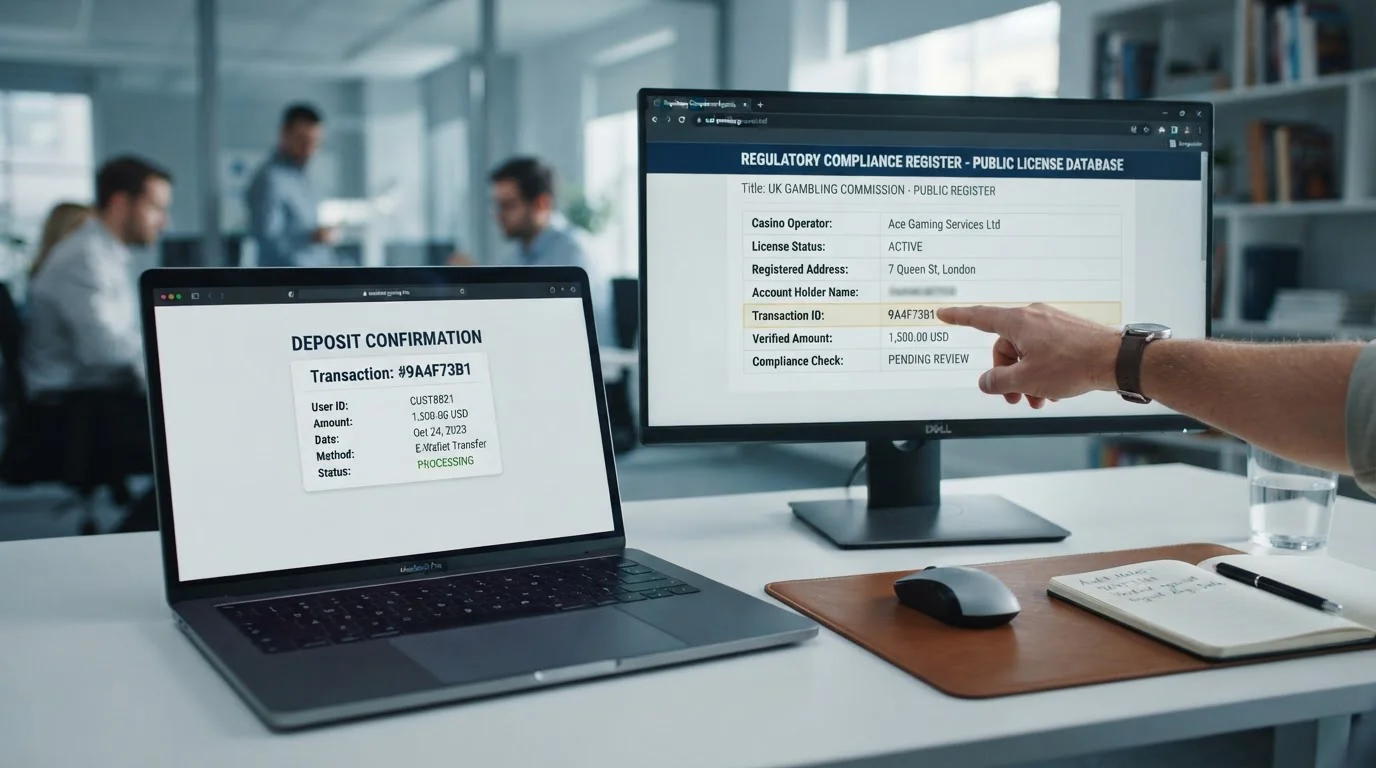
Suppose you land on a site that swears it takes Zimpler. Before you create an account or load a penny, treat the claim as something to test rather than trust. The verification is quick, it costs nothing, and it spares you the two worst outcomes: depositing into an unlicensed operator, or pushing money through a method that silently fails and ties your funds up in a reversal while support answers in circles.
The single most important check concerns the licence, not the wallet. Every genuinely UK-licensed casino holds a UK Gambling Commission operating licence, and the Commission keeps a public register anyone can search by the operator’s trading name. If the company does not appear there with an active remote licence that covers casino play, it is not a UK casino, whatever its footer badge or its ".co.uk" address suggests. An offshore site that accepts Zimpler is still an offshore site; the payment method does not launder its status.
Beyond the register, a few practical steps separate a live option from a stale one:
- Open the deposit screen itself, logged in, rather than trusting a payment-methods footer or an affiliate table, because both go stale long after an integration dies.
- Try the smallest permitted deposit first, so a dead method fails fast and cheaply instead of trapping a larger sum in limbo.
- Ask live chat to confirm the method is active for GBP accounts today and keep the transcript, because “listed somewhere” and “working right now” are not the same claim.
If the site clears the licence check and genuinely processes a small sterling deposit, you have your answer the hard way. In practice, at a UKGC-licensed cashier you will reach the deposit screen and find the familiar roster — cards, PayPal, Skrill, pay-by-bank — with no Zimpler button to press. That absence is not a bug in the page. It is the market telling you where the method does and does not belong.
How can I tell if a casino is really UK-licensed before depositing?
Search the operator’s exact trading name on the Gambling Commission’s public register. A licensed casino returns an active remote licence naming the company; an unlicensed one returns nothing, whatever its marketing claims. Confirm the licence covers casino play and shows no suspension. The register, not the footer badge, is the authority that settles it.
The Licensed Methods That Actually Replace Zimpler
Here is the part that sends you home with something usable. The need behind a Zimpler search is entirely reasonable: a fast, bank-direct way to move money into a casino without smearing card digits across a form, ideally with the money coming straight from your current account. That need is well served in Britain — just not by Zimpler. The methods below all appear at UKGC-licensed casinos, all settle in pounds, and all run through properly authorised providers. Each gets a proper look rather than a logo in a row.
First the operator picture, because methods live inside casinos. The table maps major UKGC-licensed brands to the kinds of deposit routes they genuinely support, the floor you need to start, and how quickly money comes back out. None of them carry Zimpler; all of them carry several of its stand-ins.
| Operator | Licence | Withdrawal speed | Minimum deposit | Distinguishing feature |
|---|---|---|---|---|
| bet365 | Hillside, UKGC remote | Card often same day via fast-funds; e-wallet under 24h | £5 | Deepest product range; documents its deposit flows clearly |
| William Hill | Evoke (888), UKGC remote | 1–3 days to card; 24h to e-wallet | £10 | High-street name now running on the 888 platform |
| 888casino | 888 UK, UKGC remote | 1–3 days typical | £10 | Longest-running major brand, stable software |
| LeoVegas | LeoVegas, UKGC remote | PayPal in hours; card 1–3 days | £10 | Fastest e-wallet payouts tested in the market |
| Paddy Power | PPB, Flutter, UKGC remote | 1–3 days to card | £5 | Names qualifying methods plainly in bonus terms |
| Betway | Betway, UKGC remote | 1–3 days to card; e-wallet faster | £10 | Strong mobile cashier and live-casino depth |
| Casumo | Casumo Services, UKGC remote | E-wallet under 12h; card 1–3 days | £10 | Mobile-first design, large game library |
| Grosvenor | Rank Group, UKGC remote | 1–3 days to card | £5 | Heritage brand with physical venues to visit |
Trustly / Pay by Bank
Trustly and the broader pay-by-bank category are the closest thing Britain has to Zimpler, and for most searchers they are the method they actually wanted. The mechanics are near-identical to what Zimpler does in Sweden: you pick your bank from a list, log in through the bank’s own secure flow, approve the payment, and the money moves in seconds over open-banking rails regulated by the FCA. No wallet to register, no balance to pre-load, no card number to hand over. Withdrawals can run back along the same rail, often landing in your bank account faster than a card refund crawls through the networks.
This is the route that quietly replaced a string of older instant-banking brands at UK cashiers, and it keeps spreading across UKGC-licensed sites under labels like Trustly, Pay by Bank, or Instant Banking. If what drew you to Zimpler was the account-to-account feel — money straight from the bank, no intermediary wallet — this delivers exactly that, inside British regulation rather than outside it. The one discomfort is that you authenticate in your banking app during the deposit, which some players find more exposing than a wallet login, even though the access is read-limited and your credentials never reach the casino. On every axis that matters in Britain, it beats the method you came here to find.
PayPal
PayPal is the most recognised e-wallet in Britain and, for a large share of players, the default choice. At UKGC-licensed casinos it is widely accepted, deposits land instantly, and withdrawals return to the PayPal balance rather than waiting days for a card refund. The identity and anti-fraud checks PayPal runs are stringent, which here is a strength rather than an annoyance: it is the opposite of the loose, shortcut-friendly funding that a verify-before-play market is wary of.
The weaknesses are specific. PayPal is the e-wallet most often excluded from welcome offers, on the same anti-abuse logic that catches Skrill and Neteller, and minimums tend to run higher, commonly £10 to £20. Your casino account name must match your PayPal name exactly, which trips up players whose details drifted over the years. None of that undercuts the core point: PayPal is a licensed, sterling-native, instantly reversible wallet a British casino will genuinely accept, which is more than Zimpler can claim here.
Skrill
Skrill is the e-wallet to reach for when you want a stored sterling balance and wallet-to-wallet withdrawals rather than a card refund. Owned by Paysafe and FCA-authorised as an e-money institution, it has been a fixture of UK gambling cashiers for well over a decade and sits on the accepted-methods list at the majority of UKGC-licensed operators. Deposits are instant, and winnings return to the wallet quickly, where they wait until you move them on to a bank or card.
The trade-offs are honest. Many casinos bar Skrill deposits from welcome offers, treating e-wallets as a bonus-abuse risk, so the deposit that unlocks a spins package is often the plain debit card instead. Minimums usually sit at £10 rather than £5, and Skrill levies its own fees on some transactions that the casino does not absorb. For a player who values a dedicated balance and fast payouts and does not mind forfeiting the occasional bonus, it is a clean, licensed substitute for the Nordic rail.
Neteller
Neteller is Skrill’s sibling under the Paysafe umbrella, and for casino purposes the two are near-interchangeable: an FCA-authorised e-money wallet, broadly accepted across UKGC-licensed sites, instant on deposit and quick to return funds to the wallet. If a cashier lists one, it usually lists the other. Players who already keep a Neteller balance from other online spending find the casino integration seamless, and the withdrawal speed comfortably beats a standard card refund.
The caveats echo Skrill’s almost word for word. Neteller deposits are frequently excluded from welcome bonuses, the wallet runs its own fee schedule, and a £10 minimum is common. One extra wrinkle: because Skrill and Neteller share a parent, some operators treat them as a single wallet category for bonus exclusion, so hopping between them to dodge a restriction rarely works. As a functioning, licensed, sterling-capable wallet, though, it covers the ground a British Zimpler search was reaching toward.
Apple Pay
Apple Pay is not a stored-value wallet at all, and that shapes both its appeal and its single limitation. It wraps a debit card you have added to your iPhone, iPad, Apple Watch or Mac in a one-time token, so the casino never sees the card number. A deposit takes a Face ID or Touch ID confirmation and lands instantly, and the method is accepted at a growing share of UKGC-licensed cashiers. For privacy-minded players who disliked typing card digits into a form — a real slice of the Zimpler audience — it answers the same impulse with none of the cross-border regulatory baggage.
The catch is withdrawals. Because Apple Pay holds no balance of its own, money cannot return "to Apple Pay"; it goes back to the debit card behind the token, usually within one to three days. It is also Apple-only, Safari-only on a Mac, and no use to Android owners. Within those bounds it is fast, secure, and unambiguously present at licensed British sites, which makes it a far more realistic deposit route than the rail you searched for.
Google Pay
Google Pay is the Android counterpart to Apple Pay and behaves the same way: a tokenised wrapper around your debit card, instant on deposit, biometric to confirm, and accepted at a rising number of UKGC-licensed casinos. If you are on an Android phone and wanted a tap-to-pay deposit without exposing card digits, this is the method that genuinely exists in British cashiers, and it has grown steadily as operators extend their mobile payment stacks.
Its limits mirror Apple Pay’s precisely. Withdrawals route back to the underlying debit card rather than to any Google Pay balance, because there is no balance to hold, and that card refund takes the usual one to three days. Bonus eligibility generally follows whatever rule the casino applies to card deposits, since the token resolves to a card underneath. For the everyday job of getting money into a licensed casino quickly and privately, Google Pay does it, on hardware most of the country already carries in a pocket.
paysafecard
paysafecard scratches a different itch entirely: cash, and a hard spending ceiling. You buy a voucher with a sixteen-digit code at a shop counter, using physical money, and redeem it at the casino cashier with no bank account or card involved. For players who liked the idea of a prepaid, spend-only method that cannot run away with them, paysafecard delivers exactly that at a wide range of UKGC-licensed sites, capping exposure at the voucher’s face value by design.
Its hard limit is that it is deposit-only. You cannot withdraw winnings to a paysafecard, so you will need a second method — usually a debit card or an e-wallet — registered for cashing out. Voucher values are capped, so a larger balance means juggling several codes. Used for what it is, though, it is a licensed, cash-funded, budget-fencing deposit method sitting on real British cashiers, which is its own distinct kind of control.
MuchBetter
MuchBetter is a mobile-first e-wallet built for exactly this market: FCA-regulated, sterling-capable, and deliberately courting the UK gambling sector, so it turns up at a solid list of UKGC-licensed casinos. You run it from an app, fund it from a card or bank, deposit with a tap, and receive withdrawals back into the wallet. In spirit it is close to the "purpose-built gambling payment" niche that Zimpler occupies in the Nordics, except that it sits firmly inside UK regulation rather than reaching across a border.
The reach is narrower than Skrill, Neteller or PayPal — not every operator carries it, so check the cashier before assuming — and like other e-wallets it is sometimes shut out of welcome offers. Fees are generally light, and the app occasionally sweetens deposits with its own rewards. For a player set on a modern, app-based method with proper British licensing, MuchBetter is arguably the closest thing in spirit to what a Zimpler fan was after.
Debit Card
The debit card is the unglamorous method that beats everything above on one metric: it works everywhere. Every UKGC-licensed casino accepts Visa and Mastercard debit cards, deposits are instant, minimums drop as low as £5 at many sites, and the same card receives withdrawals through the standard refund process in one to three days. No app, no wallet registration, no device restriction, no second method needed for cashing out. It is the universal fallback precisely because nothing filters it out.
Two things to keep in mind. Credit cards are banned for gambling in Great Britain outright, enforced since 14 April 2020, so only debit cards pass, and a credit card tucked inside any wallet fails the same way. And a direct card deposit does hand your card details to the casino’s payment system, which is the one thing tokenised methods like Apple Pay and Google Pay avoid. If maximum privacy is the goal, pair a card for withdrawals with a tokenised or bank-direct method for deposits. If simplicity is the goal, the card alone handles the entire job.
Which licensed method is the closest Zimpler substitute?
For most people it is Trustly or Pay by Bank, because they replicate Zimpler’s bank-direct, account-to-account feel while settling in sterling through FCA-regulated open banking. If you prefer a stored wallet balance with fast payouts, Skrill, Neteller or MuchBetter fit. For tap-to-pay privacy, Apple Pay or Google Pay. All are genuinely present at UK casinos.
Zimpler, Pay-N-Play and Non-GAMSTOP Casinos

If Zimpler is scarce at licensed British cashiers, where does it actually appear? Mostly at offshore casinos that operate outside UKGC licensing, frequently under a Curaçao or Anjouan permit, and very often advertised directly as "not on GamStop". The pay-n-play heritage is part of the pitch there: a near-instant, registration-light deposit is easy to dress up as a feature when a site has no intention of applying British verification rules anyway. The method and the venue share a tolerance for lighter oversight, which is exactly why the pairing recurs.
That is precisely why finding Zimpler at a casino should raise your guard rather than lower it. A site beyond UK licensing is not bound by the Commission’s rules on segregated player funds, age and identity verification, dispute escalation, or responsible-gambling tools. When a withdrawal is delayed for weeks, or refused on a vague terms-and-conditions technicality, there is no British regulator to complain to and no adjudication scheme to escalate into. The method that got your money in offers no help getting it out. The convenience is front-loaded; the risk waits quietly at the exit.
The "not on GamStop" framing deserves to be named for what it usually is. GAMSTOP is Britain’s national self-exclusion scheme, and every UKGC licensee participates as a condition of its licence. A search that pairs a payment method with "no GamStop" is often really a search for a way around a self-exclusion the searcher set up themselves. If that is the pull, the honest response is not a different deposit rail. It is the National Gambling Support Network or GamCare, both free and confidential, which exist to help you hold the line rather than tunnel under it. A faster deposit is the last thing that situation needs.
Can I use Zimpler at non-GAMSTOP or offshore casinos?
You sometimes can, and you still should not. Casinos "not on GAMSTOP" are unlicensed in Britain and sit outside UKGC protection, so a Zimpler deposit there costs you segregated funds, fair-dispute rights and any regulator to turn to. If the appeal is dodging a self-exclusion, that is a harm signal, not a payment choice.
Deposits, Withdrawals and Fees If You Do Find It
Say you ignore the advice and reach a site that takes Zimpler. It helps to understand how the money would actually move, because the mechanics explain much of the frustration behind the "zimpler withdrawal uk" searches. The deposit is the easy half. Zimpler initiates a payment straight from your bank account to the casino, you approve it inside your banking flow, and it arrives more or less instantly, the same clean push that makes the method popular at home. No card digits, no wallet to top up first.
The withdrawal is where the picture gets muddier at an offshore site. In a well-integrated market, money can return along the same account-to-account rail back to your bank, which is one of the method’s genuine strengths. At an unlicensed casino reached through a workaround, though, you are at the mercy of whatever payout options that operator actually honours, and those often differ from the deposit route. Winnings may be pushed toward a different method, held behind fresh verification demands, or routed through an intermediary that adds a step and a currency conversion if your account is not settled in the currency the site prefers. A modest win can shrink under forex spread and handling before it ever reaches you.
Reversals are the other silent problem. A debit-card deposit at a regulated merchant carries a chargeback route: if something goes badly wrong, your bank can claw the money back through the card scheme. Push money through a bank-initiated transfer into an offshore casino and that leverage thins out. The casino received a direct transfer, not a card charge, so the clean chargeback path blurs, and the offshore operator answers to no British dispute scheme regardless. You are relying on goodwill from a site that chose to sit beyond the reach of the regulator who would otherwise hold it to account. Goodwill has never been a payment guarantee.
Fees are the part nobody advertises up front. Where a UKGC-licensed casino is barred from charging you to deposit or withdraw, an offshore operator plays by its own schedule, and intermediaries bolted onto a cross-border flow can add their own margins and conversion costs on top. The table below sets Zimpler beside the licensed methods on the measures that decide whether a deposit is worth making, and the pattern is not subtle.
| Method | Deposit speed | Withdrawal support | UK licensed-casino availability | Best for |
|---|---|---|---|---|
| Zimpler | Instant bank push | Account-to-account where offered; patchy offshore | Effectively none | Nordic/offshore sites only |
| Trustly / Pay by Bank | Instant | Bank, minutes to hours | Wide and rising | Bank-direct, no card, no wallet |
| PayPal | Instant | Wallet, hours to 24h | Wide | Recognised wallet, strong buyer checks |
| Skrill | Instant | Wallet, under 24h | Wide | Sterling e-wallet, fast payout |
| Neteller | Instant | Wallet, under 24h | Wide | Sterling e-wallet, fast payout |
| Apple Pay | Instant | Via card, 1–3 days | Growing | iPhone users, tap-to-pay privacy |
| Google Pay | Instant | Via card, 1–3 days | Growing | Android users, tap-to-pay privacy |
| paysafecard | Instant | Not supported | Wide | Cash budget cap, deposit only |
| MuchBetter | Instant | Wallet, under 24h | Moderate | Mobile-first gambling wallet |
| Debit card | Instant | Card, 1–3 days | Universal | Simplicity, works everywhere |
Are there fees for using Zimpler at a casino?
At a UKGC-licensed casino the question is moot, since none offer it. At the offshore sites where Zimpler surfaces, there is no British rule barring deposit or withdrawal charges, and an intermediary dressing up a cross-border transfer can add its own margin and a conversion. Those costs can outstrip a plain licensed card deposit.
Safety, Legality and Responsible Gambling
Two questions tend to blur together here, so separate them. Zimpler itself is a legitimate, regulated payment company, and using it is not illegal where it is available. Gambling with it at a licensed UK casino is simply not an option, because licensed British casinos do not offer it. The real concern was never the method’s legality. It is the licensing status of the site you would have to use it on, and for a British player that site is almost always an unlicensed offshore operator. An unlicensed casino owes you none of the protections that make British gambling comparatively safe, and that is the exposure that matters.
Those protections are worth spelling out, because they are exactly what you forfeit by chasing a payment method offshore. A UKGC-licensed casino must keep player funds separate from its operating money, verify your age and identity before you play, offer deposit limits and time-outs, and submit to independent dispute resolution when things go wrong. The Commission backs this with real enforcement — large operators have been fined into eight figures for anti-money-laundering and social-responsibility failures — which is why "licensed" is a meaningful promise here, not a marketing word. No offshore Zimpler site stands behind any of that, and the slick deposit does nothing to change it.
Every licensed British operator also participates in GAMSTOP as a licence condition. Register once and you are blocked from every UKGC-licensed site for the period you choose, with no early cancellation. That mechanism is behind a lot of "zimpler casinos no gamstop" searching — people hunting a payment route to a site that will ignore their own self-exclusion. If that is the pull, the honest answer is not a smoother deposit. It is the free, confidential support that helps you keep the exclusion you set, because a self-exclusion you can pay your way around is not protecting anyone.
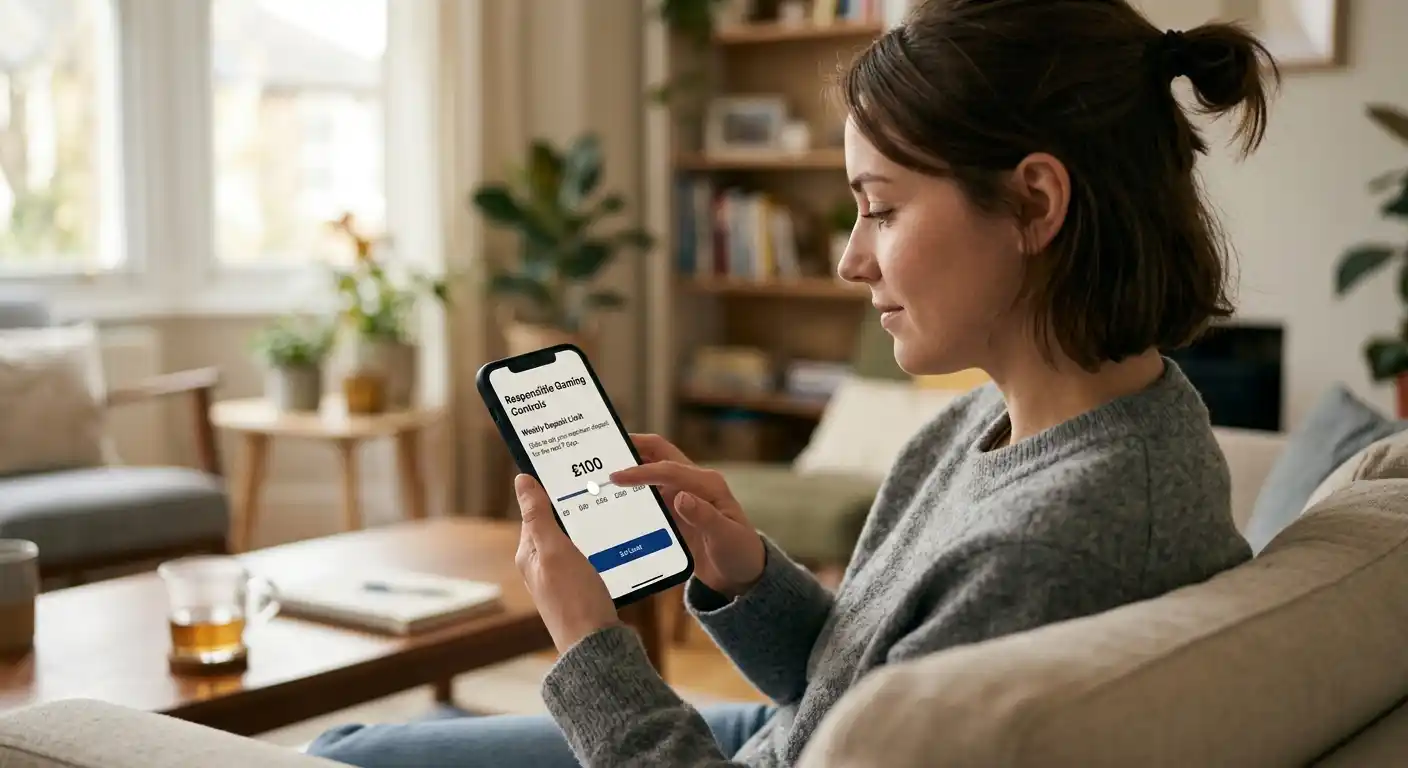
Set a Limit Before You Pick a Payment Method
The single most useful thing you can do before any deposit, by any method, has nothing to do with the payment rail at all. UKGC casinos must let you set a deposit limit at registration and tighten it whenever you like, with increases held behind a cooling-off period so you cannot lift a cap mid-session on impulse. A modest weekly figure you can genuinely afford to lose does more to protect your money than any clever choice of method, and it works identically whether you deposit by card, PayPal or pay-by-bank.
Treat a payment method as plumbing, not strategy. The route that gets money into a casino fastest is not the one that keeps you in control; the limit you set is. Pick a licensed method from the shortlist above because it is safe and it works, then let the deposit limit, not the convenience of the rail, decide how much of your money the casino ever handles. Zimpler being fast in Sweden was never the point for a player trying to stay in charge of a bankroll in Britain.
Is it safe to use Zimpler for casino play?
The method is only as safe as the casino behind it, and for UK players that is usually an unlicensed offshore site. Handing payment and identity details to an operator outside UKGC oversight means no segregated funds, no guaranteed dispute route, and no regulator if things sour. A licensed method is the safer call.
Is Zimpler Still Available, and What Is Its Future in the UK?
The "is Zimpler still available" question deserves a straight answer, and it splits cleanly in two. As a company and a payment method, yes — Zimpler is very much alive, processing large volumes across Sweden, Finland and newer markets like Brazil, and operating as a regulated payment institution under Swedish supervision. The October 2025 AML sanction was a reprimand and a fine, not a shutdown, and the regulator explicitly stopped short of threatening its authorisation. What is not alive is Zimpler as a usable deposit method at UKGC-licensed casinos, and there is no sign of that changing soon.
Why it never took root in Britain is the same story told from the UK side. The pay-n-play model that made Zimpler indispensable in the Nordics is blunted by Britain’s verify-before-play rules, the post-Brexit loss of straightforward EEA passporting raised the cost of a settled UK footing, and the open-banking niche a method like this would fill was already occupied by providers who courted the British market directly. A rail built for one regulatory environment does not automatically translate to another, and Zimpler put its growth energy elsewhere. That is a commercial judgement, not a failure.
The searches persist because the pages persist. Affiliate tables written when instant-banking methods were jostling for attention still rank, still carry the current year in the headline, and still funnel clicks toward offshore sites glad to take them. A "best Zimpler casinos UK 2026" banner is not evidence the method is thriving in Britain; it is evidence that an old page got a fresh date stamped on it. The reliable move in 2026 is to read the licensed-method shortlist above as the real answer and treat the Zimpler framing as the question that led you to it.
Why do so many pages still list Zimpler casinos if it does not work here?
Because stale pages outlive dead integrations. Affiliate tables built when instant-banking methods were common still rank, still get a fresh year on the headline, and still earn clicks routed to offshore sites. The business rewards ranking over accuracy, so a page selling "Zimpler casinos UK" survives long after the method vanished from licensed sites.
Will UK casinos start accepting Zimpler in the future?
Nothing points that way. Britain’s regulatory direction is toward tighter control over who handles gambling money, pay-n-play’s core advantage is blocked by verify-before-play rules, and the licensed market is already well served by FCA-regulated open-banking rails. Unless Zimpler establishes a settled British footing and reason to compete, the bar stays where it is.
Prepared by the Payments-casino-uk editorial staff.