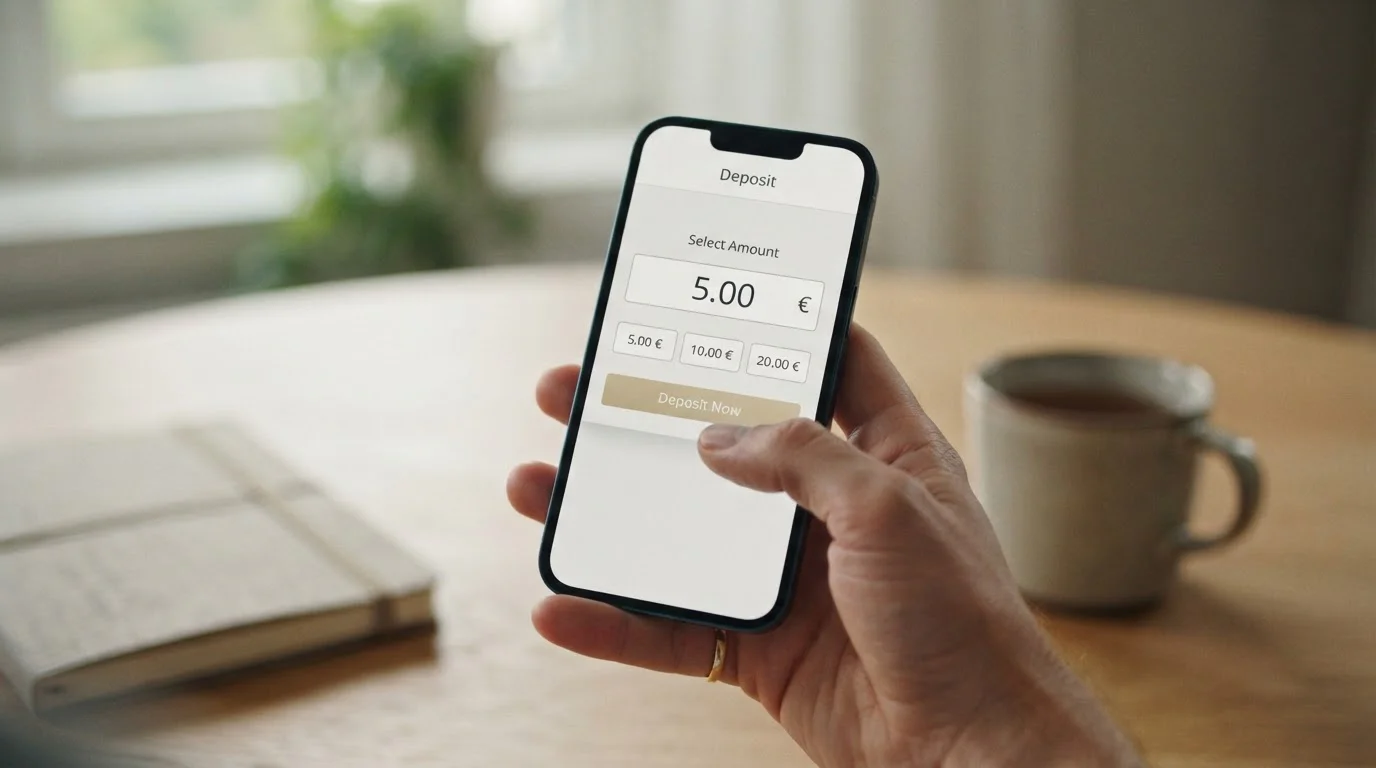
The £4 Minimum Deposit Casino — Chasing a Figure That Barely Exists in Britain (2026)
 Available in GB

You typed "£4 minimum deposit casino" into a search box expecting a tidy list of sites that let you in for the price of a meal-deal sandwich. What you probably found instead was a wall of affiliate pages confidently naming "the best £4 casinos," most of which quietly list £5 or £10 sites under a headline nobody bothered to check. The figure is odd for a reason. Four pounds is not a number UK operators reach for when they set a floor.
Here is the blunt version before the detail. British casinos bunch their minimums at £5 and £10, with a thin layer of £1 sites at the bottom. A clean, advertised "£4 minimum" as an operator policy is rare to the point of being a curiosity. Where a £4 charge genuinely shows up, it is almost always a side-effect of the payment method — pay-by-mobile billing that moves in fixed increments, or a method-specific floor the casino applies to one rail and not another. The money decides the number, not the casino’s marketing team.
So this is not a page that invents a roster of twelve "£4 casinos" to keep you clicking. It is the applied map: where the £4 figure really comes from, which UKGC-licensed sites sit closest to it, how to confirm the true minimum in the cashier before you register, and what to use instead when the number you wanted turns out to be a rounding artefact rather than a product.
Table of Contents
- Does a £4 Minimum Deposit Casino Actually Exist in the UK?
- Where the £4 Figure Actually Comes From
- The Real Minimum-Deposit Tiers: £1, £5 and £10
- UKGC-Licensed Sites Closest to a £4 Deposit
- Pay by Mobile and the In Touch Games Low-Deposit Corner
- How to Confirm a Minimum Deposit in the Cashier
- Why Most UK Minimums Sit at £5 or £10
- What a Small Deposit Actually Gets You
- Deposit Methods That Allow Small Amounts
- Bonuses on a Tiny Deposit: The £10 Threshold Problem
- Withdrawals After a Small Deposit
- Safety, Licensing and Responsible Gambling
- Small Deposits vs No-Minimum and Low-Deposit Alternatives
Does a £4 Minimum Deposit Casino Actually Exist in the UK?
Mostly no, and the honest answer matters more than a padded list. Among UK Gambling Commission licensees, deposit floors sit overwhelmingly at £5 or £10. A smaller group accepts £1. Sites that land on exactly £4 as a published minimum are a clear minority, and when they appear it is usually tied to one deposit method rather than the account as a whole. Treat any page promising a broad choice of "£4 casinos" with the same suspicion you would give a pub quiz answer written in crayon.
The confusion is understandable. Low-deposit searching is a real behaviour — players with a tight budget want to test a site for the cost of a coffee before committing. The market answers that demand, but it answers it in round numbers. A £1 deposit is a genuine marketing hook some operators lean on. A £5 deposit is the workhorse floor across the big brands. A £10 minimum is the other common standard, especially where a welcome offer is attached. Four pounds slots awkwardly between the £1 headline-grabbers and the £5 mainstream, which is precisely why no operator builds a campaign around it.
That does not make £4 impossible. It makes it incidental. If you deposit through a carrier-billing method that charges in set steps, or you hit a method whose minimum the operator pegged at £4 for processing reasons, you can absolutely end up paying exactly that. The distinction is between a casino that advertises "deposit from £4" as a feature and a cashier that happens to let £4 through on one rail. The first is nearly mythical. The second is just plumbing.
Is there really a £4 minimum deposit casino in the UK?
Rarely as an advertised policy. UK-licensed operators set minimums at £5 or £10 far more often, with a handful allowing £1. A £4 figure usually appears as a method-specific floor or a pay-by-mobile increment rather than a casino-wide rule, so always confirm it in that site’s live cashier before depositing.
Where the £4 Figure Actually Comes From
Follow the money and the mystery dissolves. The most common source of a sub-£5, non-round deposit is pay-by-mobile billing. When you fund a casino by charging your phone bill, the transaction runs through a carrier-billing provider rather than a card network, and those systems frequently move in fixed increments — £3, £5, £10 — set by the provider and the mobile network, not the casino. Depending on how a given site maps those steps, the smallest allowable charge can land somewhere in the £3-to-£5 band, and £4 is comfortably inside it.
There is a second, drier source: method-specific minimums. A casino does not always apply one floor to every rail. A site might set £10 as its debit-card minimum because that is where its bonus qualification sits, while allowing a smaller figure on an older or cheaper method it keeps around for budget players. When an affiliate scrapes that lower figure out of context and rounds it into a headline, a "£4 casino" is born — even though the £4 only ever applied to one payment route under specific conditions.
The third source is plain conversion and rounding. A site that denominates in another currency, or one that quotes a tidy figure in euros, can surface a GBP equivalent that is neither £5 nor £10. None of these three are a casino proudly offering "four-pound gaming." They are the residue of payment mechanics, and understanding that is the difference between picking a site deliberately and chasing a number that was never a real door.
The figure also has a history that keeps it alive in search long after it stopped describing much. In the 2016-to-2019 era, before the big brands tightened their floors and before verification had to happen up front, a scatter of mobile-first sites competed hard on micro-deposits, and small non-round figures were a genuine battleground. Players who deposited that way then still search the same phrase now, and the content mill happily serves them pages that pretend nothing changed. The number survives as muscle memory, not as a current market feature, which is why a fresh check beats a remembered figure every time.
Why do I keep seeing "£4 casino" lists if the number is so rare?
Because low-deposit searches are lucrative to monetise and accuracy is optional in that corner of the market. Many pages copy each other, list £5 or £10 sites under a £4 banner, and never open a live cashier to check. The figure persists as a search habit long after it stopped describing anything concrete.
The Real Minimum-Deposit Tiers: £1, £5 and £10
Strip out the noise and British minimums fall into three honest bands. Knowing which band you are actually in saves you from hunting a phantom £4 and landing on a worse site than the £5 brand two clicks away. The table below maps the tiers as they genuinely exist, with the catch each one carries.
| Deposit tier | Who typically sets it | Usual method | The catch |
|---|---|---|---|
| £1 | A small group of low-stakes and bingo-led sites | Debit card, sometimes Pay by Bank | Often excludes the welcome offer; £1 buys almost no playtime |
| £3–£5 (incl. the stray £4) | Pay-by-mobile and older micro-deposit brands | Carrier billing, select card routes | Carrier fees and daily caps; method-specific, not site-wide |
| £5 | Most major UKGC brands | Debit card, Apple Pay, Pay by Bank | Bonus usually needs £10, so £5 skips the offer |
| £10 | Big brands with a welcome offer attached | Debit card, e-wallets, Apple Pay | The real cost of qualifying for most promotions |
The £1 tier is real but narrow. A short list of licensed sites genuinely take a single pound, and they lean toward bingo rooms and low-stakes slots where the business model survives on volume. The trade-off is that a £1 deposit almost never qualifies for a welcome offer, and realistically a pound of slot stakes is gone in under a minute at anything but penny bets. It is a test-drive deposit, not a playing deposit.
The £5 tier is where most of the market actually lives. Betfair, Paddy Power, Sky Vegas and Ladbrokes all accept a £5 minimum, and that figure is the practical floor for a serious session at a household-name brand. The £10 tier exists because that is the threshold most welcome offers demand — if you want the spins and the match, £10 is usually the entry fee whatever the cashier’s technical minimum says. Four pounds, you will notice, is not a row of its own. It is a visitor inside the £3–£5 band, and only on certain rails.
UKGC-Licensed Sites Closest to a £4 Deposit
Since a dedicated £4 roster would be fiction, the useful move is to name the licensed brands whose real minimums sit nearest that figure, and to be straight about what each one costs to enter. Every operator below holds a UK Gambling Commission remote licence, every one can be checked against the Commission’s public register, and none of them is going to pretend £4 is a headline feature. What they offer is a low, honest floor and a cashier you can trust.
The comparison table gathers the key parameters first; the breakdowns that follow give each brand the two-paragraph treatment a payment decision deserves. Read the table for the shape, read the profiles for the reasons.
| Operator | Licence | Withdrawal speed | Minimum deposit | Distinguishing feature |
|---|---|---|---|---|
| bet365 | UKGC (Hillside) | Often same-day via Visa FastFunds | £5 | Fastest card payouts among the majors |
| Ladbrokes | UKGC (Entain) | Within 24 hours typical | £5 | Wager-free welcome spins |
| Coral | UKGC (Entain) | Within 24 hours typical | £5 | 24/7 phone support, shared Entain cashier |
| Paddy Power | UKGC (Flutter) | 1–3 days, faster to e-wallets | £5 | Names qualifying deposit methods in offer terms |
| Sky Vegas | UKGC (Flutter) | 1–3 days | £5 | In-house exclusive slots |
| PlayOJO | UKGC (SkillOnNet) | E-wallets within hours | £10 | Zero wagering on every bonus |
bet365 Casino
bet365 runs the £5 floor that the budget-minded actually want, and it pairs that low entry with the fastest card payouts among the big brands. The casino operates under Hillside (New Media) and a UKGC remote licence, built on the group Denise Coates founded in Stoke-on-Trent in 2000. The game library stretches past 1,500 titles with Playtech and Red Tiger exclusives sitting alongside the usual Evolution live tables, so a small deposit still opens the full catalogue rather than a stripped-back lobby.
The practical draw for a low-deposit player is Visa FastFunds. Many verified withdrawals land on your debit card the same day, sometimes inside a couple of hours, which matters disproportionately when you are cycling small sums rather than parking a big balance. The welcome offer, as ever, expects more than the £5 minimum to activate — read the specific promotion before assuming a fiver qualifies. If you want a low door and a quick exit, bet365 is the sober pick, no £4 fiction required.
Ladbrokes Casino
Ladbrokes is the £5-minimum brand to beat if your priority is a welcome offer with no strings on the winnings. Its wager-free spins mean that what you win from the spins lands as withdrawable cash rather than a balance shackled to a rollover you will never clear. The 1886 bookmaker went online in 2000, merged with Coral in 2016, and now sits inside Entain under a UKGC remote licence, sharing the same fast-payout plumbing that powers its sister brands.
For a budget deposit the appeal is the combination: a low £5 entry and a bonus structure that does not treat "free" spins as a hostage situation. The 2,500-plus game library covers slots, live casino and table games, with Evolution handling the dealers. Withdrawals usually clear back to your card within 24 hours thanks to Entain’s processing. Ladbrokes will not let you in for £4, but £5 here buys more genuine value than £4 at a site you have never heard of.
Coral Casino
Coral is the Entain twin of Ladbrokes, which means the same £5 minimum, the same cashier and the same quick payouts, with a slightly different wardrobe. Founded by Joe Coral in 1926, it joined Ladbrokes in the 2016 merger and now runs under the same Entain UKGC licence. The welcome offer is more modest than its sibling’s, but Coral keeps something most online-only brands drop entirely: 24/7 telephone support staffed by humans rather than a chatbot loop.
The reason to choose Coral over Ladbrokes comes down to texture rather than terms. The library skews a touch more toward classic slots, the demographic runs slightly older, and the phone line is a genuine differentiator if you dislike resolving a stuck withdrawal through a chat window. For small, frequent deposits the identical Entain backend means payouts move at the same 24-hour pace. Same engine, calmer paintwork.
Paddy Power Casino
Paddy Power earns its place here by being unusually honest in its small print. Where most operators leave you guessing whether your deposit method qualifies for the bonus, Paddy Power tends to name the eligible methods directly in the offer terms — a rarity worth its weight when you are depositing a small sum and cannot afford to discover after the fact that your rail was excluded. It runs under PPB Entertainment, part of Flutter Entertainment, on a UKGC remote licence, with the £5 floor that the Flutter stable shares.
The Irish bookmaker launched in 1988, went online in 2000, and brings a 2,000-plus game library with Evolution and Pragmatic Play carrying the live and slot load. Withdrawals route back to your card in one to three days, quicker to a verified e-wallet. For a low-deposit player the value is clarity: you can read exactly what your £5 or £10 unlocks before you commit, instead of reverse-engineering the rules from a failed bonus credit.
Sky Vegas
Sky Vegas is the £5-minimum option for players who care more about the games than the banking. Its calling card is a shelf of in-house exclusive slots you will not find at bet365 or Ladbrokes, commissioned rather than licensed from the usual studios. The brand sits under Flutter on a UKGC licence, having come up through Sky Betting & Gaming before the 2018 acquisition folded it into the group.
The library tilts toward slots over live casino, and the lobby tends to surface RTP and volatility more plainly than rivals, which suits a cautious low-deposit player sizing up variance before spending a fiver. The welcome structure follows the Flutter pattern — a no-deposit sweetener plus a larger tranche on a qualifying deposit — and withdrawals clear in one to three days. If exclusive content outranks payout speed on your list, Sky Vegas justifies the £5 over a cheaper unknown.
PlayOJO
PlayOJO breaks the pattern deliberately: its minimum is £10, higher than the £5 crowd, but it answers the low-deposit player’s deeper worry — that any bonus they claim will trap their winnings behind a wall of playthrough. PlayOJO applies zero wagering to everything. Whatever you win is yours to withdraw immediately, with no rollover, no maximum-cashout trap, and a slice of cashback on stakes through its OJOplus mechanic. It operates under SkillOnNet on a UKGC remote licence.
For someone drawn to a tiny deposit precisely because they distrust casino terms, PlayOJO is the honest trade: pay £10 instead of £4, and in exchange every quid you win is real money rather than a bonus balance with conditions. The library is large, the live casino is handled by the major studios, and e-wallet withdrawals can land within hours. It is the clearest counter-argument to low-floor hunting — sometimes the better deal is a slightly higher deposit at a site that does not booby-trap the exit.
Pay by Mobile and the In Touch Games Low-Deposit Corner
If a genuine sub-£5 figure is going to appear anywhere, it is in pay-by-mobile. Charging your phone bill routes the deposit through a carrier-billing provider — Boku, Fonix and a few others — rather than a card. The appeal is obvious: no card details, no bank app, just an SMS confirmation and the charge appears on your monthly bill or comes off your prepaid credit. The catch is equally real, and it is where the £4 figure finds its most plausible home.
Carrier billing moves in fixed increments, commonly in the £3-to-£10 range per transaction, and it carries a daily ceiling that is often around £30 at casino cashiers. Those limits are not the casino being generous or stingy; they trace back to the Phone-paid Services Authority, which caps carrier-billed spending at £40 per transaction and £240 per month across all services, gambling or otherwise. A small, non-round deposit like £4 fits neatly inside that increment logic, which is exactly why pay-by-mobile is the honest answer to "where does £4 come from." The cost of that convenience is a processing fee — frequently cited around the fifteen-percent mark on some rails — that a debit card simply does not charge.
Run the arithmetic and the small-deposit logic starts to wobble. A fifteen-percent charge on a £4 top-up is sixty pence, so you are handing over roughly £4.60 to get £4 of play, or seeing only about £3.40 of a £4 charge reach your balance depending on how the site applies the fee. On a single tiny deposit that sounds trivial. Repeat it across a month of £4 top-ups and the fee quietly becomes the most expensive thing about your gambling, outpacing anything a debit-card player pays. The method that makes the lowest figure possible is also the one that punishes you most per pound, which is the trade nobody in the "cheap casino" content ever spells out.
The networks behind it are the usual UK carriers — EE, O2, Vodafone, Three and the virtual operators riding on them — and the exact floor can shift by network as well as by site, because each carrier sets its own increment rules. That is a second reason the £4 figure refuses to stay still: it depends not only on which casino you join but on who provides your phone service. A rail this contingent is not something to plan a deposit around; it is something to check at the moment you use it.
The In Touch Games family (mFortune, Mr Spin, PocketWin, Dr Slot)
The brands historically synonymous with tiny mobile deposits come from the In Touch Games stable — mFortune, Mr Spin, PocketWin and Dr Slot. These are mobile-first sites built around their own in-house games rather than the big third-party studios, and they made their name letting players top up small amounts by phone bill when the household brands demanded £10 and a card. For years this corner was the most credible place a sub-£5 deposit genuinely worked, which is why it keeps surfacing in low-floor searches even now.
Two honest caveats apply. First, the specific minimum and whether pay-by-mobile is still offered shift over time and by brand, so the £3-ish figure these sites were known for is something to confirm in the live cashier rather than take on trust from an old review. Second, and more important, licensing status for any operator can change — a brand that held a UKGC remote casino licence during one period may not be in the same position later, so check the Gambling Commission’s public register directly before you deposit a penny. The In Touch Games corner is the realistic home of the small mobile deposit, but "realistic" is not the same as "verified today," and on a £4 question the verification is the whole job.
Can you deposit £4 by pay-by-mobile at a UK casino?
Possibly, where a site supports carrier billing and its increments allow it. Pay-by-mobile typically moves in £3–£10 steps with a daily cap around £30 and a processing fee on some rails. The exact minimum varies by operator and network, so confirm it in that casino’s cashier before relying on a £4 charge going through.
How to Confirm a Minimum Deposit in the Cashier
The only figure that counts is the one in the live cashier of the site you are actually joining, and checking it takes two minutes. Affiliate tables go stale, operators change floors method by method, and a page that was right last year can be wrong today. Treat every published minimum — including the ones on this site — as a starting point to verify, not a promise to bank on.
Start by opening the casino’s banking or cashier page, which most sites expose before full registration or immediately after a lightweight sign-up. Select the payment method you intend to use and look for the stated minimum against that specific method, because the debit-card floor and the pay-by-mobile floor are frequently different numbers on the same site. If the cashier only reveals the minimum once you try to deposit, enter a small test figure and watch for the rejection message — it will usually name the real floor outright.

Cross-check the licence while you are there. The Gambling Commission’s public register lets you confirm a site is UKGC-licensed and that the licence is active, which matters far more than whether the minimum is £4 or £5. A site advertising an irresistibly low deposit but missing from the register is not a bargain — it is an unlicensed operator with no UK protection behind it. The low number is the bait; the licence is the thing that keeps your money real.
How do I check a casino’s real minimum deposit?
Open the site’s cashier or banking page, select your chosen payment method, and read the minimum shown against that specific method — it often differs from one rail to another. If the figure is hidden, attempt a small deposit and note the rejection message. Verify the UKGC licence on the public register too.
Why Most UK Minimums Sit at £5 or £10
The absence of a £4 standard is not an accident, it is economics. Every deposit a casino processes carries a cost — card scheme fees, fraud screening, anti-money-laundering checks, the staff time behind verification. On a £4 deposit those fixed costs eat a painful share of the transaction before a single spin happens. Round the floor up to £5 or £10 and the maths improves, which is why the market gravitated to those numbers rather than fiddling with figures in between.
Regulation pushes the same way. UKGC licensees must verify your age and identity before you deposit or play, a check that costs the operator real money regardless of whether you put in £4 or £400. Affordability obligations, rolled out in phases across 2024 and 2025, add monitoring overhead that makes micro-deposits comparatively expensive to service. A floor of £5 or £10 is partly the operator recovering the cost of being a compliant business rather than an offshore free-for-all.
There is a behavioural layer too, and operators understand it perfectly. A £10 minimum nudges you toward the deposit size that unlocks the welcome offer, which is the whole commercial point of the offer. A £1 or £4 deposit lets you play without ever touching the promotion, which suits the player and not the house. The round-number floors are where the operator’s interest and the regulator’s requirements meet — and £4, serving neither, simply never got a seat at the table.
What a Small Deposit Actually Gets You
Be realistic about four pounds. At a penny slot you might coax a few hundred spins out of it if the variance is kind; at a £1 spin you will be done before your tea has brewed. A tiny deposit is a reconnaissance mission — enough to test the cashier, feel the lobby, confirm withdrawals behave — not a bankroll. Anyone selling a £4 deposit as a route to a meaningful win is selling the same "sure thing" that keeps casinos in marble floors.
The sharper limitation is the bonus. Most welcome offers set their qualifying threshold at £10, which means a £4 or £5 deposit frequently walks straight past the spins and the match you came for. You can play, but you play on bare balance, with none of the promotional padding the headline promised. That is not a trick — the terms are published — but it catches the low-deposit optimist who assumed any deposit would trigger the offer. It will not. The threshold is the threshold.
Put numbers on it and the picture sharpens. Four pounds at a 20p minimum stake buys twenty spins — a couple of minutes on a modern video slot that spins in under two seconds. Drop the stake to a penny a line and the same £4 can stretch to a few hundred spins, but the wins scale down with the stakes, so you trade longevity for stakes so small that a jackpot would barely cover the bus home. The honest summary is that £4 is a sampling budget. It tells you whether you like the lobby and whether the cashier behaves, and that is its entire job.
Where a small deposit does earn its keep is risk control. If you are the kind of player who benefits from a hard ceiling, depositing £4 or £5 at a time and refusing to reload is a crude but effective brake. It is not a substitute for the deposit limits every UKGC site must offer, but it is a habit that keeps a session from quietly becoming an evening. Small deposits are a discipline tool first and a value play a distant second.
Does a £4 or £5 deposit qualify for a welcome bonus?
Usually not. Most UK welcome offers set a minimum qualifying deposit of £10, so a £4 or £5 deposit typically lets you play on your own balance without triggering the spins or match. Always read the specific offer’s qualifying threshold before depositing if the bonus is the reason you are joining the site.
Deposit Methods That Allow Small Amounts
Not every rail treats a small deposit the same way, and the method you pick decides both the floor and the fee. For a budget deposit the practical shortlist comes down to a handful of options, each with a different trade between how low you can go and what it costs you.
- Debit card (Visa, Mastercard): the universal route, usually £5 or £10 minimum, no fee, and the only method that reliably receives withdrawals.
- Pay by mobile (Boku, Fonix): the home of the genuine sub-£5 figure, with carrier increments and a fee on some rails, capped at £40 per transaction and £240 a month, and no withdrawals back to the phone bill.
- Pay by Bank / open banking: direct from your account, often a £5 or £10 floor, no card in the middle, and increasingly fast for payouts too.
- E-wallets (PayPal, Skrill): low-to-mid floors, instant deposits, frequently excluded from welcome offers and sometimes carrying a higher minimum than a card.
The one non-negotiable across all of them is the credit-card question, and it has a settled answer. The Gambling Commission banned credit-card gambling on 14 April 2020, so no UKGC licensee accepts a credit card directly or wrapped inside a mobile wallet. Every small deposit you make is funded by debit, bank account or carrier billing, full stop. If a site offers to take your credit card, that is a flashing sign it is not UK-licensed.
Match the method to the goal. If you specifically want to spend as little as £4, pay-by-mobile is the realistic rail, accepting the fee and the cap as the price of that precision. If you want the money to come back out again smoothly, a debit card or Pay by Bank is the saner choice, since carrier billing is a one-way street that cannot receive a withdrawal. The lowest possible number and the smoothest possible exit rarely live on the same rail.
Bonuses on a Tiny Deposit: The £10 Threshold Problem
The welcome offer is where low-deposit ambitions most often collide with reality. Operators pitch spins and matches hard, but the qualifying deposit — the sum you must put in to activate the deal — sits at £10 at the majority of UK sites. Deposit £4 and the offer stays locked; deposit £10 and it opens. The gap between the floor you can deposit and the floor that earns a bonus is the single most misunderstood thing about low-deposit play.

Even when a small deposit does qualify somewhere, read what the "reward" actually is. Wagering requirements were capped group-wide at 10x across major operators from 19 January 2026, a sharp improvement on the 35x-to-40x that dragged on until late 2025, but 10x of a bonus derived from a £4 deposit is still a hoop. The genuinely clean offers are the wager-free ones — Ladbrokes’ spins, PlayOJO’s zero-wagering stance — where winnings are withdrawable cash rather than a balance you must churn. On a small deposit, a wager-free spin is worth several times a "bigger" bonus wrapped in playthrough.
The cynical reading is the correct one here. A bonus is a customer-acquisition cost the operator expects to recover, and the £10 threshold exists to make sure you deposit enough to make that recovery likely. None of this is hidden — it is all in the terms — but it does mean the £4 depositor and the bonus hunter are usually two different people. Decide which one you are before you let a promotional banner choose your deposit size for you.
Withdrawals After a Small Deposit
Getting a small amount in is the easy half. Getting winnings out is where the method you chose comes back to bite or to help. The first withdrawal at any UKGC site triggers identity verification — passport or driving licence, proof of address — because the regulator requires it before funds are released. That check can add a day or two to a first payout whatever you deposited, so upload the documents when you register rather than when you want your money, and the bottleneck disappears.
Pay-by-mobile’s one-way nature is the trap most small depositors walk into. You cannot withdraw to a phone bill, so a deposit made by carrier billing has to come back by another route entirely — usually a debit card or bank transfer you register specifically for the payout. That is not a flaw in any single casino; it is how carrier billing works everywhere. If you deposited £4 by phone to chase a small win, be ready to add a card before you can see that win land.
Minimum withdrawal figures also matter more at the low end than most pages admit. A site might happily take a £4 deposit but set its minimum withdrawal at £10 or more, which means a small win can be stranded until it grows past that floor or you forfeit it. Check the withdrawal minimum alongside the deposit minimum before you commit, because a low door with a high window is a worse deal than it looks, and it is exactly the sort of asymmetry a hurried low-deposit player never thinks to check.
Can I withdraw winnings if I deposited by pay-by-mobile?
Not to the phone bill itself — carrier billing is deposit-only. You withdraw to a debit card or bank account registered for payouts instead, after completing identity verification. Check the site’s minimum withdrawal figure too, as it can sit at £10 or higher even when the deposit floor is lower, stranding very small wins.
Safety, Licensing and Responsible Gambling
A low minimum is worthless if the site behind it is not licensed, and this is where the £4 hunt goes most dangerously wrong. Unlicensed operators love a headline-grabbing deposit floor precisely because it pulls in budget players who are not scrutinising the footer. The Gambling Commission’s public register is the one check that matters: if the site is not on it, the attractive minimum is bait on a hook with no UK consumer protection, no segregated funds, and no regulator to complain to when a withdrawal mysteriously stalls.
Every genuinely UK-licensed casino is bound to GAMSTOP, the national self-exclusion scheme, and must offer deposit limits you can set at registration and tighten at any time. For a player drawn to small deposits as a budgeting tactic, those tools do the job far more reliably than manually depositing £4 at a time. A weekly deposit limit enforces the ceiling automatically; raising it triggers a cooling-off delay, while lowering it takes effect at once. That asymmetry is deliberate, and it is on your side.
If the appeal of a tiny deposit is really about keeping spending under control, treat that instinct seriously rather than gamifying it. Set a deposit limit before your first deposit, not after a bad night. If gambling has started to feel like a problem rather than a pastime, the National Gambling Support Network and GamCare offer free, confidential help, and GAMSTOP will block you across every licensed site for six months, a year or five years. Those are the real safeguards. A £4 floor is not a safety feature — it is a marketing number, and it was never designed to protect anyone but the operator’s acquisition cost.
Are £4 or low-deposit casino sites safe to use?
They are as safe as their licence, not their deposit floor. A UKGC-licensed site taking £1, £4 or £5 carries full UK protection — segregated funds, GAMSTOP, dispute resolution. A low minimum at an unlicensed site carries none of that. Verify the licence on the Gambling Commission register before any deposit tempts you in.
Small Deposits vs No-Minimum and Low-Deposit Alternatives
The £4 search usually belongs to a wider family of low-floor questions, and the honest guidance is to pick the band that fits rather than fixate on a figure the market barely uses. If the goal is the absolute lowest entry, the £1 tier is a real thing at a handful of licensed sites, with the understood trade that a pound buys little and rarely unlocks a bonus. If the goal is a serious session at a brand you trust, the £5 tier at bet365, Ladbrokes, Coral, Paddy Power or Sky Vegas is the sensible home.
"No minimum deposit" is another phrase worth decoding before you chase it. In practice no UK casino processes a zero-pound deposit, so a "no minimum" claim resolves to either a very low £1 floor or an offshore site you should avoid. The £1-to-£15 spread covers almost every genuine low-deposit need: £1 to test, £5 to play, £10 to claim an offer, £15 for a slightly bigger buffer. Four pounds is a point on that line, not a destination with its own front door.
The cleanest way to think about it: decide what you want the deposit to do, then pick the rail and the tier that deliver it. Want the smallest possible charge and do not mind a fee? Pay-by-mobile in the £3–£5 band. Want a welcome offer? £10 by card. Want winnings that are truly yours? A wager-free site, whatever the floor. Chasing the literal number £4 optimises for the one variable that matters least, while the licence, the method and the bonus terms quietly decide whether the whole thing was worth doing.
What is the lowest deposit I can realistically make at a UK casino?
One pound at a small group of UKGC-licensed sites, usually bingo-led or low-stakes slots, though £1 rarely qualifies for any bonus. The £5 floor at major brands is the practical minimum for a real session. Figures between £1 and £5, including £4, are method-specific and should be confirmed in the cashier.

Prepared by the Payments-casino-uk editorial staff.