Casinos That Accept UPayCard in the UK — The Honest 2026 Breakdown
 Available in GB

You typed "casinos that accept UPayCard" into a search box, you landed here, and the honest answer is the one most affiliate pages bury under a glossy top-ten table: no UK Gambling Commission-licensed casino reliably lists UPayCard in its cashier as of 2026. Not one you can name with confidence, not one that keeps the option live from month to month, and certainly not a dozen of them lined up with welcome offers. The method exists. The British shelf for it is close to empty.
That gap between "the wallet exists somewhere in the world" and "a licensed Great Britain casino will take it" is the whole story of this page. UPayCard is a real multi-currency e-wallet with a prepaid card attached, built for international and crypto-leaning audiences. It has simply never earned a settled place on UKGC cashiers, and the few sites that claim to accept it tend to be offshore operations that sit outside British licensing entirely. Chasing it there trades a minor convenience for a major loss of protection.
So this breakdown does three things instead of pretending. It explains what UPayCard actually is, and which of the several fintech products sharing that name you might even be looking at. It sets out why a wallet like this runs into a wall at UKGC-licensed cashiers. And it maps the payment methods that genuinely work at licensed British casinos right now, with real limits and real payout routes, so you leave with a deposit you can make tonight rather than a brand name that goes nowhere.
Table of Contents
- Does Any UK Casino Actually Accept UPayCard in 2026?
- What UPayCard Actually Is (and Which One You Mean)
- Why UPayCard Rarely Clears the UKGC Bar
- How to Check Whether a Cashier Really Offers UPayCard
- The Licensed Methods That Actually Work
- UPayCard, Crypto and Offshore Casinos
- Deposits, Withdrawals and Fees If You Ever Do Find It
- Safety, Legality and Responsible Gambling
- Is UPayCard Still Available, and What Happened to It?
Does Any UK Casino Actually Accept UPayCard in 2026?
Short version: no licensed one that you can rely on. Search the cashier menus of the large UKGC-licensed brands — bet365, William Hill, 888casino, Paddy Power, Sky Vegas, LeoVegas, Betway, Casumo, Grosvenor — and UPayCard does not appear beside the debit-card button or the PayPal logo. These operators publish their accepted methods openly, and the list is consistent: debit cards, PayPal, Skrill, Neteller, Apple Pay, Google Pay, pay-by-bank services, paysafecard, MuchBetter. UPayCard is absent from that roster, and it has been for years.
What you will find are affiliate "UPayCard casinos UK" lists that rank sites by star rating and bonus size. Read those carefully and two things stand out. The operators named are frequently offshore brands licensed in Curaçao or Anjouan rather than by the UKGC, and the small print often admits the wallet does not support pounds sterling as a native balance currency. A payment method that cannot hold your money in GBP and sits on sites with no British licence is not a UK casino option in any meaningful sense. It is a listing built to catch the search, not to serve the player.
The confusion is understandable. UPayCard enjoyed a window of visibility across the mid-2010s when a wave of international wallets — Neteller, Skrill, ecoPayz, UPayCard among them — competed for the casino-deposit market before UK regulation tightened and the field thinned out. Pages written in that era still rank, still carry the old tables, and get refreshed with a new year in the title rather than a new look at the facts. The premise rots quietly while the traffic keeps arriving.
Can I deposit at a UK casino with UPayCard right now?
Not at a UKGC-licensed casino with any reliability. None of the major licensed British operators list UPayCard in their cashier, and the sites that do claim to accept it are almost always offshore operations outside UK licensing. If a cashier shows the option, check the licence first.
What UPayCard Actually Is (and Which One You Mean)

UPayCard, in the form most casino searchers remember, is a multi-currency electronic wallet with an optional prepaid card bolted on. You open an account, fund it from a bank transfer, a card, or in some versions cryptocurrency, hold a balance across several currencies, and spend or send that balance online. The prepaid card extended the wallet into physical use — a plastic or virtual card you could load from the balance and use at merchants or cash machines. On paper, that is a familiar e-wallet shape, the same silhouette as Skrill or Neteller.
The practical details are where it diverges from the mainstream. The wallet leaned toward international and crypto-friendly use rather than a pounds-first British audience, which matters enormously for a UKGC cashier that settles in sterling. Its corporate history is also harder to pin down than a PayPal or a Paysafe-owned brand, having passed through ownership and structural changes that left its current regulatory footing genuinely murky. Vague provenance is poison for a payment method that wants to touch regulated gambling money.
Then there is the name problem, which is not trivial. Search "UPay" or "UPayCard" and you hit a scatter of unrelated products: a reloadable card scheme in Israel, a crypto-focused "UPay" wallet and debit card pushed through app stores, a bank-linked "UPay" wallet in Sri Lanka, an "U!Pay" service in the Armenian market. These are separate companies with separate regulators and separate fates. A review praising one of them tells you nothing about whether a British casino will accept any of them, and much of the "is UPayCard still active" anxiety online is really people comparing notes on four different products at once.
Is UPayCard the same as a debit card or a prepaid card?
Not quite either. UPayCard is an e-wallet that can issue a prepaid card funded from your wallet balance. A bank debit card pulls straight from your current account; UPayCard’s card pulls from money you already loaded. That extra step, plus its multi-currency and crypto leanings, sets it apart from a plain debit card.
Why UPayCard Rarely Clears the UKGC Bar

A payment method does not reach a licensed British casino cashier by being popular. It reaches it by surviving a specific chain of checks, and UPayCard stumbles on several links at once. The friction is not a conspiracy against one brand. It is the ordinary machinery of UK gambling regulation doing what it was built to do, and it filters out more exotic wallets as a matter of routine.
Start with who is allowed to move the money. The Gambling Commission does not license payment providers itself, but it does require its licensees to run player funds through institutions that are properly authorised — in practice, Financial Conduct Authority-authorised payment or e-money firms, or equivalently regulated bodies. A casino’s payment stack has to satisfy that standard before a method ever appears in the cashier. A wallet with an unclear or non-UK regulatory status does not clear it, and no amount of player demand overrides the requirement.
Layer on anti-money-laundering duty. UKGC licensees operate under licence conditions and codes of practice that demand source-of-funds scrutiny, identity verification, and transaction monitoring. Payment rails that obscure where money originates — multi-currency wallets topped up from crypto, cards loaded from other cards — raise exactly the questions a compliance team does not want hanging over a method. Given a choice between a wallet that answers those questions cleanly and one that complicates them, operators pick the clean one every time. That is not caution for its own sake; a fine for AML failure runs into the millions.
Currency is the dull, decisive detail. UKGC casinos settle in sterling, and a wallet that does not hold GBP natively forces a conversion on every deposit and every withdrawal. That means forex spread, reconciliation headaches, and a worse experience than the player would get from a debit card that already speaks pounds. When the frictionless alternatives are this plentiful, a sterling-awkward wallet simply loses the slot.
Does a payment method need an FCA licence to appear at a UK casino?
Effectively, yes. The Gambling Commission requires licensees to handle player money through properly authorised institutions — in Britain, FCA-authorised payment or e-money firms, or an equivalent. A casino will not plumb an opaquely regulated wallet into its cashier, because doing so risks its own operating licence. The plumbing decides what you ever see.
Why does UPayCard work abroad but not in the UK?
Different markets, different rules. At offshore casinos answering to no single strict regulator, a multi-currency wallet like UPayCard slots in without clearing the UK’s authorisation, AML, and sterling-settlement hurdles. Britain’s framework is deliberately narrow about who may touch gambling funds, so a wallet that passes elsewhere gets filtered out here.
How to Check Whether a Cashier Really Offers UPayCard
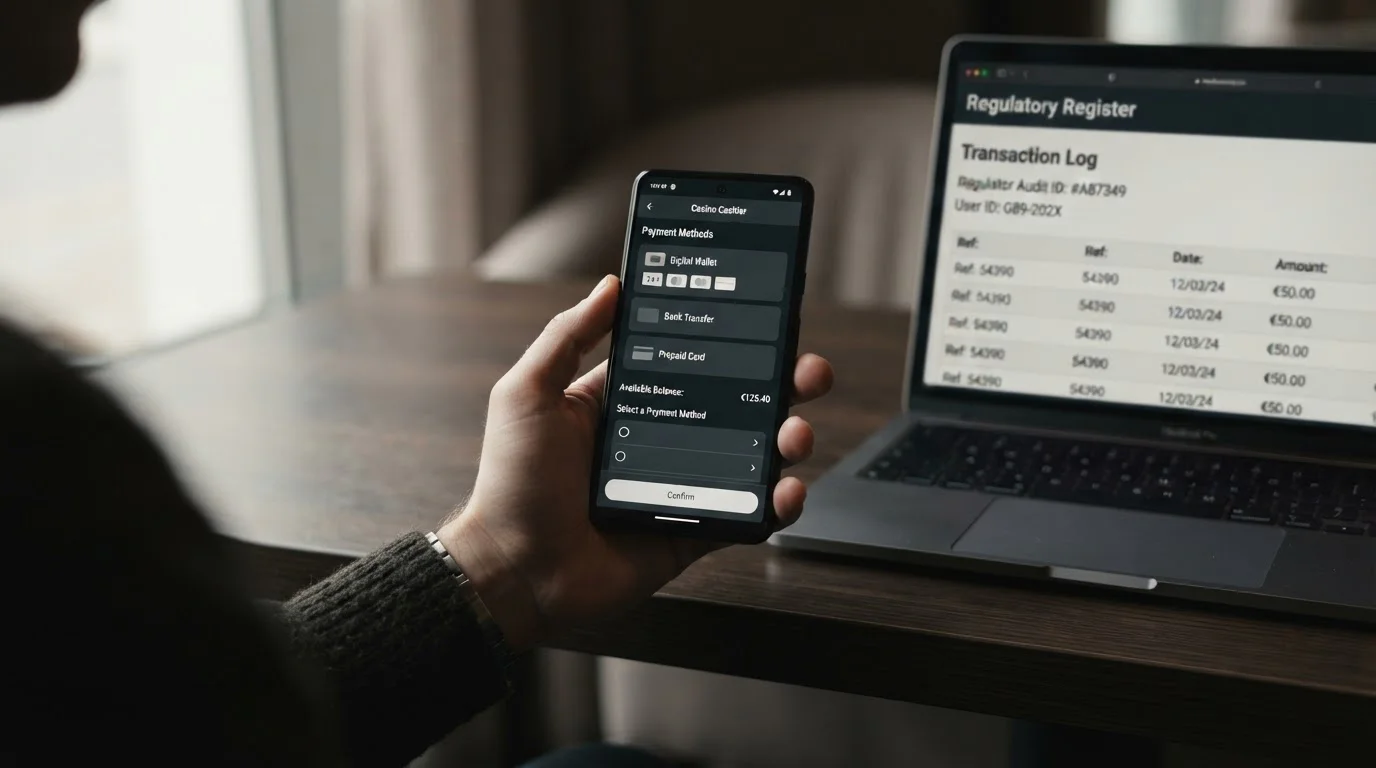
Suppose you find a site that swears it takes UPayCard. Before you create an account or load a penny, treat the claim as something to be tested rather than trusted. The verification is quick, it costs nothing, and it saves you from the two worst outcomes: depositing into an unlicensed site, or depositing through a method that silently fails and ties your money up in a reversal.
The single most reliable check concerns the licence, not the wallet. Every genuinely UK-licensed casino holds a UK Gambling Commission operating licence, and the Commission keeps a public register anyone can search. If the operator’s name does not appear there with an active remote licence, it is not a UK casino regardless of any logo in its footer or any ".co.uk" in its address. An offshore site that accepts UPayCard is still an offshore site, and the payment method does not upgrade its status.
Beyond the register, a handful of practical checks separate a live option from a stale one:
- Open the deposit screen itself, logged in, rather than trusting a payment-methods footer or an affiliate table — footers and affiliate pages go stale long after the integration dies.
- Try the smallest possible deposit first; if the method is dead, a minimum-stake test fails fast and cheaply instead of trapping a larger sum.
- Ask live chat to confirm the method is active for GBP accounts today, and keep the transcript, because “listed” and “working” are not the same claim.
If the cashier passes the licence check and the method genuinely processes a small sterling deposit, you have your answer the hard way. In practice, at a UKGC-licensed site, you will reach the deposit screen and find the familiar roster — cards, PayPal, Skrill, pay-by-bank — with no UPayCard button to press. That absence is not a glitch. It is the market telling you where the method does and does not belong.
How can I tell if a casino is really UK-licensed before depositing?
Search the operator’s exact trading name on the Gambling Commission’s public register. A licensed casino returns an active remote licence with the company named; an unlicensed one returns nothing, whatever its footer claims. Check the licence covers casino play and shows no suspension. The register, not the marketing, is the authority here.
The Licensed Methods That Actually Work
Here is the part that sends you home with something usable. The need behind a UPayCard search is reasonable — a fast, private-feeling way to move money between a bank and a casino without smearing card digits across every cashier. That need is well served in Britain, just not by UPayCard. The methods below all appear at UKGC-licensed casinos, all settle in pounds, and all run through properly authorised providers. Each gets a proper look rather than a logo.
First, the operator picture, because methods live inside casinos. The table below maps major UKGC-licensed brands to the deposit methods they genuinely support, the floor you need to get started, and how quickly money comes back out. None of them support UPayCard; all of them support several of its alternatives.
| Operator | Licence | Withdrawal speed | Minimum deposit | Distinguishing feature |
|---|---|---|---|---|
| bet365 | Hillside, UKGC remote | Card often same day via fast-funds; e-wallet under 24h | £5 | Deepest product range; documents its deposit flows clearly |
| William Hill | Evoke (888), UKGC remote | 1–3 days to card; 24h to e-wallet | £10 | High-street name now on the 888 platform |
| 888casino | 888 UK, UKGC remote | 1–3 days typical | £10 | Longest-running major brand, stable software |
| LeoVegas | LeoVegas, UKGC remote | PayPal in hours; card 1–3 days | £10 | Fastest e-wallet payouts tested in the market |
| Paddy Power | PPB, Flutter, UKGC remote | 1–3 days to card | £5 | Names qualifying methods plainly in bonus terms |
| Betway | Betway, UKGC remote | 1–3 days to card; e-wallet faster | £10 | Strong mobile cashier and live-casino depth |
| Casumo | Casumo Services, UKGC remote | E-wallet under 12h; card 1–3 days | £10 | Mobile-first design, large game library |
| Grosvenor | Rank Group, UKGC remote | 1–3 days to card | £5 | Heritage brand with physical venues to visit |
Skrill
Skrill is the e-wallet UPayCard searchers most often actually want, because it does what they imagined UPayCard would do at a British casino: hold a sterling balance, deposit instantly, and receive withdrawals back into the wallet rather than waiting on a card refund. Owned by Paysafe, Skrill has been a fixture of UK gambling cashiers for well over a decade and sits on the accepted-methods list at the majority of UKGC-licensed operators. It is FCA-authorised as an e-money institution, which is precisely the regulatory footing UPayCard lacks in Britain.
The trade-offs are honest ones. Many casinos exclude Skrill and Neteller deposits from welcome offers, treating e-wallets as a bonus-abuse risk, so the deposit that qualifies for a "generous" spins package is often the plain debit card rather than the wallet. Minimums tend to sit at £10 rather than £5. And Skrill charges its own fees on some transactions, which the casino does not absorb. For a player who values wallet-to-wallet withdrawals and does not mind forfeiting the odd bonus, it is the closest clean substitute for what UPayCard promised.
Neteller
Neteller is Skrill’s sibling under the Paysafe umbrella, and for casino purposes the two are near-interchangeable: an FCA-authorised e-money wallet, widely accepted across UKGC-licensed sites, instant on deposit and quick on withdrawal back to the wallet. If a cashier lists one, it usually lists the other. Players who already keep a Neteller balance from other online spending find the casino integration seamless, and the withdrawal speed comfortably beats a standard card refund.
The same caveats apply almost word for word. Neteller deposits are frequently barred from welcome bonuses, the wallet levies its own fee schedule, and the £10 minimum is common. One extra wrinkle worth naming: because Skrill and Neteller share a parent, some operators treat them as a single "Paysafe wallet" category for bonus exclusion, so switching from one to the other to dodge an exclusion rarely works. As a functioning, licensed, sterling-capable wallet, though, it is everything a UK UPayCard search was reaching for.
PayPal
PayPal is the most recognised e-wallet in Britain and, for many players, the default. At UKGC-licensed casinos it is widely accepted, deposits land instantly, and withdrawals return to the PayPal balance rather than crawling back to a card over several days. The identity and anti-fraud checks PayPal runs are stringent, which is a feature rather than a bug: it is the opposite of the opaque funding that makes a wallet like UPayCard unwelcome here.
PayPal’s weaknesses are specific. It is the e-wallet most often excluded from welcome offers, for the same anti-abuse reasons that catch Skrill and Neteller, and minimums can run higher — £10 to £20 is common. Your casino account name must match your PayPal account name exactly, which trips up players whose details drifted over the years. None of that undermines the core point: PayPal is a licensed, sterling-native, instantly reversible wallet that a British casino will genuinely take, which is more than UPayCard can say.
Apple Pay
Apple Pay is not a stored-value wallet at all, and that is the source of its appeal and its single limitation. It wraps a debit card you have added to your iPhone, iPad, Apple Watch, or Mac in a one-time token, so the casino never sees the card number. Deposits take a Face ID or Touch ID confirmation and land instantly, and the method is accepted at a growing share of UKGC-licensed cashiers. For privacy-minded players who disliked typing card digits — a real slice of the UPayCard audience — it answers the same impulse without any of the regulatory baggage.
The catch is withdrawals. Because Apple Pay holds no balance of its own, money cannot return "to Apple Pay"; it goes back to the debit card behind the token, usually in one to three days. It is also Apple-only, Safari-only on a Mac, and useless to Android owners. Within those bounds it is fast, secure, and unambiguously available at licensed British sites, which makes it a far more realistic deposit route than the wallet you came here to find.
Google Pay
Google Pay is the Android counterpart to Apple Pay and behaves identically: a tokenised wrapper around your debit card, instant on deposit, biometric to confirm, and accepted at a rising number of UKGC-licensed casinos. If you are on an Android phone and wanted a tap-to-pay deposit without card digits, this is the method that actually exists in British cashiers, and it has grown steadily as operators extend their mobile payment stacks.
Its limits mirror Apple Pay’s. Withdrawals route back to the underlying debit card rather than to any Google Pay balance, because there is no balance to hold, and that card refund takes the usual one to three days. Bonus eligibility generally follows whatever rule the casino applies to card deposits, since the token resolves to a card. For the everyday job of getting money into a licensed casino quickly and privately, Google Pay does it, and it does it on hardware most of the country already carries.
Trustly / Pay by Bank
Trustly and the broader pay-by-bank category are the closest thing Britain has to the "straight from my bank, no card, no extra account" feeling that drew people to international wallets in the first place. You pick your bank from a list, log in through the bank’s own secure flow, approve the payment, and the money moves in seconds through open-banking rails regulated by the FCA. There is no wallet to register, no balance to pre-load, and no card number to share. Withdrawals can run back along the same rail, often landing in your bank account faster than a card refund.
This is the method that quietly replaced several defunct instant-banking brands at UK cashiers, and it is spreading across UKGC-licensed sites under labels like Trustly, Pay by Bank, or Instant Banking. The one discomfort is that you authenticate inside your banking app during the deposit, which some players find more exposing than a wallet login, even though the access is read-limited and your credentials are never handed to the casino. For anyone whose real goal was bank-direct movement without a card, this beats UPayCard on every axis that matters in Britain.
paysafecard
paysafecard scratches a different itch: cash. You buy a voucher with a sixteen-digit code at a shop counter, with physical money, and redeem it at the casino cashier with no bank account or card involved. For players who wanted a prepaid, spend-only, hard-to-overspend method — a meaningful part of the prepaid-card appeal behind UPayCard — paysafecard delivers that at a wide range of UKGC-licensed sites, and it caps your exposure at the voucher’s value by design.
Its hard limit is that it is deposit-only. You cannot withdraw winnings to a paysafecard, so you will need a second method — usually a debit card or an e-wallet — registered for cashing out. Voucher values are capped, and large balances mean juggling several codes. Used for what it is, though, it is a licensed, cash-funded, budget-fencing deposit method that exists on real British cashiers, which is exactly the combination UPayCard’s prepaid card promised and cannot deliver here.
MuchBetter
MuchBetter is a mobile-first e-wallet built for exactly this market: it is FCA-regulated, sterling-capable, and deliberately courted the UK gambling sector, so it appears at a solid list of UKGC-licensed casinos. You run it from an app, fund it from a card or bank, deposit with a tap, and receive withdrawals back into the wallet. In spirit it is the closest modern equivalent to the "dedicated gambling wallet" niche that UPayCard once occupied internationally, except that it sits firmly inside UK regulation rather than outside it.
The reach is narrower than Skrill, Neteller, or PayPal — not every operator carries it, so it pays to check the cashier before assuming — and like other e-wallets it is sometimes excluded from welcome offers. Fees are generally light, and the app occasionally sweetens deposits with its own rewards. For a player set on a purpose-built e-wallet with a prepaid-ish feel and proper British licensing, MuchBetter is the method UPayCard searchers should probably have been looking for all along.
Debit Card
The debit card is the unglamorous method that beats all of the above on one metric: it works everywhere. Every UKGC-licensed casino accepts Visa and Mastercard debit cards, deposits are instant, minimums sit as low as £5 at many sites, and the same card receives withdrawals through the standard refund process in one to three days. No app, no wallet registration, no device restriction, no second method needed for cashing out. It is the universal fallback precisely because nothing filters it out.
Two things to know. Credit cards are banned for gambling in Great Britain outright, enforced since 14 April 2020, so only debit cards pass — a credit card wrapped inside any wallet fails the same way. And a direct card deposit does hand your card details to the casino’s payment system, which is the one thing tokenised methods like Apple Pay and Google Pay avoid. If maximum privacy is the goal, pair a card for withdrawals with a tokenised or e-wallet method for deposits. If simplicity is the goal, the card alone covers the entire job.
Which licensed method is the best UPayCard substitute?
It depends on what drew you to UPayCard. For a sterling e-wallet with wallet-to-wallet withdrawals, choose Skrill, Neteller, or MuchBetter. For bank-direct movement with no card, choose Trustly or pay-by-bank. For a cash-funded, spend-only cap, choose paysafecard. For tap-to-pay privacy, choose Apple Pay or Google Pay. All are licensed, sterling-native, and present at UK casinos.
UPayCard, Crypto and Offshore Casinos

If UPayCard is scarce at licensed British cashiers, where does it actually appear? Mostly at offshore casinos and crypto-leaning sites that operate outside UKGC licensing, often under a Curaçao or Anjouan permit, sometimes under nothing verifiable at all. These are the operators that populate the "UPayCard casinos" lists, and the wallet’s crypto-funding options and multi-currency design fit that environment far better than they fit a sterling-settled British site. The method and the venue share a tolerance for looser oversight.
That is precisely why finding UPayCard at a casino should raise your guard rather than lower it. A site outside UK licensing is not bound by the Commission’s rules on segregated player funds, age and identity verification, dispute escalation, or responsible-gambling tools. When a withdrawal is delayed for weeks, or refused on a vague terms-and-conditions technicality, there is no British regulator to complain to and no adjudication scheme to escalate into. The wallet that got your money in offers no help getting it out. The convenience is front-loaded; the risk waits at the exit.
There is also a quieter trap. Some offshore sites route "UPayCard" deposits through intermediary processors that dress the gambling transaction up as something else to slip past card-network rules. That can breach the wallet’s own terms and the card scheme’s rules, and it can get your account or your funding instrument flagged — a problem that follows you well beyond the single deposit. A method that only works when someone is bending the rules behind the curtain is not a method you want holding your money.
The payout-refusal pattern is depressingly consistent, and worth recognising before you are inside it. A deposit clears in seconds. The play goes well, a withdrawal gets requested, and suddenly the site discovers a verification requirement it never mentioned at sign-up: a fresh document, a selfie, a utility bill dated this week, a source-of-funds explanation. Each round of checks resets the clock. Weeks pass, support answers in circles, and the terms contain a clause broad enough to void almost anything. At a licensed British casino that behaviour invites a Commission complaint and independent adjudication. At an offshore site reached through an exotic wallet, the clause is the last word, and the wallet that moved the money in has no part in moving it back out.
Can I use UPayCard at non-GAMSTOP or offshore casinos?
You sometimes physically can, and you still should not. Casinos "not on GAMSTOP" are unlicensed in Britain and sit outside every UKGC protection, so a UPayCard deposit there costs you segregated funds, fair-dispute rights, and any regulator to turn to. If the appeal is dodging self-exclusion, that is a harm signal, not a payment problem.
Deposits, Withdrawals and Fees If You Ever Do Find It
Say you ignore the advice and find a site that takes UPayCard. It helps to understand how the money would actually move, because the mechanics explain a lot of the frustration in the "upaycard withdrawal uk" searches. A deposit from the wallet to the casino is the easy half: you fund the UPayCard balance first — from a bank transfer, a card, or crypto, depending on the version — then push it to the casino, and it arrives more or less instantly, like any e-wallet deposit.
The withdrawal is where it bites. Money generally returns along the route it came, so winnings land back in the UPayCard wallet, not in your bank account, and you then face a second step to move it from the wallet to somewhere spendable — a card load, a bank transfer, or a cash-machine withdrawal on the prepaid card if that card is live for you. Each of those hops can carry its own fee and its own delay, and because the wallet is not sterling-native for most users, a currency conversion can bite on the way in and again on the way out. Two forex spreads and a stack of wallet fees can quietly eat a chunk of a modest win.
Reversals are the other silent problem. A debit-card deposit at a regulated merchant carries a chargeback route: if something goes badly wrong, your bank can claw the money back through the card scheme. Push money through a wallet into an offshore casino and that leverage thins out. The casino received a wallet transfer, not a direct card charge, so the clean chargeback path blurs, and the offshore operator is not answerable to a British dispute scheme in any case. You are relying on goodwill from a site that chose to operate beyond the reach of the regulator who would otherwise hold it to account. Goodwill is not a payment guarantee.
Fees are the part nobody advertises. Where a UKGC-licensed casino is barred from charging you to deposit or withdraw, an international wallet sitting on an offshore site plays by its own schedule: load fees, transaction fees, currency-conversion margins, inactivity fees on a dormant balance, cash-withdrawal fees on the card. The table below sets UPayCard beside the licensed methods on the measures that decide whether a deposit is worth making, and the pattern is not subtle.
| Method | Deposit speed | Withdrawal support | UK licensed-casino availability | Best for |
|---|---|---|---|---|
| UPayCard | Instant once wallet funded | Back to wallet, then extra hops | Effectively none | Offshore/crypto sites only |
| Skrill | Instant | Wallet, under 24h | Wide | Sterling e-wallet, fast payout |
| Neteller | Instant | Wallet, under 24h | Wide | Sterling e-wallet, fast payout |
| PayPal | Instant | Wallet, hours to 24h | Wide | Recognised wallet, strong buyer checks |
| Apple Pay | Instant | Via card, 1–3 days | Growing | iPhone users, tap-to-pay privacy |
| Google Pay | Instant | Via card, 1–3 days | Growing | Android users, tap-to-pay privacy |
| Trustly / Pay by Bank | Instant | Bank, minutes to hours | Wide and rising | Bank-direct, no card, no wallet |
| paysafecard | Instant | Not supported | Wide | Cash budget cap, deposit only |
| MuchBetter | Instant | Wallet, under 24h | Moderate | Mobile-first gambling wallet |
| Debit card | Instant | Card, 1–3 days | Universal | Simplicity, works everywhere |
Are there fees for using UPayCard at a casino?
Potentially several. Unlike UKGC-licensed casinos, which cannot charge you to deposit or withdraw, the offshore sites where UPayCard appears impose no such restraint, and the wallet itself can levy load, transaction, conversion, inactivity, and cash-withdrawal fees. Add two currency conversions for a non-sterling balance and the cost dwarfs a licensed card deposit.
Safety, Legality and Responsible Gambling
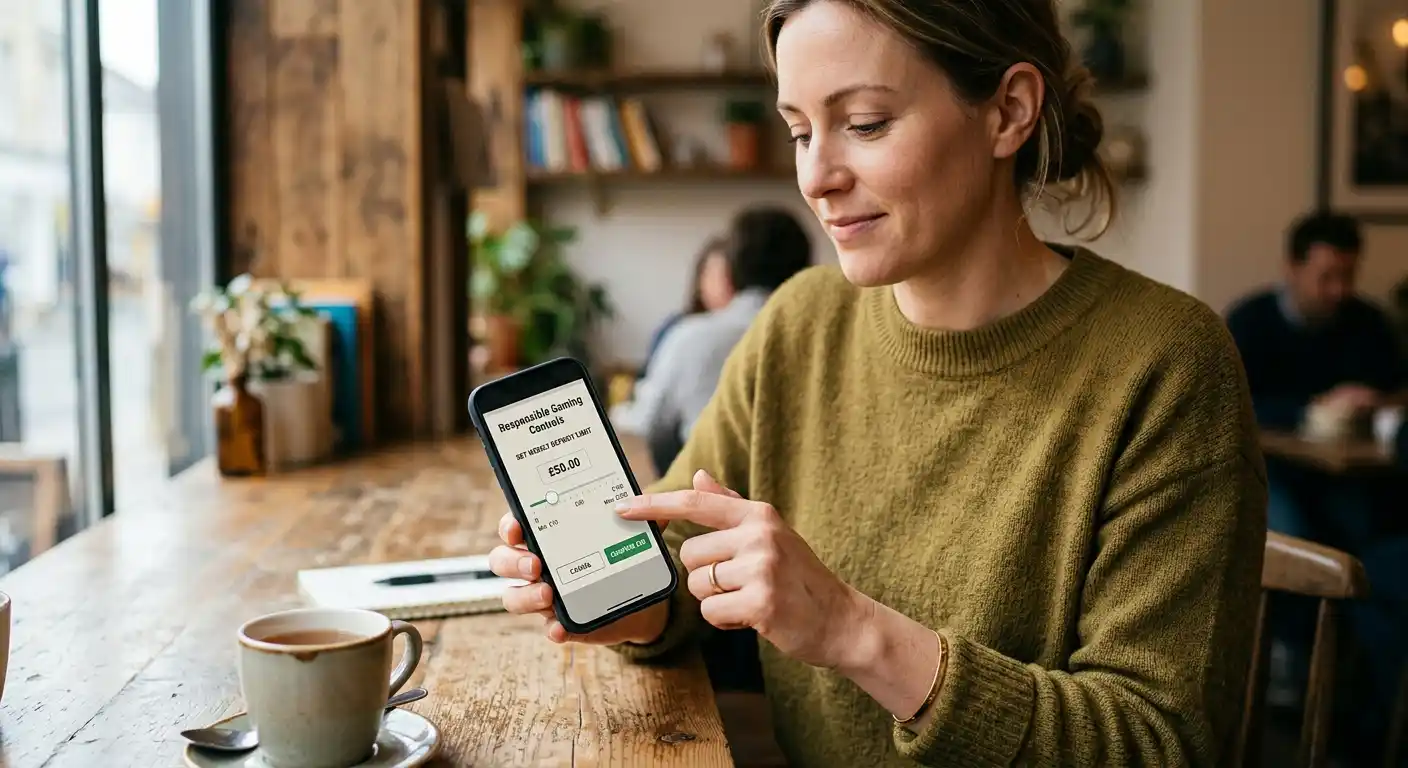
Let us separate two questions that searchers tend to blur. Using UPayCard is not itself illegal in Britain, where it is accessible. Gambling with it at a licensed UK casino is simply not an option, because licensed casinos do not offer it. The legality concern is really a licensing concern: the danger is not the wallet but the unlicensed site you would have to use it on, and that danger is substantial. An unlicensed operator owes you none of the protections that make British gambling comparatively safe.
Those protections are worth spelling out, because they are exactly what you forfeit by chasing a payment method offshore. A UKGC-licensed casino must keep player funds separate from its operating money, verify your age and identity before you play, offer deposit limits and time-outs, and submit to independent dispute resolution when things sour. The Commission backs this with real enforcement — large operators have been fined into eight figures for anti-money-laundering and social-responsibility failures — which is why "licensed" is not a marketing word here but a meaningful promise. No offshore UPayCard site is standing behind any of that.
Every licensed British operator also participates in GAMSTOP, the national self-exclusion scheme, as a condition of its licence. Register once and you are blocked from every UKGC-licensed site for your chosen period, with no early cancellation. That is the mechanism behind a lot of "upaycard casinos no gamstop" searching — people looking for a payment route to a site that ignores their own self-exclusion. If that is the pull, the honest response is not a different wallet. It is the National Gambling Support Network or GamCare, both free and confidential, which help you hold the line rather than find a way around it.
Set a Limit Before You Set Up a Payment Method
The most useful thing you can do before any deposit, by any method, has nothing to do with the payment method at all. UKGC casinos must let you set a deposit limit at registration and tighten it whenever you like, with increases held behind a cooling-off period so you cannot lift a cap mid-session on impulse. A modest weekly figure you can genuinely afford to lose does more to protect your money than any clever choice of wallet, and it works identically whether you deposit by card, PayPal, or pay-by-bank.
Treat a payment method as plumbing, not strategy. The method that gets money into a casino fastest is not the one that keeps you in control; the limit you set is. Pick a licensed method from the shortlist above because it is safe and it works, then let the deposit limit, not the convenience of the rail, decide how much of your money the casino ever sees.
Is it safe to give UPayCard my details for casino play?
The wallet is only as safe as the casino behind it, and for UK players that is usually an unlicensed offshore site. Handing payment and identity details to an operator outside UKGC oversight means no segregated funds, no guaranteed dispute route, no regulator if things go wrong. A licensed method is safer.
Is UPayCard Still Available, and What Happened to It?
The "is UPayCard still active" question deserves a straight answer, with the caveat the name problem forces on it. Depending on which "UPay" product you mean, something by that name may still be operating somewhere in the world — an Israeli card scheme, a crypto wallet pushed through app stores, a Sri Lankan bank wallet, and others all share the label. What matters for this page is narrower and clearer: as a payment method at UKGC-licensed casinos, UPayCard is not a live option, and there is no sign of that changing.
Why the method faded from the British casino conversation is partly the same story that took down other mid-2010s international wallets. UK gambling regulation tightened through the credit-card ban of 14 April 2020, the roll-out of affordability and verification expectations, and ever-stricter demands on who may handle player money. Wallets built for a looser, more international environment did not adapt to Britain’s narrower rules, and operators quietly dropped them in favour of methods that cleared the bar cleanly. The industry-wide shock in early 2018, when a major third-party card issuer’s programme was pulled and the physical prepaid cards tied to several wallets stopped working overnight, hardened the lesson: a payment method only as stable as its weakest regulatory link is a liability in a licensed cashier.
The searches persist because the pages persist. Affiliate tables written when the wallet had a pulse still rank, still carry the year in the title, and still funnel clicks toward offshore sites happy to take them. A "best UPayCard casinos UK 2026" headline is not evidence the method is thriving; it is evidence that an old page got a fresh date. The reliable move in 2026 is to read the licensed-method shortlist above as the real answer and treat the UPayCard framing as the question that led you to it.
Why do so many pages still list UPayCard casinos if it does not work here?
Because stale pages outlive dead integrations. Affiliate tables built when international wallets were common still rank, still get a new year stamped on the title, and still earn clicks that route to offshore sites. The business rewards ranking over cashier accuracy, so a page selling "UPayCard casinos" stays up long after the method died here.
Will UK casinos start accepting UPayCard in the future?
Nothing suggests it. Britain’s regulatory direction is toward tighter control over who handles gambling money, not looser, and the licensed market is already well served by sterling-native, FCA-authorised wallets and bank-direct rails. A wallet with unclear UK footing and no sterling-first design has little reason to clear the bar now.
Published by the Payments-casino-uk team.