Klarna Casinos in the UK — Why Buy Now, Pay Later Stops at the Cashier (2026)
 Available in GB
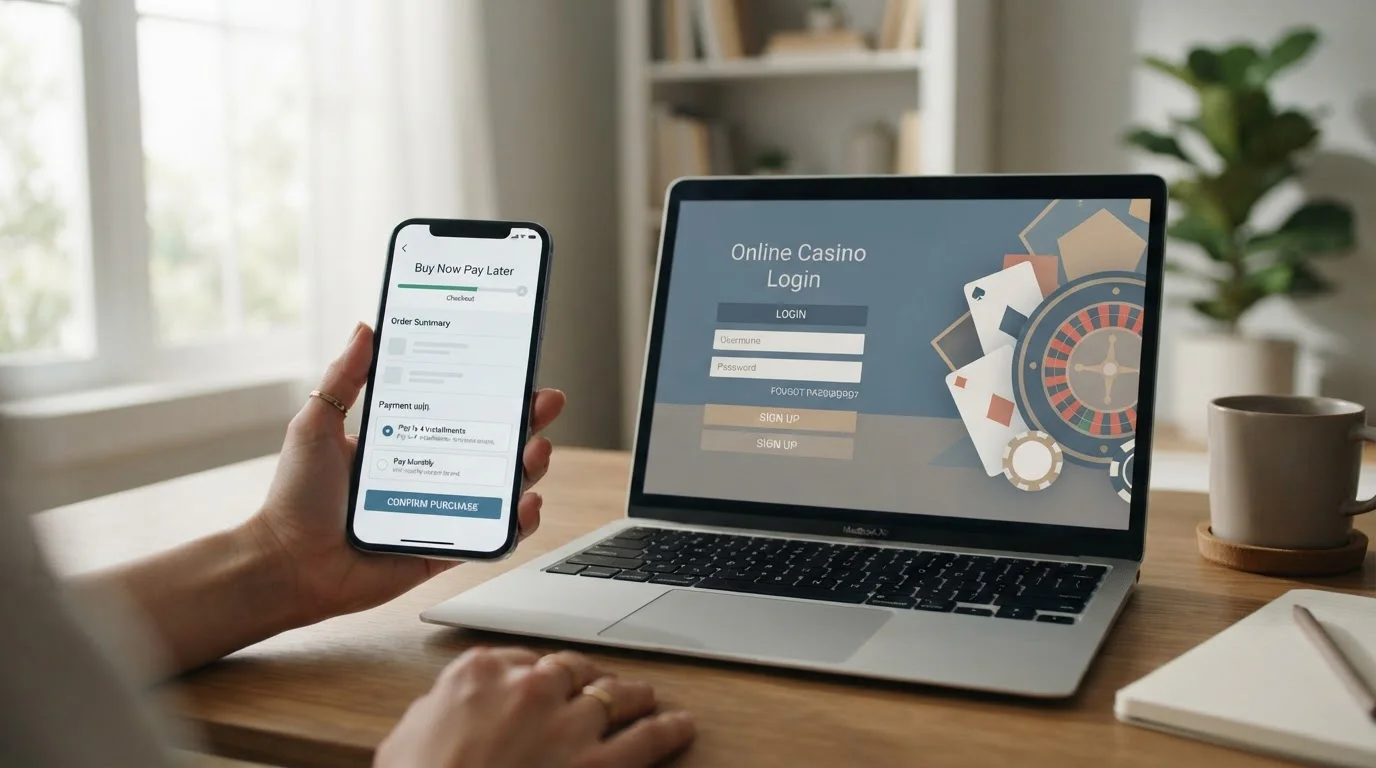
You paid for trainers in three instalments last week without a second thought. So the logic runs: if Klarna handles the shoe shop, surely some casino somewhere takes it too. The honest answer is the one no affiliate page wants to lead with. No UK Gambling Commission-licensed casino accepts Klarna in 2026, and that is not an oversight waiting to be fixed. It is the direct consequence of a rule written specifically to keep borrowed money away from the roulette table.
Klarna is, at its core, a credit product. Its best-known options let you defer payment or split a purchase across instalments, which means someone else fronts the money until you pay it back. Great Britain banned gambling on credit in April 2020. The ban started with credit cards, but the principle behind it reaches every payment that hands you money now and asks for it later. Buy now, pay later sits squarely inside that principle, so the method that breezes through a clothing checkout is a non-starter at a licensed cashier.
That leaves two useful things to sort out. First, why the search term exists at all, given the answer is a flat no, and what the rulebook actually says. Second, the part that matters once the Klarna fantasy is parked: which debit-based and account-based methods do the same job at licensed sites, how fast they pay, and where the genuinely low minimum deposits sit. Everything below is built around the licensed roster, not the offshore detour that pretends the credit ban is optional.
Table of Contents
- Why No UK Casino Accepts Klarna in 2026
- The Credit Ban: Why Borrowed Money and Betting Don’t Mix
- Why People Keep Searching for "Klarna Casinos"
- What Klarna Users Should Use Instead
- UKGC-Licensed Casinos and Their Debit-Based Cashiers
- Responsible Gambling: The Point of the Credit Ban
- Klarna in Retail vs Gambling: Why the Same App Behaves Differently
Why No UK Casino Accepts Klarna in 2026
Start with the thing people assume is a glitch. When a casino cashier does not list Klarna, it is not because the operator forgot, could not be bothered to integrate it, or is waiting on a contract. Three separate walls stand in the way, and any one of them is enough on its own. The regulator forbids gambling on credit. Klarna’s own rules forbid its products being used for gambling. And the payment companies that process casino transactions will not route a credit-based method into a betting merchant. All three point the same direction.
Klarna is a Swedish fintech founded in 2005 in Stockholm, and it grew up as a retail checkout tool, not a gambling wallet. Its headline products are the deferred-payment ones: pay in 30 days, or split the cost across three or more instalments, with longer financing on bigger baskets. Those are consumer credit. The company floated on the New York Stock Exchange in 2025, and by then it was processing payments for hundreds of thousands of retailers worldwide. Retailers. Not bookmakers, not casinos.
There is a subtlety worth naming, because the "pay later" label hides it. Klarna also runs a "Pay Now" option that debits your bank or card immediately, with no credit extended. In a vacuum, an instant debit like that would not trip the credit ban. But Klarna does not slice its service that finely for gambling merchants, and neither does the acquiring side of the industry. The brand is treated as a credit provider as a whole, its merchant terms exclude gambling outright, and no licensed UK operator has struck a deal to carve out the debit-only slice. So even the technically compliant corner of Klarna never reaches the cashier.
The practical upshot is blunt. Every casino that answers the "do you take Klarna" question answers it the same way, whether you ask bet365, Ladbrokes, Sky Vegas or a bingo-led site. The method is absent from the deposit menu, and it is absent for reasons that are structural rather than temporary. Anyone promising otherwise is either describing an unlicensed offshore site or hoping you will not check.
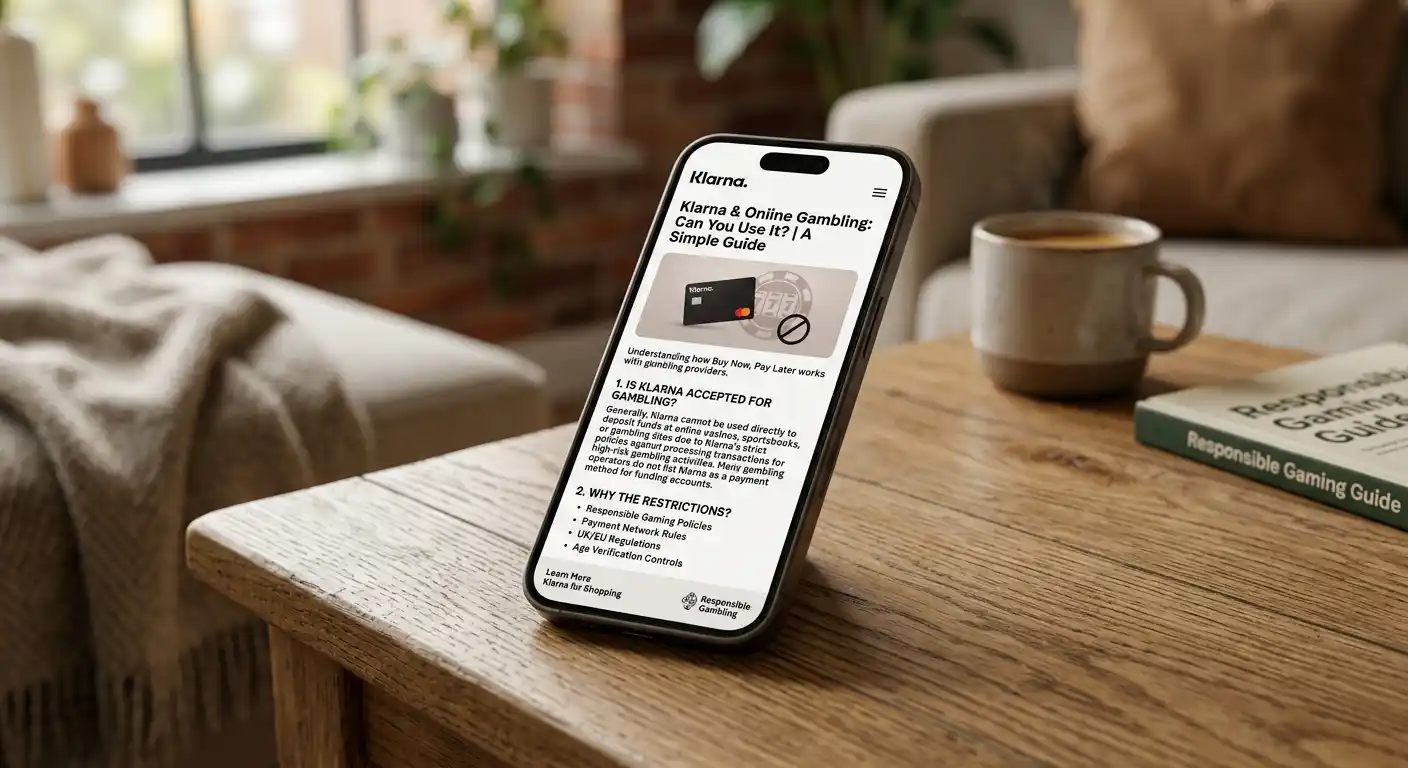
What Klarna Is and How It Actually Works
Klarna is a payment service built around deferring or splitting the cost of a purchase. In a shop checkout, you pick Klarna, confirm a few details, and the goods are paid for in full to the retailer while you settle up with Klarna afterwards. Pay in 30 days gives you a month, interest-free, before the bill lands. Pay in 3 or Pay in 4 breaks the total into equal instalments taken over the following weeks. Longer financing stretches larger purchases over months, sometimes with interest.
The mechanics matter because they explain the gambling problem rather than just asserting it. In every deferred option, the money reaching the merchant is not yours at the moment of purchase. Klarna advances it and you repay. That advance is a line of credit, however short and however interest-free the headline sounds. A soft credit check usually runs when you use the instalment or deferral products, and missed repayments can be reported and chased. This is lending dressed in a friendlier font.
Against that, "Pay Now" is the odd one out: a straight pull from your debit card or bank account, settled instantly, no borrowing involved. It behaves like a debit payment. The reason it still does not help a would-be casino depositor is commercial and regulatory, not technical, and the next sections spell that out. For a reader who only wants the headline, hold onto this: most of what Klarna is famous for is credit, and credit and UK gambling do not mix.
Does any UK casino accept Klarna in 2026?
No. No casino holding a UK Gambling Commission licence accepts Klarna in 2026. Klarna’s deferred and instalment products are consumer credit, and funding gambling with credit is banned in Great Britain. Klarna’s own terms exclude gambling too. Any site claiming to take it is operating outside UK licensing.
Klarna’s Own Rules Say No to Gambling
People fixate on the Gambling Commission and forget the other party in the transaction. Klarna does not want this business either. Its merchant agreements and acceptable-use terms list gambling among the categories it does not serve, which is standard across most buy now, pay later providers. The reputational and regulatory exposure of financing bets is exactly the kind of thing a company heading into public markets prunes from its risk profile.
That self-exclusion closes a door some players assume they can prise open. The theory goes: if Klarna is willing and the casino is willing, the regulator is the only obstacle, and maybe there is a workaround. In reality the willingness is not there on Klarna’s side. Even a licensed operator that somehow wanted to offer it would find the provider unwilling to onboard a gambling merchant category. Two "no" votes, cast independently, before the regulator even weighs in.

The Credit Ban: Why Borrowed Money and Betting Don’t Mix
The rule doing the heavy lifting here is not obscure. In April 2020 the Gambling Commission banned the use of credit cards for gambling across Great Britain, and the reasoning behind that ban is what extends its reach to Klarna. Understanding the "why" is more useful than memorising the "what", because the why is what tells you no clever instrument is going to sneak past it.
The Commission’s case rested on harm data it gathered before the change. Its research found that a meaningful share of people gambling on credit cards showed signs of problem gambling, at a rate well above the figure for gamblers overall, and it estimated that hundreds of thousands of consumers were funding bets on credit. The logic followed quickly: money you have not yet earned is money you cannot afford to lose, and losing it leaves debt plus the temptation to chase those losses with more borrowing. Cut the credit line and you remove the most dangerous fuel.
Buy now, pay later did not feature by name in the 2020 ban, mostly because it was a smaller slice of the market then than it is now. But the ban was never really about the plastic rectangle. It was about the direction of the money. A credit card, an overdraft tapped deliberately, a short-term loan, a pay-in-3 instalment plan — all of them put you in the position the Commission set out to prevent, which is gambling with funds that belong, for now, to someone else. Reading the rule as "credit cards only, everything else is fair game" misses its entire point.
The UK Credit Card Ban (14 April 2020)
The ban took effect on 14 April 2020 and applies to every operator licensed by the Gambling Commission: online casino, online betting, bingo, and the high-street bookmakers, with lotteries funded by remote payment caught too. It was delivered through changes to the Licence Conditions and Codes of Practice that bind UK licensees, so it is not advisory. An operator that let a credit payment through would be breaching its licence, and licences are the thing operators protect above almost everything else.
Enforcement does not rely on the casino manually spotting a credit card. The block sits at the payment layer. When a card or wallet is presented, the processor can read whether the underlying funding source is debit or credit, and a credit source is rejected before the operator is even asked to approve it. That is why a credit card wrapped inside a digital wallet fails just as a bare credit card does — the wrapper changes the convenience, not the funding type underneath. The same reasoning is exactly why a credit-based service like Klarna cannot be slotted in as a workaround.
The scope is Great Britain: England, Scotland and Wales. Northern Ireland runs on separate gambling legislation, and outside the UK entirely, some regulated markets still permit credit-funded gambling. None of that helps a player in Great Britain using a Great Britain-licensed site. The 2023 gambling white paper reviewed the landscape and left the credit ban firmly in place rather than loosening it, so there is no pending reversal to wait for.
Where Buy Now, Pay Later Sits in the Rules
Buy now, pay later occupies a slightly awkward legal space, which is part of why the search confusion persists. For years, much of the sector operated outside the full consumer-credit regulation that governs credit cards, thanks to exemptions designed for short interest-free deferral. That lighter-touch status fed a mistaken hope that BNPL might also escape the gambling credit ban. It does not, and treating it as a loophole gets the logic backwards.
The direction of travel is toward more oversight, not less. The Treasury confirmed that buy now, pay later would be brought under Financial Conduct Authority regulation, with the framework taking shape across 2025 and into 2026. As those rules bed in, BNPL providers face affordability checks and clearer complaint routes much closer to the ones credit card issuers already follow. That makes it even less likely, not more, that any provider would open a gambling channel. A sector being pulled toward stricter affordability rules is not about to start bankrolling bets.
Why do people search for Klarna casinos?
Because Klarna is everywhere in retail, and the habit transfers. Shoppers who split the cost of clothes or electronics assume the same button exists at a casino. Some are chasing a way to bet when their own balance is empty — exactly what the credit ban targets. Others just want a familiar checkout.
Why People Keep Searching for "Klarna Casinos"
The search demand is real even though the product is not, and it is worth being honest about what sits behind it. A large chunk is pure habit transfer. Klarna has spent years embedding its orange button into checkouts across fashion, tech and homeware, and that familiarity breeds the assumption of universality. If it works for the sofa, why not for a Friday-night slot session? The answer is the whole point of this page, but the question is a reasonable one for anyone who has not met the credit ban before.
A second slice is more pointed, and it deserves a direct response rather than a wink. Some of the interest comes from players whose own money has run out and who are looking for a way to keep going on someone else’s. That is not a payments question. That is the precise scenario the Commission legislated against, and the fact that the plumbing blocks it is the system working as designed, not failing you. If the appeal of Klarna here is specifically that it would let you bet funds you do not currently have, treat that pull as a signal worth taking seriously.
Then there is the "not on GAMSTOP" crowd, which the research around this topic is thick with. The pitch from offshore sites is that they will take anything — Klarna, credit cards, whatever — because they answer to no UK regulator. That is true, and it is the problem, not the selling point. A site that ignores the credit ban also ignores the player-protection rules the ban belongs to. The freedom being advertised is the freedom to be unprotected.
Can I use Klarna at casinos not on GAMSTOP?
Some offshore sites outside UK licensing may claim to take Klarna or credit, but that is a warning, not a feature. Sites not on GAMSTOP ignore UK rules on credit, affordability and self-exclusion, and gambling through Klarna breaches its terms too. You would bet on credit with no UK regulator to turn to.
What Klarna Users Should Use Instead
Here is where the page earns its keep. The reason someone reaches for Klarna is usually one of three things: a fast app-based checkout, a low barrier to entry, or the convenience of not typing card details. Every one of those wants is met by a method that is actually accepted at licensed UK casinos — and met without putting you into debt. The table sets out the realistic options side by side, and the breakdowns that follow explain who each one suits.
| Method | Funding type | Deposit speed | Withdrawal route | Typical minimum | Bonus eligibility |
|---|---|---|---|---|---|
| Debit card (Visa/Mastercard) | Your own money | Instant | Back to the card, 1–3 days | £5–£10 | Always qualifies |
| PayPal | Debit card or bank balance | Instant | To PayPal balance, hours | £5–£10 | Usually qualifies |
| Apple Pay | Tokenised debit card | Instant | Back to the card, 1–3 days | £5–£10 | Usually qualifies |
| Google Pay | Tokenised debit card | Instant | Back to the card, 1–3 days | £5–£10 | Usually qualifies |
| Trustly / Pay by Bank | Direct from bank account | Instant | To bank, minutes to hours | £5–£10 | Usually qualifies |
| Paysafecard | Prepaid cash voucher | Instant | Not supported for payout | £5–£10 | Varies by site |
| Pay by Mobile (Boku) | Phone bill or balance | Instant | Not supported for payout | £3–£10 | Often restricted |
Two things stand out once Klarna is removed from the picture. None of these methods lends you money, which is exactly why they are permitted, and several of them deliver the speed and app-convenience people wrongly credit to Klarna alone. The only genuine thing you lose by giving up the Klarna fantasy is the ability to defer payment — and deferring payment on a gamble is the thing the law exists to stop.

Debit Cards
The debit card is the backbone of UK casino payments and the most direct replacement for anyone who liked Klarna’s simplicity. Visa and Mastercard debit are accepted at every licensed operator, deposits land instantly, and because the funds come straight from your current account there is no credit involved and no affordability trap beyond the balance you actually hold. Minimums sit at £5 or £10 at most sites, which undercuts the idea that you need a credit product to start small.
Withdrawals return to the same card through the standard refund rail, usually within one to three banking days, and faster where the operator uses push-to-card services that settle in hours. The trade-off against a wallet is modest: you type the card details once, or save them to the account, rather than tapping a phone. For a player who reached for Klarna out of habit rather than a need to borrow, a debit card does the same job with none of the regulatory friction, and it is the one method no casino will ever refuse.
PayPal
If the appeal of Klarna was the app-wallet feel — a login, a tap, no card numbers on the casino’s screen — PayPal is the closest licensed match. It returned to the UK gambling market and is now carried by most large operators, with instant deposits and a stored balance that behaves like the e-wallet Klarna never was for betting. Crucially, PayPal draws on your debit card or existing balance, not a credit line, so it stays the right side of the ban.
The standout feature is the exit speed. Winnings come back to your PayPal balance rather than queuing behind a card refund, often within hours at the faster operators, and moving that balance to a UK bank is typically free. PayPal also tends to qualify for welcome offers where other wallets are excluded, because operators treat it as a trusted, KYC-checked account. Minimums usually land at £5 to £10. For the player who wanted Klarna’s convenience without Klarna’s debt, this is the obvious first stop.
Apple Pay and Google Pay
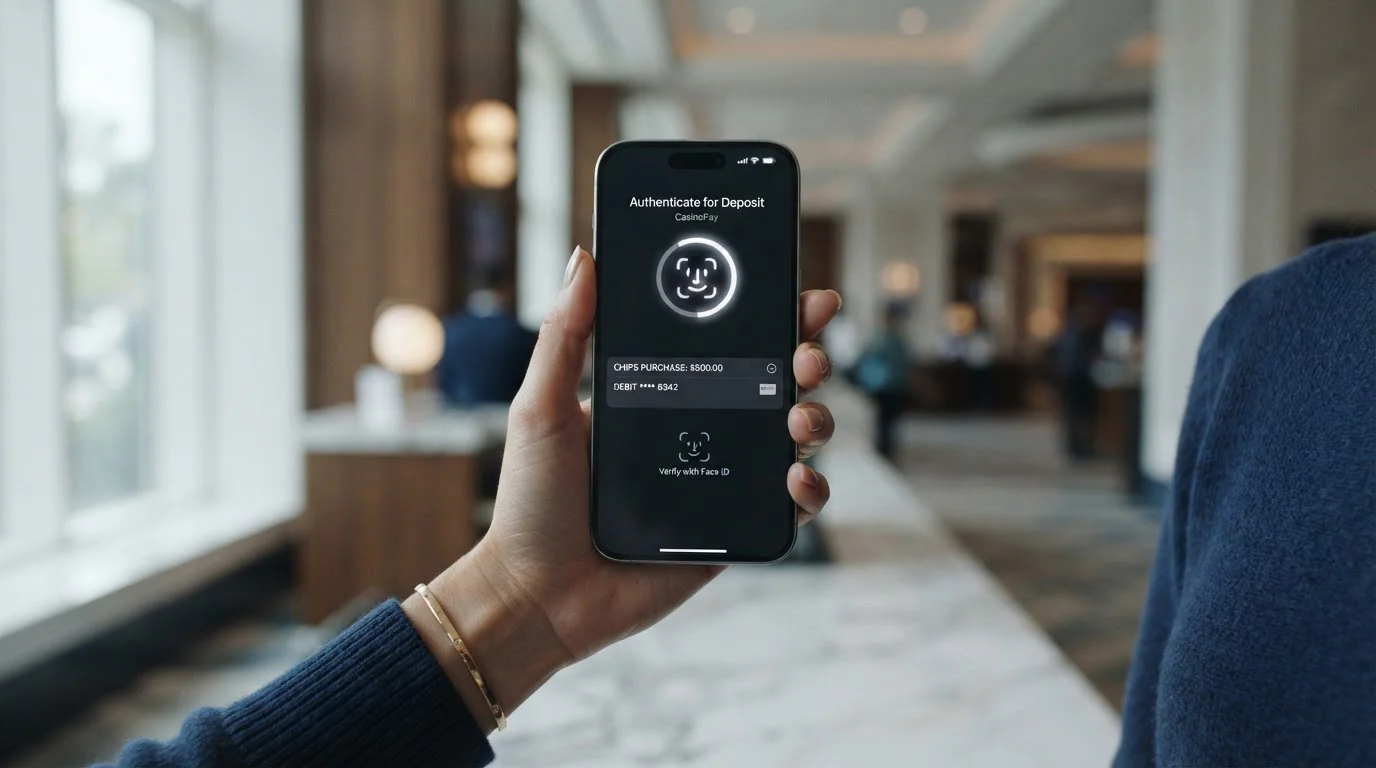
Apple Pay and Google Pay solve the "I don’t want to type my card in" want more neatly than Klarna ever could, because both are built into the phone you already hold. Each is a tokenised wrapper around a debit card: the casino never sees your real card number, a one-time token authorises the payment, and Face ID, a fingerprint or a passcode confirms it. Deposits are instant, and the biometric step makes a stray phone far less useful to a thief than a saved card would be.
The debit-only nature is baked in. Add a credit card to either wallet and a casino deposit will be rejected at the gateway, the same block that catches a bare credit card, which again is why no credit instrument slips through. Withdrawals route back to the underlying debit card rather than to the wallet interface, landing in one to three days. Apple Pay needs an Apple device, and on a Mac it only works in Safari; Google Pay covers the Android side. Between them they fit almost everyone who wanted a tap-to-pay casino deposit.
Trustly and Pay by Bank
For the player who liked that Klarna sat between them and their bank, Trustly and the broader Pay by Bank options offer a cleaner version of that idea. Built on Open Banking, they connect the casino directly to your bank account: you pick your bank, authorise the payment inside your own banking app or login, and the money moves instantly. No card, no wallet to top up, no stored balance — and, pointedly, no credit, because the funds come straight from the account you already have.
The withdrawal story is the real draw. Because the rail runs bank-to-bank, payouts can land in minutes to a few hours rather than waiting on a card refund cycle, which makes it one of the quicker exits in the licensed market. The discomfort some players report is authorising through their bank during the deposit, which feels more exposed than a biometric tap, though the Open Banking framework is regulated and does not hand the casino your banking credentials. Minimums match the rest of the field at around £5 to £10.
Paysafecard
Paysafecard flips the Klarna instinct on its head and, for some players, that is exactly the point. Instead of deferring payment, you pay for a prepaid voucher in advance — with cash or your own card at a shop or online — and then redeem the sixteen-digit code at the casino. The money is spent before you ever reach the cashier, which makes it the strongest built-in spending cap on this list and the polar opposite of borrowing to bet.
It suits a specific profile: someone who wants hard control over how much enters their casino account and is content to lose the ability to withdraw back to the same method. Paysafecard is deposit-only at most sites, so winnings have to leave by another route, typically a debit card or bank transfer you verify on the account. Bonus eligibility varies more than with cards or PayPal, so the offer terms are worth a glance first. As a discipline tool it is genuinely useful; as a payout method it is a dead end.
Pay by Mobile and Boku
Pay by mobile, usually powered by Boku, answers the "I just want it on my phone and I want it tiny" impulse. Deposits are charged to your mobile bill or taken from your pre-pay balance, confirmed with a text, no bank or card details entered at the casino at all. It is about as frictionless as a deposit gets, and it carries a strict low ceiling that doubles as a safety rail.
That ceiling is the headline: UK pay-by-mobile gambling deposits are capped at £30 a day across licensed sites, a limit enforced at the carrier level precisely to stop the method becoming a route to overspending. Withdrawals are not supported, so, like Paysafecard, winnings exit by another verified method. It also sits awkwardly with some welcome offers, which restrict it. But for micro-deposits with a built-in daily brake, it does something Klarna should never have been trusted to do — keep the amount small on purpose.
Is there a buy now, pay later option that works at UK casinos?
No. No buy now, pay later service — Klarna, Clearpay, Laybuy or any rival — can legitimately fund gambling at a UK-licensed casino, because all extend credit and gambling on credit is banned in Great Britain. The providers also exclude gambling. The workable routes are debit cards, PayPal, Apple Pay or Pay by Bank.
UKGC-Licensed Casinos and Their Debit-Based Cashiers
Knowing the method is half the job; knowing where to use it is the other half. The operators below are among the larger UK Gambling Commission licensees, and every one of them runs a cashier built entirely on the compliant methods above — no Klarna, no credit, no exceptions. The comparison table gives the practical parameters at a glance, and the breakdowns underneath cover who each brand actually suits once you have accepted that the deposit will come from your own money.
| Operator | Licence | Withdrawal speed | Minimum deposit | Distinguishing feature |
|---|---|---|---|---|
| bet365 | UKGC (Hillside) | Same-day to card via FastFunds | £5 | Widest method list, strong help docs |
| Ladbrokes | UKGC (Entain) | Within 24 hours typical | £5 | Wager-free spins welcome offer |
| LeoVegas | UKGC (MGM group) | PayPal 1–12 hours | £10 | Fastest e-wallet payouts |
| Sky Vegas | UKGC (Flutter) | Card/Apple Pay 1–4 hours | £5 | Wager-free spins, exclusive slots |
| 888casino | UKGC (888) | 1–3 days | £10 | 27-year platform, own live tables |
| Paddy Power | UKGC (Flutter) | 1–3 days | £5 | Names qualifying methods in terms |

bet365
bet365 is the default recommendation for anyone who liked the breadth of options a wallet like Klarna seemed to promise, because its cashier carries just about every compliant method a UK player could want: Visa and Mastercard debit, PayPal, Apple Pay, Google Pay, Paysafecard and Pay by Bank among them. Deposits start at £5, and the operator is unusually good at documenting each payment flow in its help pages, which spares first-timers the guesswork. Founded in 2000 by Denise Coates in Stoke-on-Trent, it runs under Hillside with a UK Gambling Commission remote licence.
Where it pulls ahead is payout reliability. Verified accounts often see card withdrawals pushed back same-day through faster-payment rails, and the single balance spans casino, sports, poker and bingo without juggling separate wallets. The game library runs past a thousand titles with Playtech and Red Tiger exclusives alongside the usual Evolution live tables. For a player trading the Klarna idea for something that actually works, bet365 covers the widest spread of needs in one account.
Ladbrokes
Ladbrokes earns its place for the welcome offer rather than the heritage, though the heritage is real — a bookmaker since 1886, online since 2000, now part of Entain. The draw for a new player is the wager-free spins package: winnings from the spins land as withdrawable cash with no rollover, which is a cleaner deal than the match bonuses that dominated the market until recently. The Apple Pay and debit minimum sits at £5, keeping the entry low without any need for a credit product.
Behind the brand is Entain’s payment infrastructure, the same engine that powers Coral and BetMGM, which translates into fast, dependable withdrawals — frequently inside 24 hours back to the card. The catalogue stretches past 2,500 titles across slots, live casino and table games, with Evolution handling the dealer side. If the appeal of Klarna was starting small on a Friday night, Ladbrokes lets you do it on a fiver of your own money and keep what the free spins win.
LeoVegas
LeoVegas built its name on mobile, launching in 2012 with a phone-first design back when most casinos treated handsets as an afterthought, and it entered the UK market the following year before MGM acquired the group in 2022. For the player who wanted Klarna specifically for the slick on-phone experience, LeoVegas delivers that polish natively, with a cashier that handles debit cards, PayPal, Apple Pay and Pay by Bank cleanly on a small screen.
Its signature is withdrawal speed. PayPal cashouts have been clocked in the one-to-twelve-hour range, among the quickest in the UK market, while card returns run the standard one to three days. The library is the broadest on this list, past 3,000 titles spanning slots, live casino, game shows and instant-win games, with Evolution covering the full dealer suite. The minimum deposit sits at £10. For anyone whose real priority was getting winnings out fast on a phone, this is the strongest fit here.
Sky Vegas
Sky Vegas is the pick for slot players and for anyone who values seeing a withdrawal clear quickly. Part of Flutter since 2018, it leans into custom-commissioned exclusive slots you will not find elsewhere, and its interface shows return-to-player and volatility more plainly than most, which helps newcomers judge a game before staking. Debit cards, Apple Pay and Pay by Bank anchor the cashier, with a low £5 minimum.
The two features worth the entry are the payout time and the bonus structure. Card and Apple Pay withdrawals have been processed in the one-to-four-hour window, unusually fast for the UK, and the welcome offer runs on wager-free spins — win from them and the cash is yours to withdraw straight away, no playthrough. Flutter’s platform reliability sits underneath it all. For a slots-first player who reached for Klarna out of convenience, Sky Vegas offers speed and fairness without a hint of credit.
888casino
888casino is the endurance entry, live since 1997 and one of the longest-running brands still standing in the UK market. That longevity shows up as stability: the platform loads quickly, handles load well, and runs its own branded live-dealer tables that white-label rivals cannot match. It operates under 888 with a UK Gambling Commission licence, and the cashier runs on debit cards, PayPal, Apple Pay and the usual compliant set, with a £10 minimum.
The deposit floor is a touch higher than the £5 brigade, and the standard welcome match is mid-tier rather than spectacular, but neither is restrictive. Withdrawals average one to three days. The group also absorbed William Hill’s UK operation, so a William Hill casino account now runs on much the same infrastructure. For a player who values a platform with a long track record over the newest shiny offer, 888casino is a steady, credit-free home that has outlasted most of its competitors.
Paddy Power
Paddy Power is the operator that takes the guesswork out of bonus eligibility, which matters more than it sounds once you have swapped Klarna for a compliant method. It is among the few that name qualifying deposit methods directly in its welcome-offer terms — debit card and Pay by Bank style options spelled out, e-wallets flagged where excluded — so you know before depositing whether your fiver counts toward the offer. It runs under Flutter with a UK Gambling Commission licence, minimum deposit £5.
The brand itself launched in 1988, went online in 2000, and now sits in the same stable as Betfair and Sky Vegas. The casino carries past 2,000 games with Evolution and Pragmatic Play doing the heavy lifting, and daily promotions add a loyalty layer beyond the welcome hook. Withdrawals return to the card in one to three days. For anyone who wants certainty that their deposit method qualifies — the certainty Klarna could never give them here — Paddy Power writes it down in black and white.
Which licensed casino is best for low deposits?
Several match the lowest floor. bet365, Ladbrokes, Sky Vegas and Paddy Power all take a £5 minimum on debit cards and compliant wallets, so you can start on a fiver of your own money. If you want a hard cap instead, pay by mobile limits gambling top-ups to £30 a day.
Responsible Gambling: The Point of the Credit Ban
It is easy to read the credit ban as bureaucratic meddling until you remember what it is actually guarding against. The rule exists because gambling with borrowed money is one of the clearest routes from a hobby into harm, and Klarna’s absence from the cashier is that protection working rather than failing. Taking the ban seriously means using the tools that sit alongside it, all of which are built into every licensed operator by requirement, not goodwill.
The honesty test is worth applying to yourself. If the reason Klarna appealed was convenience — the tap, the app, not typing a card — then any of the debit-based methods above solves that cleanly and you have lost nothing. If the reason it appealed was that it would let you deposit money you do not currently have, that is the harm signal the entire framework is designed to catch, and the better move is to step back rather than to hunt for a provider that has not yet closed the gap.

Deposit Limits and GAMSTOP
Every UK Gambling Commission licensee must offer deposit limits and must let you set them at registration and tighten them whenever you like. Daily, weekly or monthly caps take effect within minutes, and while lowering a limit is immediate, raising one triggers a cooling-off delay so you cannot lift it on impulse mid-session. Setting a weekly figure you can comfortably lose, before your first deposit, is the single most effective habit on offer — and it works on a debit balance, where there is a real ceiling, far better than it ever could on a credit line.
GAMSTOP is the heavier tool: a national self-exclusion scheme that blocks you from every UK-licensed operator for six months, one year or five years once you register. It covers casino, betting, bingo and poker across all licensees, takes effect within a day, and cannot be cancelled early by design. The "Klarna casinos not on GAMSTOP" searches are, bluntly, searches for a way around this protection, and the sites that answer them are the ones with no player safeguards at all. If GAMSTOP feels necessary, that feeling is information worth acting on.
Getting Support
If the pull toward funding bets on credit is strong enough that Klarna looked like a solution, free and confidential help exists and does not involve a payment method at all. The National Gambling Support Network and GamCare both run advice lines and online chat, with the GamCare helpline reachable on 0808 8020 133 at no charge. They help with the underlying pressure, not with finding another way to keep going.
Framing this as a payments problem is the mistake the offshore sites want you to make, because it keeps the conversation on which button to press rather than whether to press it. The licensed market’s refusal to take Klarna, and its insistence on deposit limits, affordability checks and self-exclusion, is the same instinct from the other side. Use the tools before a problem hardens, not after.
What happens if I try to fund gambling with a Klarna loan?
At a licensed UK casino you cannot — Klarna is not in the cashier, so there is no transaction to attempt. Fund a different method with borrowed money, or use Klarna elsewhere to free up cash for betting, and you sidestep the credit ban and risk debt on losses. Klarna’s terms forbid it.
Klarna in Retail vs Gambling: Why the Same App Behaves Differently
The detail that confuses people most is that Klarna plainly works at the shop and plainly does not at the casino, with no obvious difference in the app itself. The difference is invisible to you but central to the plumbing: the merchant category code. Every merchant is tagged with a code that says what kind of business it is, and gambling has its own. Payment systems read that code and apply rules to it, which is how the credit ban can be enforced automatically without a human checking each transaction.
When you pay for trainers, the retailer’s code is a clothing or general-goods category, and Klarna’s credit flows through without issue because nothing in the rulebook forbids buying trainers on a deferral. Point the same payment at a merchant tagged with the gambling code and the logic changes entirely. Klarna’s own systems decline the gambling category under its acceptable-use terms, and even if they did not, the acquiring banks that handle casino payments screen credit-based methods out to satisfy the licence conditions. The app is the same; the category it is pointed at is not.
This is also why the occasional "it worked for me" anecdote should be treated with suspicion rather than envy. Where a credit-based payment appears to have slipped through to a gambling site, it almost always means the merchant was miscoded — the transaction was dressed up as something other than gambling — which is a practice that breaches the payment networks’ rules and tends to get the player’s account flagged rather than rewarded. On a properly coded, properly licensed UK casino, there is no gap to exploit, and that is the condition you actually want to be gambling under.
The cleaner mental model is to stop thinking of Klarna as a universal payment button and start thinking of it as a retail credit tool with a defined perimeter. Inside that perimeter — shops, interest-free deferral on goods — it does what it says. Gambling sits firmly outside it by the deliberate choice of the regulator, the provider and the payment industry all at once. Reaching for the debit-based alternatives is not a downgrade forced on you by red tape; it is the arrangement that keeps a night’s entertainment from quietly turning into next month’s repayment problem.
Published by the Payments-casino-uk team.