Which Small Deposit Tier Actually Works: £1, £5, £10 and £15 in 2026
 Available in GB

Search for a £1 deposit casino and you will find a hundred pages promising one. Open the cashiers behind those pages and the number quietly becomes £10. That gap between the headline and the cashier is the whole story of low-deposit casinos in the UK, and it is worth understanding before you move any money at all.
Four figures dominate these searches: £1, £5, £10 and £15. They are not four equal options. One of them is the genuine market standard, one is a realistic floor at a decent number of brands, one survives mostly as a marketing hook tied to specific payment methods, and one barely exists as a headline minimum at all. The amount that actually appears in the cashier depends less on the casino and more on how you choose to pay.
This guide sorts the four tiers at UK Gambling Commission-licensed sites: which brands set which floor, which payment methods accept the smallest amounts, where the minimum withdrawal quietly outranks your deposit, and how the bonus-qualifying threshold (usually £10, sometimes £15) sits above the minimum you are allowed to put in. No offshore sites, no "not on GAMSTOP" detours, no invented numbers. Just the licensed roster and the mechanics behind it.
Table of Contents
- The Four Tiers at a Glance
- Best Low Deposit Casinos Compared (2026)
- The £1 Deposit Tier: Marketing Versus Reality
- The £5 Deposit Tier: The Realistic Floor
- The £10 Deposit Tier: The Market Standard
- The £15 Deposit Tier: The Odd One Out
- Which Payment Methods Accept the Smallest Deposits
- Minimum Withdrawal Versus Minimum Deposit
- Bonus-Qualifying Thresholds and the 10x Wagering Cap
- Fees, Limits and What a Small Deposit Really Buys
- Low Deposits and Non-GAMSTOP Claims
- How We Ranked the Low Deposit Tiers
- Setting a Budget: Deposit Limits and Responsible Play
The Four Tiers at a Glance
A low deposit is not one threshold. Operators publish a general minimum, individual payment methods carry their own floors on top of that, and the sum required to trigger a welcome offer sits higher again. Treat the four numbers as a ladder rather than a menu, and the picture clears up quickly.
| Tier | How common at UKGC sites | Usual route in | What it realistically buys |
|---|---|---|---|
| £1 | Rare, mostly legacy or promo-driven | Pay-by-mobile, a handful of spins offers | A few minutes of play or a fixed batch of spins |
| £5 | Fairly common | Debit card, pay-by-mobile, Apple Pay, Google Pay | A proper short session, rarely the full welcome offer |
| £10 | The market standard | Every method, cards to open banking | Standard play plus most welcome offers |
| £15 | Uncommon as a headline floor | Shows up as a bonus or method threshold | Nothing a £10 deposit does not, unless an offer demands it |
The honest ranking: £10 is the number you will meet most often, £5 is the realistic low end, and £1 and £15 are the outliers for opposite reasons. The £1 figure is squeezed below what most cashiers accept, so it clings to specific methods and the odd promotion. The £15 figure sits above the common minimum, so it only matters when a particular offer or payment route sets it. Everything below expands on why, with named operators and the payment plumbing that decides the real floor.
One rule holds across all four tiers. A licensed operator must verify your age and identity, must offer deposit limits, and since 19 January 2026 cannot attach a wagering requirement above ten times the bonus to anything it gives you. Those protections do not shrink because your deposit is small. If anything, the small deposit is the sensible way to test whether a cashier behaves before you trust it with more.
Best Low Deposit Casinos Compared (2026)
The table below gathers nine UKGC-licensed operators that sit at the £5 or £10 floor, the two tiers that actually populate a licensed cashier. Minimums reflect the standard cashier figure as of 2026; where a welcome offer demands more, the operator breakdown underneath spells it out. Withdrawal speed assumes a verified account, because the first payout always takes longer.
| Operator | Licence (UKGC licensee) | Min deposit | Withdrawal speed | Distinguishing feature |
|---|---|---|---|---|
| bet365 | Hillside (UK) Ltd | £5 | Often same day (Visa FastFunds) | Largest all-round platform, fastest card route |
| MrQ | MrQ Limited | £5 | Same day to 24 hours | No wagering on any bonus, ever |
| Ladbrokes | LC International Ltd (Entain) | £5 | Within 24 hours | Wager-free spins on a low first deposit |
| Coral | LC International Ltd (Entain) | £5 | Within 24 hours | Same platform as Ladbrokes, 24/7 phone support |
| Sky Vegas | Bonne Terre Ltd | £10 | One to three days | Exclusive in-house slots, clear game info |
| 888casino | 888 UK Ltd | £10 | One to three days | Longest-running major brand, stable software |
| PlayOJO | SkillOnNet Ltd | £10 | Same day via e-wallet | Zero wagering across the whole site |
| Casumo | Casumo Services Ltd | £10 | Under 24 hours via e-wallet | Gamified loyalty, large game library |
| Mr Vegas | Videoslots Ltd | £10 | One to two days | Thousands of titles, flat no-nonsense bonus |
The ranking inside the table leans toward value at the lowest realistic deposit: the £5 brands sit above the £10 ones because a fiver genuinely starts an account there, and bet365 leads its tier on payout speed and platform depth. None of these entries is a "best casino" in the abstract. They are the operators where a small deposit is both accepted and sensible, which is a narrower claim and a more useful one.

bet365 Casino
bet365 is the default comparison point for almost any UK payments question, and small deposits are no exception. The £5 cashier floor applies across cards, Apple Pay and pay-by-mobile, and the platform’s Visa FastFunds support means a withdrawal to a debit card can land the same day once you are verified. For a low-deposit player that speed matters more than the headline bonus, because the whole point of a small stake is a quick, clean loop in and out.
Hillside (UK) Ltd holds the UKGC remote licence. The group was founded in Stoke-on-Trent in 2000 by Denise Coates, and the casino sits inside a single balance shared with sports, poker and bingo, so a £5 deposit is not locked to one product. The library runs past 1,500 titles with Playtech and Red Tiger exclusives. The welcome offer changes often and usually asks for more than the £5 minimum to qualify, so read the active terms before assuming your fiver triggers it. As a place to test a small deposit and get it back fast, bet365 is hard to beat.
MrQ Casino
MrQ built its whole identity on one promise: no wagering on anything. Every bonus and every free spin pays out as withdrawable cash with no playthrough, which is unusual enough that it reshapes how a small deposit behaves. Deposit £5, win from a spins offer, and the winnings are yours rather than a figure you must churn ten times first. For low-deposit players, who rarely have the bankroll to clear a wagering requirement anyway, that structure is worth more than a bigger "free" headline at a rival.
MrQ Limited holds the UKGC licence and runs a deliberately stripped-back cashier, historically debit-card led with pay-by-mobile support for the smallest top-ups. Sources differ on whether the current floor is £5 or £10, so confirm it in the cashier on the day; either way it sits at the low end. The trade-off is scope: MrQ is a focused casino and bingo site, not a sprawling multi-product group, and its promotions are modest by design. If you want the cleanest possible relationship between a small deposit and withdrawable winnings, this is the standout.
Ladbrokes Casino
Ladbrokes pairs a £5 cashier floor with wager-free spins on a qualifying first deposit, a combination that suits the low-deposit player better than most of the market. Winnings from those spins land as cash, not as a bonus balance shackled to a rollover. The Entain platform underneath delivers withdrawals back to a debit card usually within 24 hours, so the money does not linger once you ask for it.
LC International Ltd carries the UKGC licence under the Entain group. Ladbrokes started as a bookmaker in 1886, moved online in 2000, and merged with Coral in 2016 before the enlarged group became Entain. The casino library sits around 2,500 titles with Evolution running the live tables. A £5 deposit will not always clear the full qualifying threshold for the headline spins offer, which often sits at £10, so check whether your fiver qualifies or whether you need to round up to unlock the promotion.
Coral Casino
Coral shares everything structural with Ladbrokes: the same Entain platform, the same £5 floor, the same roughly 24-hour payouts to card. What it adds is 24/7 phone support, a genuine rarity among online-only brands and a comfort if a small deposit ever gets tangled in verification. The welcome spins package is smaller than its sibling’s, but the mechanics and the low entry point are identical.
LC International Ltd holds the licence here too, so the two brands are regulatory twins. Coral was founded by Joe Coral in 1926, went online in the 2000s, and joined Ladbrokes in the 2016 merger. The demographic skews slightly older and the slot mix leans a touch more classic, but for a £5 deposit the choice between Coral and Ladbrokes comes down to whether you want the larger spins offer at Ladbrokes or the phone line at Coral. The money behaves the same way at both.
Sky Vegas
Sky Vegas raises the floor to £10, which is the market standard rather than a penalty, and earns its place through its library. The site commissions exclusive in-house slots you will not find elsewhere and displays return-to-player, volatility and minimum stake more plainly than most cashiers bother to. For a £10 player feeling their way into slots, that transparency is a real advantage: you can see what a game costs per spin before you commit the deposit to it.
Bonne Terre Ltd holds the UKGC licence for the Sky Betting & Gaming brands, now part of the Flutter Entertainment group. The welcome offer typically runs a batch of no-deposit spins followed by more on a qualifying £10 deposit, and withdrawals route back to your card over one to three days. Sky Vegas will not give you a £5 entry, but at £10 it offers a cleaner, better-labelled slot floor than most rivals at the same price.
888casino
888casino is the longest-running major brand still standing in the UK, live since 1997, and that longevity shows in software that rarely stutters under load. The £10 cashier floor is standard for the tier, and the platform’s own branded live tables give it something the white-label crowd cannot copy. For a small-deposit player who values a cashier that simply works over a flashy welcome headline, 888 is a dependable pick.
888 UK Ltd holds the UKGC remote licence, with the parent 888 Holdings based in Gibraltar. In 2022 the group absorbed William Hill’s UK operations, so William Hill Casino now runs on 888’s platform with a near-identical library and cashier. The welcome offer is a mid-range match rather than anything spectacular, and e-wallet deposits are sometimes excluded from it, so a £10 card deposit is the safer qualifying route. Ignore any "bonus code" an affiliate page invents; trust only what the live cashier confirms.
PlayOJO
PlayOJO is the £10 tier’s answer to MrQ: zero wagering on every bonus across the entire site, not just a flagged promotion. Win from the welcome spins and the cash is withdrawable immediately. General play can start lower than £10 on some methods, but the no-wagering welcome spins are pinned to a £10 qualifying deposit, so treat £10 as the number that unlocks the headline offer. The payment menu is broad, covering debit cards, Apple Pay, PayPal and Trustly, which gives a small depositor room to pick the cheapest route in.
SkillOnNet Ltd holds the UKGC licence and operates PlayOJO alongside a stable of other brands on shared infrastructure. The loyalty scheme, OJOplus, pays cashback on every wager with no strings, which again favours the steady low-roller over the jackpot chaser. E-wallet withdrawals can clear the same day. If the wagering-free promise is what you are after but you want a bigger library than MrQ offers, PlayOJO is the natural £10 choice.
Casumo Casino
Casumo wraps a £10 deposit in a gamified shell: levels, missions and rewards that treat casino play like a slow video-game climb. Underneath the decoration sits a large library past 3,000 titles and reasonably quick e-wallet payouts, often under 24 hours once verified. The match-bonus welcome offer now runs under the 10x wagering cap introduced in January 2026, so the rollover on a £10 deposit is a fraction of what the same offer demanded two years ago.
Casumo Services Ltd holds the UKGC licence, with a Malta licence covering international markets. The brand launched in 2012 as a mobile-first operator and still treats the phone as the primary screen, which suits players who deposit a tenner from an app rather than a desktop. The gamified layer is a nice-to-have rather than a reason to choose it, but the combination of a big library, a capped-wagering bonus and sub-day e-wallet cashouts makes Casumo a solid middle-of-the-road £10 option.
Mr Vegas Casino
Mr Vegas trades on sheer breadth. The library runs into the thousands, drawn from a long roster of studios, and the bonus structure is deliberately flat and readable rather than layered with tiers. The £10 floor is standard, withdrawals clear in one to two days, and the cashier takes the usual spread of cards and e-wallets. For a small depositor who wants maximum choice of games per tenner without decoding a baroque promotion, Mr Vegas keeps things plain.
Videoslots Ltd holds the UKGC licence and operates Mr Vegas within its wider group, which means the backend shares the same tested payment processing as its sibling sites. The welcome offer is a straightforward match on a £10 deposit under the current wagering cap, with no no-deposit spins gimmick attached. It will not win on bonus theatre, and it does not try to. What it offers the low-roller is a very large shelf and a bonus you can actually read.
Is a £5 deposit enough to start playing properly?
Yes, at the £5 brands it starts a real account rather than a token one. A fiver at bet365, MrQ, Ladbrokes or Coral funds a short slot session or a handful of low-stake hands, and your own winnings stay withdrawable throughout. What £5 rarely does is clear a welcome-offer threshold, which usually sits at £10, so expect play without the full bonus unless you deposit more.
The £1 Deposit Tier: Marketing Versus Reality
The £1 deposit casino is the most searched and least real of the four tiers. Pages advertising it rank well because the phrase is irresistible, but the cashiers behind the promise almost always set a higher floor once you log in. A genuine £1 minimum at a UKGC-licensed site is rare, and where it survives it is usually bolted to a specific payment method or a fixed promotional offer rather than being a true free choice of amount.
Where £1 does appear, pay-by-mobile is the usual mechanism. Charging a deposit to your phone bill through a provider like Boku lets a casino accept very small amounts, though in practice the floor tends to sit around £3 per transaction with a daily cap near £30, not the advertised pound. The second home of the £1 figure is the fixed promotional deposit, the "£1 for 80 spins" style offer, where the amount is set by the promotion rather than chosen by you. Those offers exist, but they are a marketing structure, not a standing minimum you can repeat.
The practical problem with £1 is that it buys almost nothing. A single pound at penny stakes is a few minutes of spins, and any winnings small enough to come from a pound deposit will often sit below the site’s minimum withdrawal, which is covered further down and is the real trap of the lowest tier. Pay-by-mobile also cannot receive withdrawals, so a £1 pay-by-phone deposit means lining up a second method before you can ever cash out. The tier is less a bargain than a demonstration of how the cashier works.
There is also a honesty issue baked into many £1 results. A large share of sites ranking for "£1 deposit casino" are offshore operations outside UKGC oversight, which can set any floor they like precisely because no British rules bind them. A licensed operator has every incentive to set a workable minimum and verify you properly; an unlicensed one has an incentive to take your pound and make the exit difficult. If a £1 offer looks too generous for the licensed market, that is usually because it is not in the licensed market.
Are £1 deposit casinos genuine in the UK?
Rarely as a free-choice minimum. Most £1 results either advertise a figure the cashier raises to £5 or £10 once you log in, or they are offshore sites outside UKGC oversight. Where £1 is real, it is usually a fixed promotional deposit or a pay-by-mobile charge, and the winnings often fall below the minimum withdrawal.
The £5 Deposit Tier: The Realistic Floor
If £1 is the fantasy, £5 is the honest low end of the licensed market. A solid group of established brands accept a fiver as a standard deposit, and crucially they do it across mainstream payment methods rather than hiding it behind one awkward route. bet365, Ladbrokes and Coral all sit here, as does MrQ with its no-wagering structure, which makes £5 the smallest amount worth planning a session around.
The reason £5 works where £1 does not is processing economics. A card or wallet transaction carries a small fixed cost to the operator regardless of size, and at £5 that cost is still a sensible fraction of the deposit. Below that, the overhead starts to eat the transaction, which is why operators who would happily take your fiver balk at a pound. Debit cards, Apple Pay, Google Pay and pay-by-mobile all commonly clear the £5 bar; some e-wallets set their own £5 or £10 floor on top, so the method can raise the minimum even when the casino would allow less.
What £5 still does not reliably do is unlock the welcome offer. The qualifying deposit for most UK promotions sits at £10, occasionally £15, which means a £5 deposit funds play but forfeits the headline bonus. That is not always a loss. A no-wagering site like MrQ or PlayOJO hands you a bonus worth keeping, whereas a £5 deposit chasing a heavily conditioned offer at another brand often leaves you churning a balance you were never going to clear. For the low-roller, matching the deposit to whether the offer is worth qualifying for matters more than the offer’s size.
Which UK casinos genuinely accept a £5 deposit?
At the licensed end, bet365, Ladbrokes, Coral and MrQ all take a £5 cashier deposit as standard, across cards and usually pay-by-mobile. A £5 deposit funds real play and keeps your own winnings withdrawable, but it rarely meets the £10 qualifying threshold most welcome offers set, so expect to play without the full bonus unless you deposit more.
The £10 Deposit Tier: The Market Standard
Ten pounds is the number the UK market is actually built around. It is the most common cashier floor, it matches the qualifying deposit for the majority of welcome offers, and it clears the minimum on every mainstream payment method without friction. When a comparison page talks loosely about "low deposit casinos," this is almost always the tier it means, whatever smaller figure sits in the headline. The merged searches for a "10 pound minimum deposit casino" all land here, and for good reason: it is where supply and demand meet.
The practical advantage of £10 is that it removes the guesswork. At £5 you have to check whether your chosen method raises the floor and whether the deposit qualifies for the offer; at £10 both questions usually resolve to yes. Sky Vegas, 888casino, PlayOJO, Casumo and Mr Vegas all sit here, covering slots specialists, no-wagering sites, gamified platforms and sheer-volume libraries. The tier is broad enough that the choice becomes about the casino’s character rather than whether it will take your money.
Ten pounds also sits at a sensible place for the bonus mechanics. A typical offer matches the deposit or adds spins on a £10 qualifying amount, and under the 10x wagering cap in force since 19 January 2026 the rollover on that bonus is finally proportionate. A £10 match bonus of £10 now carries at most £100 of wagering rather than the £350 to £400 the old 35x-to-40x requirements demanded. For a player depositing modestly, that cap is the single biggest improvement to the value of a low deposit in years. It does not make a bonus "free", but it makes one worth claiming.
The one thing £10 does not guarantee is a matching withdrawal floor. Plenty of £10-deposit sites set a £10 or even higher minimum withdrawal, which is fine until a short session leaves you with £7 you cannot extract. That mismatch belongs to the next section, because it is the quiet mechanic that catches more small depositors than any bonus term.
Why do most welcome offers ask for a £10 deposit?
Because £10 is the point where the bonus economics work for the operator and the player both. It is large enough to cover the cost of funding a match or spins package, small enough to stay accessible, and it aligns with the standard cashier floor. Deposits below £10 usually fund play but fall short of the qualifying threshold, so the offer does not trigger.
The £15 Deposit Tier: The Odd One Out
Fifteen pounds is the tier that barely exists as a headline minimum. Almost no UKGC-licensed operator sets £15 as its standing cashier floor; the number is too specific and sits awkwardly above the clean £10 standard. Where £15 turns up, it is nearly always a threshold set by something other than the general minimum, and understanding which something saves you from treating it as a tier in its own right.
The first place £15 appears is the bonus-qualifying deposit. An operator running a promotion might require £15 rather than £10 to unlock a particular spins package or match, usually because the offer is more generous and the higher bar protects it. In that case £15 is not the minimum to play; it is the minimum to claim one specific offer. You could still deposit £10 and play, you would simply miss that promotion. Reading the offer terms, not the cashier floor, is what tells you whether £15 is actually being asked of you.
The second home of £15 is a payment-method or bundle threshold. A particular deposit route, or a "deposit £15, play with £X" structured offer, can set the figure, as can some prepaid or voucher products sold in fixed denominations. None of these makes £15 a general minimum. The takeaway is simple and slightly deflating: there is no meaningful "£15 deposit casino" category separate from the £10 one. If you have £15 to deposit, you are a £10-tier player with a little extra, and every £10-tier brand above will take the amount happily. Anyone marketing £15 as a distinct tier is rounding a promotion up into a headline.
Which Payment Methods Accept the Smallest Deposits
The real floor on a deposit is set at the intersection of the casino’s minimum and the payment method’s own minimum, and the method usually wins. A site might advertise £5, but if you pay with an e-wallet that enforces a £10 floor, £10 is what you deposit. Knowing which method accepts which amount is more useful than knowing the casino’s headline number, because it tells you the smallest deposit you can genuinely make.
| Payment method | Typical minimum | Small-deposit verdict | Withdrawal support |
|---|---|---|---|
| Debit card (Visa/Mastercard) | £5–£10 | Reliable, universal, credit cards banned | Yes, back to the card |
| Pay-by-mobile (Boku) | £3–£10 | Lowest real floor, daily cap near £30 | No, needs a second method |
| Apple Pay / Google Pay | £5–£10 | As low as the card behind it | Yes, back to the card |
| PayPal | £5–£10 | Mid-range floor, fast payouts | Yes, to the wallet balance |
| Trustly / open banking | £5–£10 | Bank-direct, no card needed | Yes, often same day |
| e-wallet (Skrill/Neteller) | £5–£10 | Floor can exceed the casino’s | Yes, to the wallet balance |
Pay-by-mobile is the method that gets nearest to the bottom. Charging the deposit to your phone bill or prepay credit through Boku lets a casino accept £3 where a card might want £5 or £10, which is why the few genuine sub-£5 deposits in the licensed market run through it. The cost is twofold: a daily cap that usually tops out around £30, and the hard fact that you cannot withdraw to a phone bill, so every pay-by-mobile player needs a second method lined up for cashing out. Some providers also carry a processing charge, so read the cashier note before assuming the deposit is free.
Cards and the wallets that wrap them, Apple Pay and Google Pay, are the dependable middle. They clear the £5 bar at most brands, process instantly, and return withdrawals to the card behind the token over one to three days. Only debit cards work, because the Gambling Commission banned credit-card gambling on 14 April 2020, and that ban extends to a credit card loaded into a mobile wallet. Open banking services like Trustly connect straight to your bank account, skip the card entirely, and often pay withdrawals back the fastest of any route, which makes them a strong fit for the £10 tier where their floors sit comfortably.
Does the payment method change the minimum deposit?
Yes, and it often sets it. The deposit you can make is the higher of the casino’s minimum and your payment method’s own floor. Pay-by-mobile reaches the lowest amounts, around £3, while some e-wallets enforce a £5 or £10 minimum regardless of what the casino allows. Check the method’s floor, not just the cashier’s headline figure.
Minimum Withdrawal Versus Minimum Deposit
Here is the mechanic that undoes more small deposits than any wagering term: the minimum withdrawal does not have to match the minimum deposit, and frequently does not. A site can let you deposit £5 while setting the smallest cashout at £10 or even higher. Win a little from that fiver and you can be stranded with a balance the cashier will not release, which turns a cheap experiment into money you cannot get back without depositing and playing further.

The asymmetry exists because withdrawals cost the operator more to process and attract more fraud checks than deposits, so a higher floor reduces the volume of tiny, admin-heavy payouts. That is a reasonable business position and a genuine trap for the £1 and £5 player. The smaller your deposit, the more likely your winnings sit below the withdrawal minimum, and the lower tiers are exactly where the two numbers diverge most sharply. It is the single strongest argument for treating £10 as the practical floor even when a site will take less.
Check the withdrawal minimum before you deposit, in the same breath as the deposit minimum. A site where both sit at £5, or where the withdrawal floor is £10 and you plan to deposit £10 anyway, carries no trap. A site that takes £1 but will not pay out below £20 is one to walk past, however appealing the entry point. The figure is usually in the cashier or the terms under banking; if you cannot find it quickly, that opacity is itself a reason to be cautious. A licensed operator has no reason to hide it.
First withdrawals also carry a time cost the deposit never does. Because UKGC sites must verify identity before releasing funds, your opening cashout can take 24 to 72 hours longer than later ones while you upload a photo ID and proof of address. Submit those documents the day you register rather than the day you win, and the first payout from even a small balance clears far faster.
Can a casino stop me withdrawing a small balance?
Effectively yes, through the minimum withdrawal. If your balance sits below that floor, the cashier will not release it until you top it up by depositing and playing more. This is why the withdrawal minimum matters as much as the deposit minimum: a £5 deposit at a site with a £10 cashout floor can leave winnings you cannot extract. Always check both figures first.
Bonus-Qualifying Thresholds and the 10x Wagering Cap
Low-deposit players and bonuses have an awkward relationship. The deposit you are allowed to make and the deposit required to claim an offer are two different numbers, and the second is usually higher. Most UK welcome offers set their qualifying deposit at £10, some at £15, which means the £1 and £5 tiers frequently fund play without unlocking the headline promotion at all. That is not a trick; it is simply the threshold, and it is why the realistic bonus tier starts at £10.

The bigger change is what happens after you qualify. Since 19 January 2026, operators licensed by the Gambling Commission cannot set a wagering requirement above ten times the bonus, and they can no longer bundle different gambling products into one offer. That cap rewrote the maths of a low-deposit bonus. Under the old regime a £10 bonus at 35x meant churning £350 before a withdrawal, a requirement a modest bankroll could almost never clear. At 10x the same bonus asks for £100, which a careful session can actually reach. The cap did not make bonuses generous; it made them honest, which for a small depositor is the more valuable property.
Two structures now genuinely suit the low-roller. The first is the no-wagering site, MrQ and PlayOJO, where the question of clearing a requirement never arises because there is no requirement. The second is a capped-wagering match at the £10 tier, where the 10x ceiling keeps the rollover within reach of a real session. What no longer makes sense is depositing £5 to chase an offer you cannot qualify for, or qualifying for a match whose wagering you will never clear. Match the deposit to the offer that is actually worth claiming, and ignore the word "free" wherever it appears, because a casino attaches conditions to everything it gives away.
What wagering requirement applies to a low-deposit bonus in 2026?
No more than ten times the bonus amount. Since 19 January 2026, Gambling Commission-licensed operators cannot require wagering above 10x, and cannot combine different gambling products in one promotion. On a £10 bonus that means a maximum of £100 to wager before winnings become withdrawable, down from the £350 or more the old 35x requirements demanded.
Fees, Limits and What a Small Deposit Really Buys
A small deposit should arrive whole. UKGC licence conditions prohibit operators from charging a deposit fee, so a £10 deposit credits as £10, and withdrawal fees at the licensed brands above are zero too. The one charge that can creep in sits outside the casino: pay-by-mobile providers sometimes add a processing fee, and a non-GBP card can attract a currency-conversion markup from its issuer. Neither is a casino fee, but both shrink what your deposit buys, so the cashier note is worth a glance.
Deposit limits are the flip side and a feature, not an obstacle. Every licensed operator must let you set a daily, weekly or monthly deposit cap, usually right at registration, and must apply a tightening immediately while delaying any increase by 24 hours. For a low-deposit player that is exactly the right tool: set the cap at the amount you have decided to spend, and the decision is made once rather than renegotiated every session. A £20 weekly limit turns "just one more deposit" from a temptation into a wall.
What a small deposit genuinely buys is time and information rather than expected profit. A £10 stake at typical slot stakes funds a real session, and the return-to-player percentage means the house keeps a slice of every pound staked over time regardless of the deposit size. The value of depositing small is not a better chance of winning; it is a capped, affordable way to test whether a cashier pays promptly, whether the games suit you, and whether the site behaves before you trust it with more. Treated that way, the smallest tier that pays out cleanly is worth more than the flashiest bonus you cannot clear.
Affordability checks sit in the background of all this. The frictionless checks rolled out across 2024 and 2025 can trigger when net losses pass certain thresholds over set periods, prompting a request to confirm your circumstances before limits rise. They do not block a small deposit, and for a genuinely low-stake player they rarely bite at all. They are a reason the licensed market is safer than the offshore sites that run no such checks, not a hoop that stands between you and a £10 deposit.
Low Deposits and Non-GAMSTOP Claims
A steady share of low-deposit searches attach "not on GAMSTOP" to the amount, and the two ideas sit together for a reason worth naming plainly. GAMSTOP is the UK’s national self-exclusion scheme, mandatory for every UKGC licensee since 2018. Register with it and you are blocked from depositing at every licensed site, including all nine above, for the period you choose. A casino advertising both a tiny deposit and freedom from GAMSTOP is advertising that it is not licensed in the UK at all.
Those sites exist, under offshore licences or none, and they will take a small deposit precisely because no British rule stops them setting any floor they like. What they do not offer is the protection that makes a small deposit sensible. No UKGC audit, no segregated player funds under UK rules, no identity verification worth the name, and no regulator to escalate a dispute to when a withdrawal is delayed for weeks or refused outright. The small deposit that was supposed to be a cheap test becomes money with no reliable way home.
If the appeal of a non-GAMSTOP site is specifically to get around a self-exclusion you set, that is a signal rather than a loophole. GAMSTOP exists because someone decided they needed a break, and routing around it with an offshore cashier is the opposite of the decision that registered them. The National Gambling Support Network and GamCare both run free, confidential help, and either is a better destination than a site whose entire pitch is the absence of the rules that would protect you. A low deposit at a licensed site is a budget choice; a low deposit at an unlicensed one is an exposure.
Are low deposit casinos not on GAMSTOP safe to use?
No. A site offering low deposits while avoiding GAMSTOP is unlicensed in the UK, because GAMSTOP participation is mandatory for every UKGC operator. These offshore sites skip identity checks, fund segregation and dispute resolution, and routinely delay or refuse withdrawals. A small deposit there carries the same risks as a large one, with no regulator to turn to when something goes wrong.
How We Ranked the Low Deposit Tiers
The nine operators and the four-tier ladder in this guide were assessed against a short set of practical tests rather than headline bonus sizes. The aim was to describe where a small deposit is both accepted and sensible, which rules out a lot of what ranks for these searches.
- Licence first – every named operator holds a current UKGC remote licence under the operating entity listed, verifiable on the Commission’s public register.
- Real cashier floor – the deposit minimum reflects what the cashier actually sets as of 2026, not an advertised figure that rises on login.
- Withdrawal floor checked – whether the minimum withdrawal sits at or near the deposit minimum, because a gap is the main low-deposit trap.
- Bonus honesty – whether the welcome offer qualifies at a stated threshold and sits under the 10x wagering cap, with no-wagering sites weighted up.
- Payout behaviour – realistic withdrawal speed for a verified account, since the point of a small deposit is a quick loop in and out.
Tiers were ranked by how reliably they appear in a licensed cashier, which is why £10 sits top and £1 and £15 are framed as outliers rather than genuine categories. Operators were ordered within their tier by the balance of entry point, payout speed and bonus value, which places the £5 brands above the £10 ones and bet365 at the head of its tier. The list is not exhaustive. Other UKGC-licensed sites accept £5 and £10 deposits; these are the ones where the surrounding mechanics, especially the withdrawal floor and the wagering terms, make the small deposit worth making.
Setting a Budget: Deposit Limits and Responsible Play
The strongest argument for a small deposit is also the simplest: it is a budget made concrete. Deciding to deposit £10 and no more is a spending decision taken before the session rather than during it, when the games are pulling the other way. The licensed framework is built to support that decision, and using its tools turns a low deposit from a one-off restraint into a standing one.
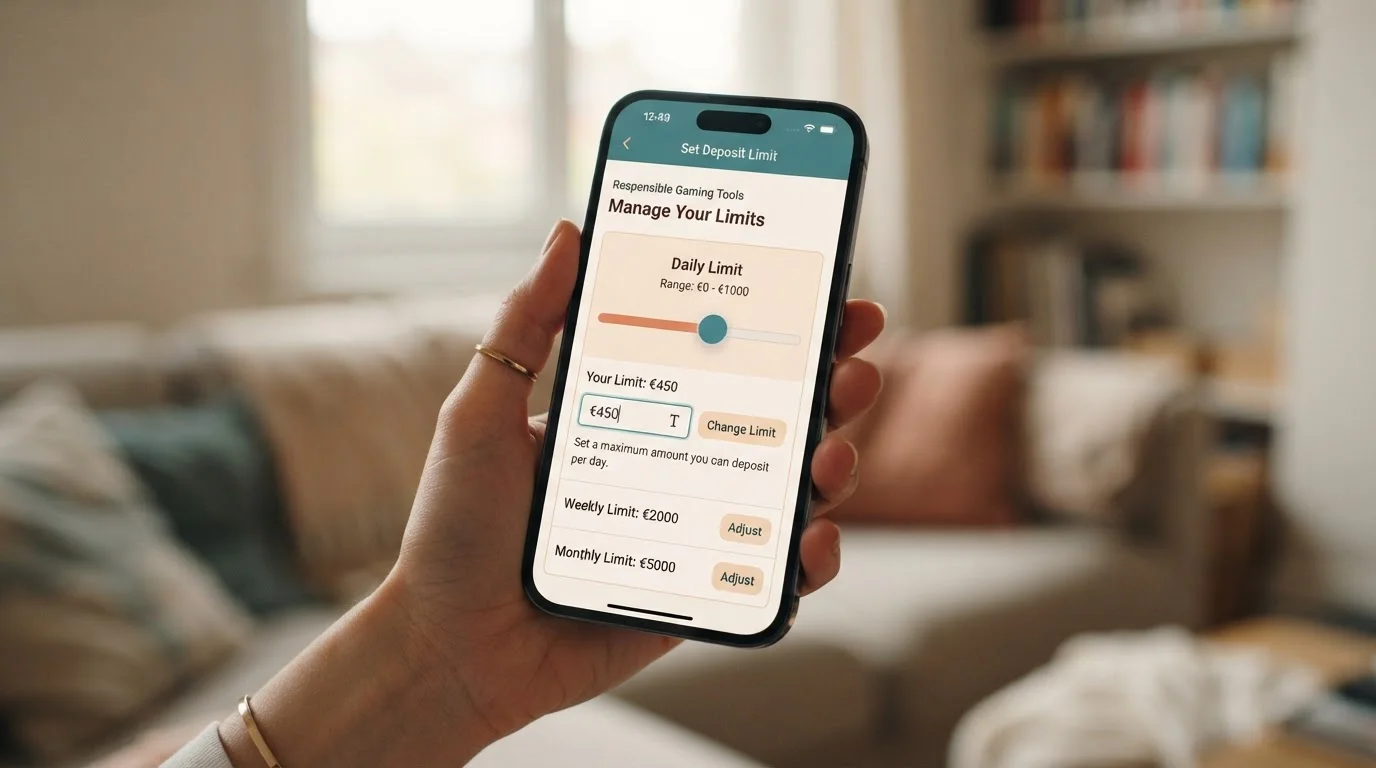
Set a deposit limit at registration, before the first deposit, at the figure you have decided you can lose without it touching rent, bills or anything else that matters. The limit applies across every method, so a £20 weekly cap covers card, wallet and pay-by-mobile together. A reduction takes effect immediately; an increase waits 24 hours, which is the cooling-off period that stops a losing session from quietly raising its own ceiling. Reality checks and time-outs sit alongside the limit for shorter interventions, and a casino-level self-exclusion blocks one site for a set stretch without the full reach of GAMSTOP.
GAMSTOP remains the backstop for when a limit is not enough. Registration at gamstop.co.uk blocks every UKGC site within 24 hours for six months, one year or five years, and it cannot be cancelled early by design. If you are weighing it, that irreversibility is the point rather than a drawback. For most low-deposit players the deposit limit alone does the job, keeping the small deposit genuinely small. Keep the budget set in advance, treat the deposit as the cost of the entertainment rather than a stake on profit, and the lowest tier that pays out cleanly is all the casino you need.
What is the lowest deposit I can make at a licensed UK casino?
Around £3 through pay-by-mobile at the few sites that support it, though £5 is the lowest reliable floor across mainstream methods and £10 is the standard. The true minimum is the higher of the casino’s figure and your payment method’s own floor, so check both in the cashier, along with the minimum withdrawal, before depositing.
Written by the editors at Payments-casino-uk.