
E-Wallet Casinos in the UK — What the Cashier Menu Doesn’t Tell You
 Available in GB

An e-wallet is the deposit method people reach for when they want distance between their bank account and the casino. Load the wallet once, pay the casino from that balance, and the operator never sees a card number. Deposits land instantly, payouts often beat the card queue, and your bank statement shows a transfer to PayPal or Skrill rather than a line that reads like a bookmaker. For a lot of UK players that privacy alone is the reason they switched.
The complication is that "e-wallet" is a shopping bag of very different products. PayPal holds a real balance and sends money back to itself. Skrill and Neteller do the same but sit under the same owner and appear at a narrower set of sites. MuchBetter is a phone-first wallet built around a UK e-money licence. Payz is what ecoPayz became, and it has quietly thinned out in the British market. Then there are the tokenised services — Apple Pay, Google Pay — that people file under "wallet" but which are really a debit card wearing a disguise. Each behaves differently at the cashier, and the differences decide whether your deposit qualifies for a bonus and how fast your winnings come home.
This guide maps the ones that genuinely work at UK Gambling Commission-licensed casinos as of 2026: which brands list them, the minimums, the fee reality, the payout-speed advantage that is real but smaller than the adverts imply, and the single rule that catches most newcomers — the e-wallet bonus exclusion. The named-wallet pages elsewhere on the site go deep on PayPal, Skrill and MuchBetter individually. Here the job is the category: what to use, when a wallet beats a plain card, and when it quietly works against you.
Table of Contents
- Best UK Casinos for E-Wallet Deposits (2026)
- What Counts as an E-Wallet (and What Doesn’t)
- The E-Wallets UK Casinos Actually Support
- The Bonus Catch: Why E-Wallet Deposits Are Often Excluded
- Withdrawal Speed: The Real E-Wallet Advantage
- Fees, Limits and Minimum Deposits
- How to Deposit with an E-Wallet, Step by Step
- E-Wallet vs Card vs Pay by Bank: When a Wallet Wins
- Games You Can Play After an E-Wallet Deposit
- Safety, KYC and the Credit-Card Funding Rule
- GAMSTOP, Non-Licensed Sites and E-Wallets
- Is That Wallet Still Around? Discontinued and Renamed Services
- New E-Wallet Casinos in 2026
- How We Chose These Casinos
Best UK Casinos for E-Wallet Deposits (2026)
No UKGC operator supports every wallet. PayPal is the near-universal one; Skrill and Neteller gather at a smaller group of sportsbook-led brands; MuchBetter shows up mostly at the independent and SkillOnNet-powered sites. The table below lists licensed casinos where at least one mainstream e-wallet is confirmed in the cashier, with the payout behaviour and entry minimums that matter more than the welcome headline.
| Operator | Licence | Withdrawal speed | Minimum deposit | Distinguishing feature |
|---|---|---|---|---|
| bet365 | UKGC · Hillside (New Media) | PayPal/Skrill/Neteller same day to 24h | £5 | Widest wallet menu of any major UK book |
| Betway | UKGC · Betway Ltd | Skrill/Neteller within 24h | £10 | Skrill and Neteller front and centre |
| LeoVegas | UKGC · LeoVegas Gaming (MGM) | PayPal 1–12h in testing | £10 | Fastest PayPal payouts in the market |
| PlayOJO | UKGC · SkillOnNet | PayPal/Skrill/MuchBetter 24–48h | £10 | No wagering on any offer, wallets included |
| Casumo | UKGC · Casumo Services | PayPal/Skrill under 24h | £10 | Large library, e-wallet cashouts under a day |
| 888casino | UKGC · 888 UK (Evoke) | PayPal/Neteller 1–3 days | £10 | Own live tables, 27-year platform |
| Paddy Power | UKGC · PPB Entertainment (Flutter) | PayPal within 24h | £10 | Names wallets explicitly in bonus terms |
| Sky Vegas | UKGC · Bonne Terre (Flutter) | PayPal 1–3 days | £5 | Exclusive in-house slots |
| Virgin Games | UKGC · Gamesys Operations | PayPal 1–3 days | £10 | Wager-free welcome structure |
| William Hill | UKGC · WHG (International) | PayPal/Skrill/Neteller 1–3 days | £10 | High-street brand, full wallet set |
The ranking order reflects how usable each site is for a wallet-first player, not raw brand size. bet365 leads because it is the one major operator that lists PayPal, Skrill and Neteller together and clears them quickly. LeoVegas earns its place on payout speed alone — its PayPal cashouts have come back in hours rather than days in repeated tester reports. PlayOJO sits high for a different reason: it strips wagering out of every offer, which sidesteps the exclusion problem this whole category suffers from.
Which e-wallets can I actually use at UK casinos?
PayPal is accepted almost everywhere, from bet365 to Virgin Games. Skrill and Neteller appear at a narrower band led by Betway, bet365 and several SkillOnNet sites. MuchBetter shows up at independent brands and Pay-by-mobile-friendly casinos. Payz, AstroPay, Jeton and Revolut are supported only sporadically and worth checking per site.
What Counts as an E-Wallet (and What Doesn’t)
The word gets stretched to cover three mechanically different things, and the differences are not academic. They change your refund route, your fee exposure and your bonus eligibility.
A true e-wallet holds a stored balance. You top it up from a card or bank transfer, the money sits in the wallet, and you spend from that pot. PayPal, Skrill, Neteller, MuchBetter and Payz all work this way. Because the wallet can receive money as well as send it, the casino can push a withdrawal straight back into the balance — no card refund, no bank wait. That round trip is the entire appeal.
A tokenised card wallet is a different animal. Apple Pay and Google Pay store a token that stands in for your debit card; there is no balance inside them. Deposits feel the same — tap, authenticate, done — but a withdrawal cannot land in Apple Pay because there is nowhere for it to go. The money returns to the card behind the token. People lump these in with e-wallets because the cashier icon sits in the same row, but for payout purposes they behave like a card. They get their own pages on this site for good reason.
Then there is Pay by Bank, the Open Banking rail branded as Trustly or Instant Bank Transfer. It is not a wallet at all. It connects the casino to your bank account directly, moves money in real time, and sends withdrawals back the same way. It solves the same speed problem a wallet does but keeps a card and a third-party balance out of the chain entirely. Worth knowing it exists before you decide a wallet is the only fast option.
The practical takeaway: when a casino or an affiliate says "e-wallet," ask which kind. If it holds a balance, withdrawals are fast and the bonus is probably excluded. If it is a tokenised card, withdrawals go to the card and the bonus may well qualify. Getting those two confused is the most common reason a player is surprised at cashout.
The E-Wallets UK Casinos Actually Support
Five wallets carry the UK market. A handful of others turn up occasionally. Below is what each one is, who owns it, and the catch that matters when you hand it to a casino cashier.
PayPal
PayPal is the default UK gambling wallet and the reason this whole category has mainstream traction. It left the gambling sector for years over compliance concerns, returned properly in the early 2020s, and now sits in the cashier at bet365, Paddy Power, Sky Vegas, Virgin Games, LeoVegas and most of the Flutter and Evoke stable. Deposits are instant. The draw is the withdrawal: money comes back to your PayPal balance, usually inside 24 hours and sometimes within a few, rather than waiting on a card refund.
The catch is twofold. First, PayPal is the wallet most often barred from welcome offers — operators treat it as a bonus-abuse risk because balances move easily between accounts. Second, PayPal enforces its own rules: the PayPal account name must match the casino account name exactly, or the withdrawal stalls in verification. It is the safest-feeling option and the one most likely to be excluded from the "free" spins you came for. Read the offer terms before you assume your tenner qualifies.
Skrill
Skrill is the sportsbook wallet. Owned by Paysafe, it built its following among bettors who wanted fast, low-friction transfers, and it survives at the betting-led UKGC brands — Betway, bet365, and various SkillOnNet casinos — more than at the pure-slots sites. Deposits are instant and minimums sit at the usual £10. Skrill also runs a loyalty scheme, Knect, that returns points on transactions, which is a genuine if minor edge over PayPal for heavy users.
Two things temper it. Skrill is excluded from casino bonuses at least as often as PayPal, frequently in the same breath in the terms ("deposits via Skrill and Neteller do not qualify"). And it is one of the few wallets that can charge the user directly — a withdrawal fee and a currency-conversion margin that PayPal and the casino itself do not impose. Fast, bettor-friendly, and the one wallet where you should actually read Skrill’s own fee schedule, not just the casino’s.
Neteller
Neteller is Skrill’s sibling under Paysafe, close enough in plumbing that casinos almost always list them together and exclude them together. The feature set mirrors Skrill: instant deposits, wallet-to-wallet withdrawals inside a day at most sites, a rewards programme, and the same habit of charging the user a small fee on certain transactions. If a casino takes one, it usually takes both, and the choice between them comes down to which balance you already keep funded.
Where Neteller earns separate mention is its reach for players who also move money internationally — it has historically been the stronger of the pair outside the UK, which matters only if you travel or hold multiple currencies. For a domestic UK player the two are interchangeable. Pick the one your bank is comfortable funding, keep an eye on the fee line, and expect it to be locked out of the welcome offer.
MuchBetter
MuchBetter is the newest of the serious contenders and the most UK-native in feel. It is a phone-app wallet run by MIR Limited under a UK e-money licence, built mobile-first with a tap-to-pay flow and, usefully, a prepaid Mastercard and a wearable payment ring for people who like gadgets. It has leaned hard into gambling, picked up awards in the payments space, and shows up at independent and SkillOnNet-powered casinos such as PlayOJO, plus a lot of pay-by-mobile-friendly sites.
The appeal is the app-driven security — a transaction needs confirmation on your phone, so a leaked login is not enough to spend your balance — and the fact that it is sometimes treated more leniently than PayPal and Skrill on bonus eligibility, though never count on that without checking. The limitation is coverage: the biggest legacy brands often don’t list it. If you want a wallet designed this decade rather than retrofitted from the 2000s, MuchBetter is the one.
Payz (formerly ecoPayz)
Payz is the rebrand of ecoPayz, the long-running wallet that changed its name in 2023. ecoPayz spent two decades as a workhorse for players who wanted a wallet that accepted awkward funding sources and operated across borders. The Payz relaunch kept the balance-based model and the tiered account levels but came with a retreat from several regulated markets, and its presence at UKGC casinos is now thin and shrinking rather than growing.
That makes it the honest inclusion-with-a-warning. If you already hold a Payz balance you may find it at a handful of sites, often the same independents that list MuchBetter. If you are choosing a wallet fresh in 2026, Payz is the weakest of the five for a UK player — not because the product is bad, but because the places that take it keep getting fewer. Treat it as a fallback, not a first pick, and confirm it is still live in the cashier before you fund it.
AstroPay, Jeton and Revolut
Three more surface often enough to list and rarely enough to warn about. AstroPay is a card-and-wallet hybrid popular in betting circles; it appears at some UKGC sportsbooks but its UK footprint is patchy and its gambling availability shifts with acquirer policy. Jeton is a balance wallet with a small but real presence at independent casinos, usually alongside MuchBetter and Payz rather than the big brands. Revolut is the odd one out — a full banking app rather than a gambling wallet, and most UK casinos interact with it as a card or a Pay-by-Bank source rather than a listed e-wallet, with Revolut’s own gambling-block toggle sitting over the top of all of it.
| Wallet | Owner | Withdrawal to wallet | User fees | Bonus eligibility |
|---|---|---|---|---|
| PayPal | PayPal Holdings | Yes, usually under 24h | None to the user | Usually excluded |
| Skrill | Paysafe Group | Yes, under 24h at most sites | Possible fee + FX margin | Usually excluded |
| Neteller | Paysafe Group | Yes, under 24h at most sites | Possible fee + FX margin | Usually excluded |
| MuchBetter | MIR Limited (UK e-money) | Yes, app-confirmed | Low, sometimes none | Sometimes allowed |
| Payz | PSI-Pay / Payz | Yes, where still supported | Tiered by account level | Varies, often excluded |
The Bonus Catch: Why E-Wallet Deposits Are Often Excluded
Here is the rule that trips up more first-time wallet users than any other. Deposit with PayPal, Skrill or Neteller, claim the shiny welcome offer, and the bonus never credits. You did nothing wrong. Most UK casinos simply do not count e-wallet deposits toward their promotions, and the exclusion is buried in a terms line most people skim past.

The logic is bonus abuse, or rather the operator’s fear of it. Balances in a stored-value wallet move between accounts easily and cheaply, which makes it simpler for a determined abuser to open several casino accounts, cycle the same funds, and harvest multiple welcome offers. Debit cards carry a name and a bank verification that ties them to one person; a wallet feels one step removed from that. Operators respond with the blunt instrument: exclude wallets from offers entirely rather than police them case by case. Fair to the casino, annoying to the honest player who just prefers not to type a card number.
The exclusion is not universal, and the exceptions are worth knowing. PlayOJO’s offers carry no wagering at all and accept wallet deposits, because there is nothing to abuse when there is no rollover. Paddy Power spells out its qualifying methods in the offer terms, so you can see at a glance whether your wallet counts. MuchBetter is occasionally waved through where PayPal and Skrill are not. The pattern: the fewer strings attached to a bonus, the more likely a wallet qualifies for it.
If the welcome offer matters to you, the move is simple and slightly deflating. Make the first qualifying deposit with a debit card, clear or claim the bonus on that, then switch to your wallet for every deposit and withdrawal afterward. You lose the privacy on one transaction and keep it on all the rest, and you keep the fast payout route for your winnings. It is the workaround the terms practically invite, and it beats funding a wallet only to watch the bonus evaporate.
Why do casinos exclude e-wallet deposits from the welcome bonus?
Operators treat stored-balance wallets as a bonus-abuse risk, because money moves between wallet accounts easily enough to let someone farm multiple welcome offers. Debit cards carry bank-level identity checks that wallets feel one step removed from. The blunt fix is excluding PayPal, Skrill and Neteller from promotions rather than policing each claim individually.
Withdrawal Speed: The Real E-Wallet Advantage
Strip away the privacy talk and the genuine reason to use a wallet is the cashout. A card refund crawls through the Visa or Mastercard settlement queue — the casino approves it, the network batches it overnight, your bank posts it a day or two later, and a weekend stretches the whole thing. A wallet withdrawal skips that. The casino pushes funds straight into your PayPal or Skrill balance, and once the operator’s own review clears, the money is spendable, not "pending at your bank."

The real-world gap is smaller than the "instant" wording suggests, because the slow part is rarely the payment rail. It is the casino’s pending period — the window during which the operator reviews the withdrawal and, on a first cashout, runs identity checks. LeoVegas has turned PayPal payouts around in a handful of hours when an account is already verified; bet365 and the Entain brands clear wallet withdrawals inside a day for most verified players; the slower sites still land wallet money in a day where a card would take three. The rail is fast. Whether you feel it depends on how quickly the casino lets go.
That makes verification the lever that actually controls your payout speed. UKGC rules require the operator to confirm who you are before releasing funds, so the first withdrawal almost always drags while you upload a photo ID and proof of address. Do that on the day you register, not the day you win, and the wallet’s speed advantage shows up on your very first cashout instead of being swallowed by the document queue. Players who leave verification until payout time blame the wallet for a delay the casino’s compliance desk caused.
One more wrinkle specific to wallets: the name-match rule. PayPal, Skrill and Neteller all expect the wallet account to be in the same name as the casino account, and a mismatch — a joint wallet, a partner’s account, a maiden name — freezes the withdrawal until support sorts it out. It is not a flaw so much as an anti-fraud feature, but it catches people who never had a problem depositing, because deposits don’t check the name as hard as payouts do.
Are e-wallet withdrawals really faster than card payouts?
Usually yes, but the rail is not the bottleneck. Wallet payouts reach a spendable balance in hours to a day, while card refunds wait on bank settlement for one to three. The slow part at both is the casino’s own review and first-time identity check. Verify early and the wallet advantage actually shows.
Fees, Limits and Minimum Deposits
The fee picture is better than the forums suggest, with one exception. UKGC licence conditions bar operators from charging you to deposit or withdraw, so the casino side is free across every brand in the table above. What you deposit is what lands in your balance, and what you withdraw arrives whole, minus nothing on the casino’s end.
The exception lives inside the wallet, not the casino. PayPal does not charge a UK user for a standard personal transfer to a gambling account, and MuchBetter’s user fees are low to nil. Skrill and Neteller are the ones to watch: both can levy a withdrawal fee and, more quietly, a currency-conversion margin if your wallet balance and the casino operate in different currencies. Keep the wallet in sterling, funded from a sterling source, and you avoid the conversion bite. The casino will never mention this because it is not the casino’s charge — it is Paysafe’s, and it is in Skrill’s own schedule, not the casino’s cashier.
Minimums land where you would expect. bet365 and Sky Vegas open the door at £5; most of the rest sit at £10 for e-wallet deposits, occasionally a pound or two higher than the same site’s card minimum because the operator sets wallet floors independently. Maximums are governed less by the wallet than by your verification tier and the casino’s risk thresholds. An unverified account commonly caps wallet deposits in the low thousands per day; completing enhanced checks lifts that substantially at the larger operators. UKGC affordability monitoring sits over all of it, and a pattern of losses can trigger a request for proof of funds before limits rise, whatever method you deposit with.
Worth flagging the funding source behind the wallet, because the credit-card ban reaches through it. More on that below, but in short: a wallet you topped up from a credit card can be refused at the casino even though the wallet itself accepted the top-up. The gambling block follows the money one layer back.
Do UK casinos charge fees on e-wallet deposits?
The casino charges nothing — UKGC licence conditions forbid deposit and withdrawal fees on every licensed site. Any charge comes from the wallet itself. PayPal and MuchBetter are effectively free for UK users; Skrill and Neteller can apply a withdrawal fee and a currency-conversion margin if your balance is not held in sterling.
How to Deposit with an E-Wallet, Step by Step
The flow is the same across wallets and takes under a minute once the wallet is funded. Set the wallet up first, away from the casino: download the app or open the account, verify your identity with the wallet provider, and load a balance from your debit card or bank. That front-loads the friction so the casino side stays quick.
At the casino, log in and open the cashier, usually under a "Deposit" or "Banking" tab. Pick your wallet from the method list — if it isn’t there, the site doesn’t support it, and no amount of retrying changes that. Enter the amount, mind the minimum and any bonus-qualifying threshold, and confirm. You are bounced to the wallet to authorise: a PayPal login, a Skrill password, a tap in the MuchBetter app. Approve it and the funds hit your casino balance instantly. The casino never sees the card or bank details behind the wallet, which is the privacy you came for.
A few things that save grief later. Use the same name on the wallet and the casino account, because the payout will check it even if the deposit didn’t. Keep the wallet funded in pounds to dodge conversion margins. And if you want the welcome offer, confirm the wallet qualifies before this deposit rather than after — the bonus either credits on deposit or it doesn’t, and support rarely reverses an exclusion written into the terms.
E-Wallet vs Card vs Pay by Bank: When a Wallet Wins
A wallet is not automatically the right call. It wins in specific situations and loses in others, and knowing which is which saves you from funding a balance you didn’t need.
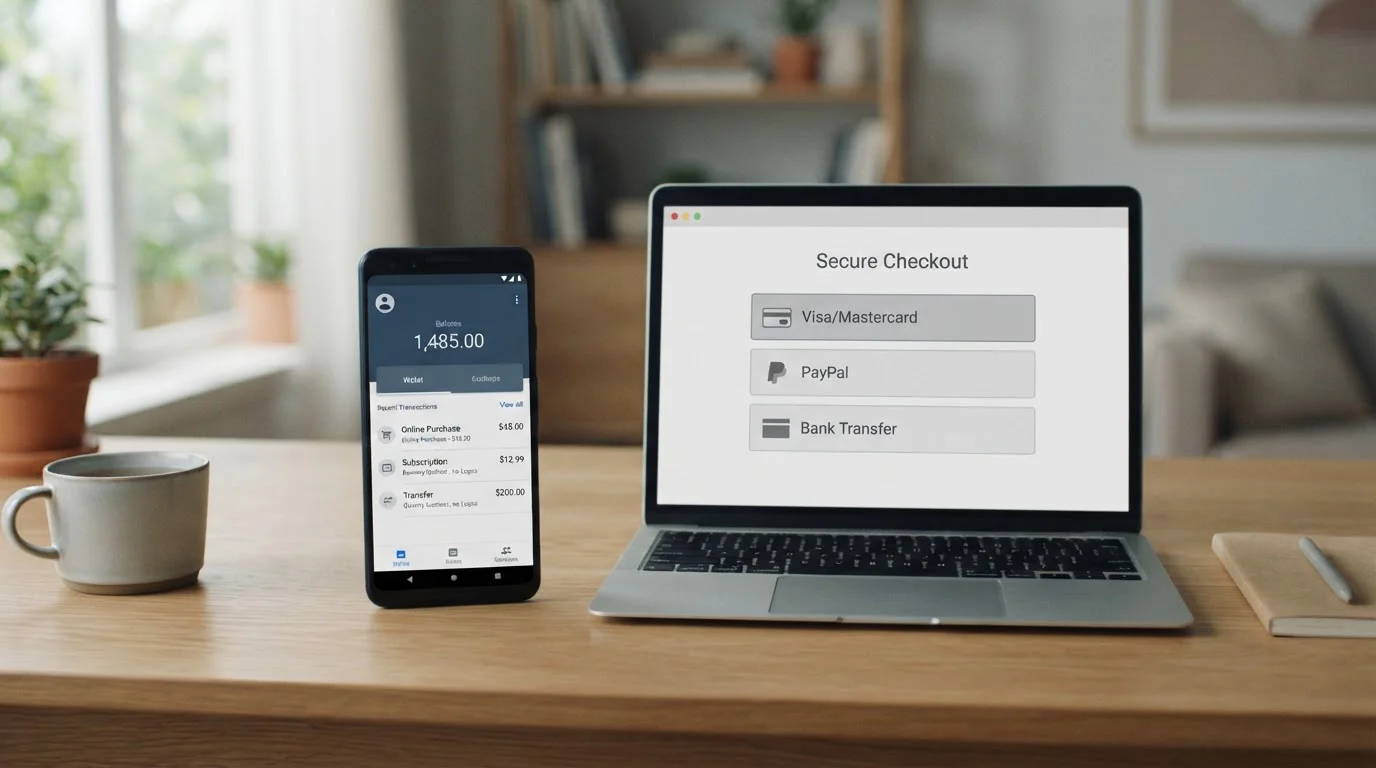
A wallet beats a plain debit card in a short list of cases:
- You want the casino kept off your card and your bank statement, with the transaction showing as a wallet transfer instead.
- You cash out often and value getting winnings to a spendable balance in hours rather than waiting on a card refund.
- You deposit across several casinos and would rather manage one funded balance than expose one card everywhere.
A card wins when the welcome bonus is the point, because cards qualify for offers that wallets are shut out of, and when you want zero third-party fees, since a card carries no Skrill-style withdrawal charge. Pay by Bank wins when you want a wallet’s speed without a wallet — Open Banking moves money bank-to-bank in real time and sends withdrawals back the same way, no balance to fund and no card in the chain. It is the quiet third option most people forget while they argue card versus wallet.
| Method | Deposit speed | Withdrawal route | Bonus eligibility | Best for |
|---|---|---|---|---|
| E-wallet (PayPal/Skrill) | Instant | Back to wallet, hours to a day | Usually excluded | Fast cashouts, statement privacy |
| Debit card | Instant | Card refund, 1–3 days | Qualifies | Welcome offers, no third-party fees |
| Pay by Bank / Trustly | Instant | Bank transfer, minutes to hours | Varies | Speed with no card or wallet |
| Tokenised wallet (Apple/Google Pay) | Instant | Back to the card, 1–3 days | Often qualifies | Card privacy, bonus access |
The honest summary: use a card for the first qualifying deposit, a wallet or Pay by Bank for everything after. You capture the bonus once and keep the privacy and speed for the life of the account. Anyone telling you a wallet is strictly superior is selling the wallet.
Games You Can Play After an E-Wallet Deposit
A recurring worry in the searches is whether paying by wallet locks you out of part of the casino. It does not. Once the deposit lands, your balance is a balance — it spends identically whether it arrived by PayPal, Skrill, debit card or bank transfer. Slots, live dealer tables, roulette, blackjack, baccarat, bingo, the full catalogue opens to you with no payment-method gate. There is no such thing as a wallet-only slot or a card-only live table at a UKGC site, and nobody building a licensed cashier would want the maintenance headache of one.
The single place the funding method brushes against gameplay is the bonus, and even then only indirectly. A welcome offer might restrict which games count toward its wagering — slots full weight, live tables at ten percent or zero — but that rule applies to every player on that bonus regardless of how they deposited. If your wallet deposit was excluded from the offer in the first place, you simply play with your own money and ignore the game-weighting fine print entirely. The restriction lives on the bonus, never on the wallet.
Live casino deserves a specific mention because it is where wallet users often spend, given the higher stakes and the appetite for fast cashouts after a good session. The Evolution-powered tables that dominate the UK market run the same whether you funded with a wallet or a card, and the payout-speed edge of a wallet is most felt here — win at the blackjack table at midnight and a wallet gets the money to a spendable balance before a card refund has left the casino’s queue. The game doesn’t care how you paid. The cashout, as ever, is where the wallet earns its place.
Does paying with an e-wallet limit which games I can play?
No. A deposited balance plays the same regardless of funding method — slots, live tables, roulette and blackjack all open normally. The only payment-linked restrictions come from bonus terms, which govern game weighting for every player on an offer, not from the wallet. Skip the bonus and nothing restricts you.
Safety, KYC and the Credit-Card Funding Rule
A wallet adds a layer of safety that is real and a layer of inconvenience that is also real, and the two come from the same place: the money passes through a regulated intermediary before it reaches the casino.

The security upside is that the casino never holds your card or bank credentials. If an operator’s systems are breached, there is no card number of yours in the wreckage — only a wallet reference that is useless without the wallet’s own login and, for MuchBetter and the app-based services, a device confirmation on top. PayPal and Skrill add their own fraud monitoring and buyer-side checks. For a player depositing at several sites, consolidating behind one wallet shrinks the number of places your card actually lives from many to one.
The inconvenience is KYC, and the wallet doesn’t let you skip it. You verify once with the wallet provider and again with each UKGC casino, because the licence requires the operator to know its customer regardless of how the money arrives. Anyone selling a wallet as a route to "no verification" gambling at a licensed UK site is describing something that does not exist — the checks are a licence condition, not an operator preference. The wallet changes who holds your card details, not whether you prove who you are.
Then the credit-card rule, which reaches further than most players expect. The Gambling Commission banned gambling with credit cards on 14 April 2020, covering every UKGC operator. The ban doesn’t stop at the cashier — it follows the funding source back through the wallet. Top up PayPal or Skrill from a credit card, try to deposit, and a compliant operator’s gateway checks the underlying source and can refuse it, because letting credit-funded wallet money through would defeat the ban. Fund the wallet from a debit card or a bank transfer and it goes through clean. The wallet is a wrapper, and the rule looks inside the wrapper.
Is my money safe in an e-wallet casino account?
Safer than handing a card straight to the casino. The operator never holds your card or bank details, only a wallet reference useless without the wallet’s own login. UKGC licensing adds segregated funds and audits. The trade-off is verification — you prove your identity to both wallet and casino, with no shortcut.
GAMSTOP, Non-Licensed Sites and E-Wallets
A steady slice of wallet searches ask about "e-wallet casinos not on GAMSTOP," and the answer deserves to be blunt rather than coy. Every casino in this guide is on GAMSTOP, because participation in the national self-exclusion scheme is a condition of the UKGC licence, not a feature the operator chose. Self-exclude through GAMSTOP and you are blocked from all of them, wallet or no wallet. There is no licensed site where a wallet lets you around that.
Sites advertised as "not on GAMSTOP" are unlicensed in Britain. They run on offshore permits — Curaçao most often — and sit outside UKGC rules, which means no segregated-funds requirement, no UK age checks, no independent dispute route when a payout stalls. A wallet does not fix any of that. If anything, the mainstream wallets make a point of avoiding these sites: PayPal, Skrill and Neteller work through regulated acquirers that steer clear of offshore gambling, so the wallet you trust at bet365 frequently won’t fund an offshore casino at all. The ones that do slip through tend to route via obscure processors that misdescribe the transaction, which can flag your wallet account.
The reason people chase the combination is usually that GAMSTOP is doing its job and they want around it. That is the moment to step back rather than hunt for a payment trick. If the scheme feels too tight, the National Gambling Support Network and GamCare offer free, confidential help, and a casino-level time-out is a gentler first step than a five-year block. A wallet is a payment tool, not a loophole, and treating it as one points at a problem the payment method can’t solve.
Can I use an e-wallet at casinos not on GAMSTOP?
There is no safe or licensed way to. Casinos off GAMSTOP are unlicensed in the UK, and mainstream wallets like PayPal and Skrill route through regulated acquirers that avoid offshore gambling, so they often won’t fund those sites at all. Chasing the combination usually signals that GAMSTOP is working as intended.
Is That Wallet Still Around? Discontinued and Renamed Services
The wallet space has a graveyard, and half the confusion in the searches comes from brands that changed name, pulled out of the UK, or collapsed outright. Clearing it up matters because players still type the dead names into cashiers and wonder why nothing appears.
ecoPayz did not disappear — it became Payz in 2023, same company, new brand, and a narrower UK gambling footprint than the name once enjoyed. If you held an ecoPayz balance, it is Payz now; if a casino lists neither, it has simply stopped supporting the wallet. Wirecard is the dramatic one: the German payments group behind a swathe of prepaid and wallet products collapsed into insolvency in 2020 after a fraud scandal, and the services riding on its rails scrambled for new providers. Anything that still carries the Wirecard name in a search result is a ghost. ClickandBuy, an older PayPal-owned wallet, closed in 2016 and is not coming back, whatever a stale listing suggests.
The pattern behind all three is the same. Payment wallets live and die by their acquirer relationships and their regulatory standing, and gambling is a high-scrutiny corner of that world. A wallet can be perfectly healthy as a consumer product and still vanish from UK casino cashiers because an acquirer pulled out or a regulator tightened the rules. That is why a wallet that worked last year may be missing this year, and why the live cashier menu — not an affiliate’s aging list — is the only reliable check of what a site takes today.
Whatever happened to ecoPayz and Wirecard?
ecoPayz rebranded to Payz in 2023 — same operator, slimmer UK presence. Wirecard, the German payments group, collapsed into insolvency in 2020 after a fraud scandal, taking associated wallet products with it. ClickandBuy closed in 2016. Dead or renamed brands still surface in searches, which is why the live cashier is the only trustworthy check.
New E-Wallet Casinos in 2026
"New" in the UK market usually means a fresh skin on an existing platform rather than a new operator building payments from scratch, and that shapes which wallets a launch supports. A brand going live on SkillOnNet, Gamesys or White Hat Gaming inherits that platform’s cashier, so its wallet menu is decided upstream — which is why new SkillOnNet casinos tend to list MuchBetter and Skrill while new Gamesys brands lean on PayPal. The wallet support arrives pre-built with the platform.
That makes platform the thing to read, not the launch date. A genuinely new operator with its own UKGC licence and its own payment stack is rare and expensive to stand up, so most 2026 arrivals are white-labels whose wallet options you can predict from the platform behind them. The consolidation running through the market — Paysafe owning both Skrill and Neteller, Evoke absorbing William Hill into 888’s infrastructure, Flutter spanning Paddy Power, Sky Vegas and Betfair — means wallet decisions get made at group level and roll out across a stable at once. When a platform adds a wallet, every brand on it gains it together.
For a player, the upshot is reassuring and a little dull: the wallets worth using are already at the established sites, and a new casino’s main variable is which platform it rents. Chase a launch for its welcome offer if you like, but don’t expect a new brand to carry a wallet the big operators don’t. The payment landscape moves at the pace of acquirers and regulators, not casino marketing calendars.
How We Chose These Casinos
The list is not a popularity contest. Every site had to clear the same gate before it earned a row, and plenty of well-advertised brands didn’t make it because their wallet support was thinner than their banner suggested.
- An active UKGC remote licence, cross-checked against the Gambling Commission’s public register rather than taken from the site footer.
- At least one mainstream e-wallet — PayPal, Skrill, Neteller or MuchBetter — confirmed live in the cashier in 2026, not merely listed on an old review.
- Wallet withdrawals actually supported, not deposit-only, because a one-way wallet defeats the point.
- An entry minimum of £10 or lower on the wallet, and no casino-side deposit or withdrawal fee.
- No active run of unresolved payout complaints across the usual player-review channels in the preceding year.
Wallet availability was the deciding factor more than brand size, which is why a few household names sit lower than their marketing would place them and an independent like PlayOJO ranks high on the strength of wagering-free offers that let wallet deposits qualify. Minimums, payout behaviour and bonus eligibility were read from each operator’s current terms, and where a term was ambiguous — the usual grey area being whether a specific wallet counts toward an offer — the guide says so rather than guessing. The aim was an applied map a wallet-first player can act on, not a ranking that rewards the biggest advertising budget.

Prepared by the Payments-casino-uk editorial staff.